
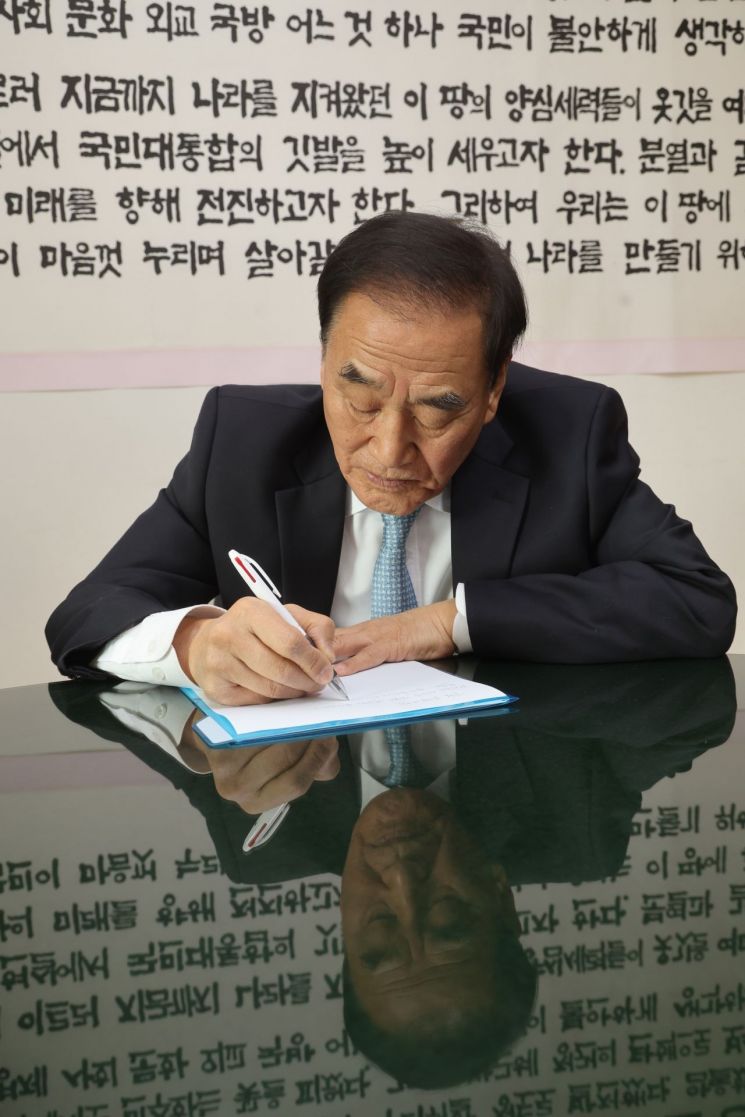
 Lee Jae-oh, an advisor for the People Power Party, is writing a manuscript in his office near Gwanghwamun, Seoul. On the wall, a portion of the founding declaration of the National Unity Coalition he wrote in 2019 is displayed in brush calligraphy. Photo by Heo Younghan younghan@
Lee Jae-oh, Senior Advisor of the People Power Party, has kept a daily diary without missing a single day since his high school years. This is one of his writing secrets. Diary writing is a "time for reflection." No matter how late or tired he is, he writes his diary before going to bed. It is like eating a meal. Having served five terms representing Eunpyeong-eul in Seoul, Lee still lives in Gusan-dong. During an interview with Asia Economy, he earned the nickname "The Man of 20,000 Steps." He wakes up every day at 5 a.m., stretches, and heads to the mountains. He spends about two hours walking in the mountains and about one hour exercising there, totaling around 12,000 steps. The remaining roughly 8,000 steps are made up by commuting via subway," he said. He walks 20,000 steps daily.
Lee Jae-oh Walks 20,000 Steps Daily and Writes a Diary Every Day
He usually commutes between the National Assembly and broadcasting stations by subway. Lee also enjoys cycling. Former Minister of Culture, Sports and Tourism Yoo In-chon is also an avid cyclist who commutes by bike. I have been walking, running, and cycling with Na Do-chae, the expedition leader, for decades. All of them are versatile sportsmen, surprising once, and twice when you check their ages. Former Minister Yoo participates in triathlon competitions and enjoys motorcycling. Whether it is fencing, horseback riding, windsurfing, or any other sport, there is no discipline he hasn't tried.
Dr. Lee Si-hyung, approaching his nineties (Director of Serotonin Culture and Chief of Healing Sun Village), enjoys walking along the Deoksugung Stone Wall Road. The path starts near Inwangsan Mountain, continues to Independence Gate and Gyeonghuigung Palace walls, and ends in front of City Hall. Dr. Lee said, "I think this path used to pass through Jingogae and connect to Namsan Saennimgol in the past. At night, tigers roamed Inwangsan, and woodcutters likely followed this path to Namsan Saennimgol." He added, "Walking while lost in such thoughts makes me realize that the small pains of today are nothing compared to the long journey of history."
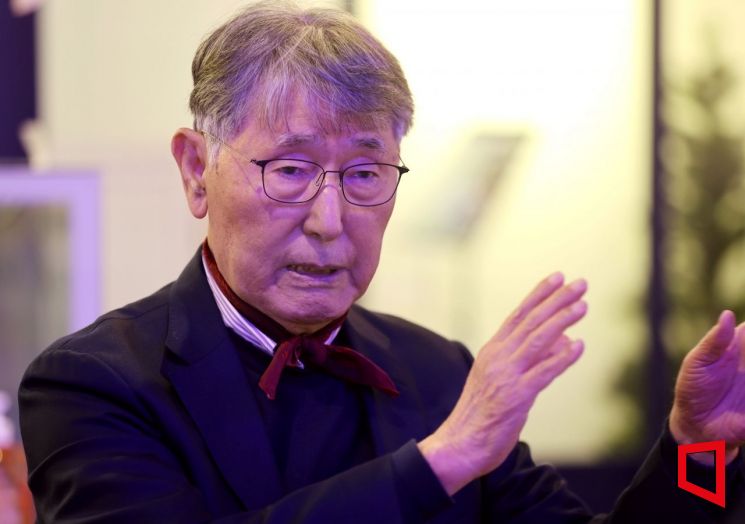 Dr. Lee Si-hyung, president of the Korean Society of Meaning Therapy, director of the Serotonin Cultural Center, and head of health-related organizations, has published over 120 books. Photo by Younghan Heo younghan@
Why Dr. Lee Si-hyung, Approaching Ninety, Advocates '5-Minute Walking'
Dr. Lee emphasizes "5-minute walking." "You won't believe it, but even walking for just five minutes makes you happier," he says, a scientifically proven conclusion. He recommends "Socrates Walking," which means walking with a specific theme rather than just walking aimlessly. When you have worries, pacing back and forth is part of this method. "Serotonin Walking" is simple: walk with a slightly faster pace and a wider stride than usual. Keep your chest open and your back straight. Breathe out three times from your lower abdomen, then inhale once, focusing your attention on the wind and the sound of fallen leaves. Listening to serotonin music (available for free download on the Serotonin Culture website) can help concentration. Dr. Lee explains, "If you walk like this for five minutes, serotonin, the happiness chemical, is released, reaching its peak after 15 minutes."
Oh Han-jin, President of the Korea Walking Association and a professor at Daejeon Eulji University Hospital, holds dozens of titles while commuting between Daejeon and Seoul. Without physical and mental stamina, it would be difficult to manage. Every morning upon waking, he heads straight to a nearby hotel fitness center. He swims for 30 minutes, then spends about an hour and a half focusing entirely on exercise, including treadmill walking and strength training like lunges. Since he often meets patients in clinics all day or rushes between appointments by car, maintaining morning exercise consistently since his youth has been his secret to health management. He says, "Only after exercising and showering in the morning do I feel like I have started the day well," adding, "Exercise is the best investment one can make for oneself."
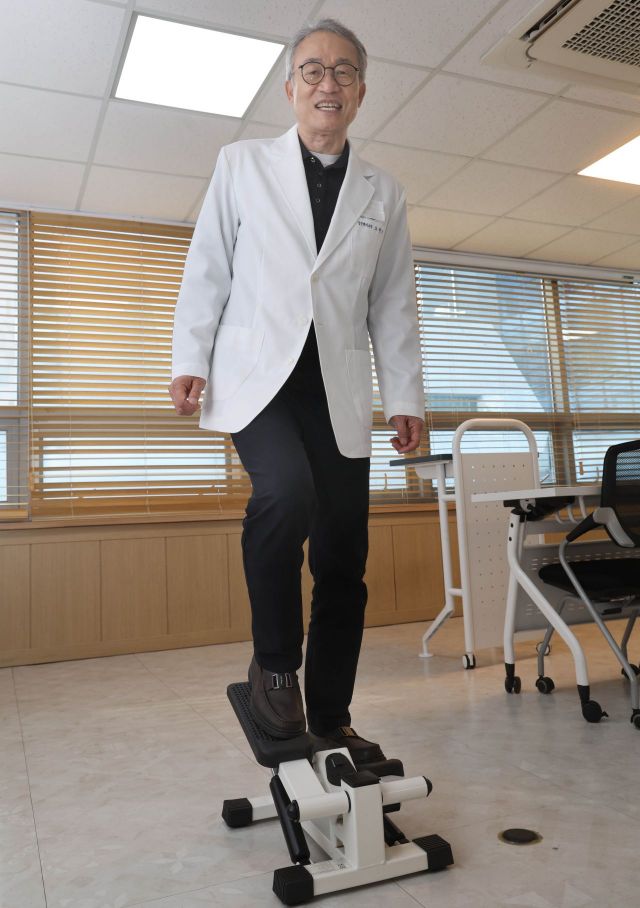 Dr. Oh Han-jin, President of the Korea Walking Association, is demonstrating walking exercise on a stepper at the Georeum Research Institute in Gangnam-gu, Seoul. Photo by Heo Young-han younghan@
Oh Han-jin’s Stamina: Holding Dozens of Titles While Commuting Between Seoul and Daejeon
President Oh said, "Walking is the easiest exercise in the world, but walking 10,000 steps is actually very difficult," adding, "Walking is important, but walking correctly is equally crucial." He suggests starting with a proper posture, standing upright with the face slightly looking upward. The pace should be at least 2 to 3 steps per second. Avoid spreading your feet too wide and do not put pressure on the back heel of one foot. The moment we take a step, numerous bones and muscles move simultaneously, affecting all organ functions.
Park Dong-chang, Chairman of the Barefoot Walking National Movement Headquarters, is known as the "Barefoot Walking Evangelist." Originally, the organization was called the Citizens' Movement Headquarters but was renamed to the National Movement Headquarters to expand nationwide. He walks barefoot for over an hour in the apartment yard in the morning, barefoot for 30 minutes in the forest during the day, and barefoot for an hour on the barefoot walking trail along the river embankment in the evening. Residents who once found this unusual have joined him in barefoot walking.
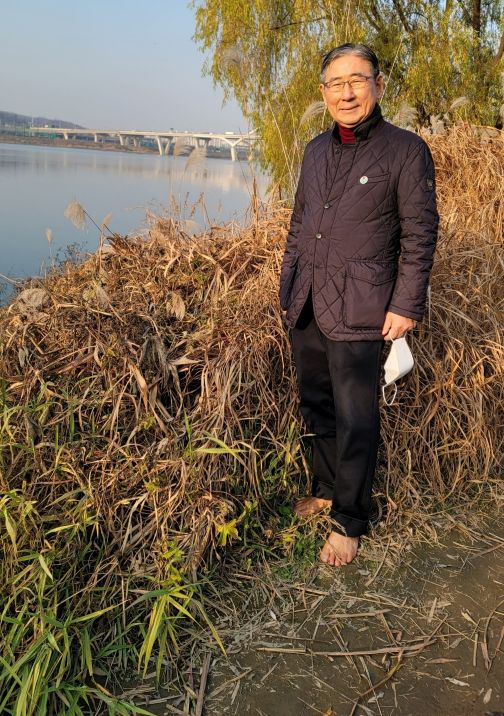
"From Finance Man to Barefoot Walking Evangelist... Now a National Movement" Chairman Park Dong-chang
Graduating from Seoul National University Law School and having spent half his life in finance, Chairman Park hopes people experience the "miracle of barefoot walking." After retirement, since 2016, he has run the "Barefoot Walking Forest Healing School," meeting citizens barefoot every Saturday from March to November at Daemosan in Seoul. In 2018, he formally established the movement headquarters to promote barefoot walking nationwide. He has consistently published books promoting barefoot walking, including "The Joy of Barefoot Walking" (2006), "The Miracle of Barefoot Walking" (2019), and "Walk Barefoot" (2021). Chairman Park advises that walking barefoot is much more effective than walking with shoes. Walking barefoot maximizes acupressure and grounding effects. "The muscles surrounding the musculoskeletal system become stiff due to shoes, causing pain, but barefoot walking relieves this through compression and relaxation, which is the acupressure effect. The grounding effect occurs when negatively charged electrons from the earth enter the body through the bare feet, neutralizing reactive oxygen species that cause chronic diseases."
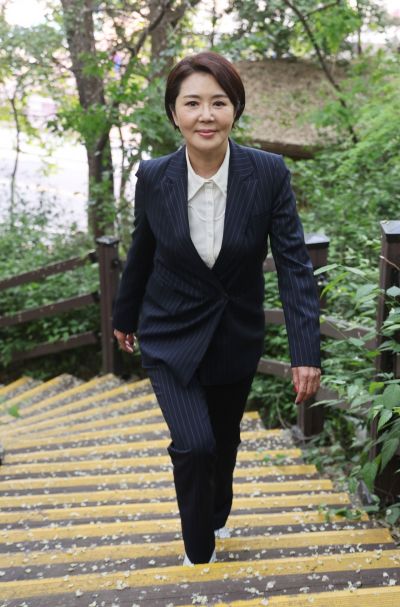 Actor Choi Wan-jung, director of Dapsimni Film Media Art Center and president of the Stair Climbing and Walking Association, is climbing the wooden stairs on Baebongdume Simni-gil in front of the center. Photo by Younghan Heo younghan@
Actress Choi Wan-jung, Who Overcame Depression by Climbing Stairs, Finds a Turning Point in Life
With 38 years of experience as an actress and currently managing the Dapsimni Film Media Art Center in Dongdaemun-gu, Seoul, Center Director Choi Wan-jung serves as the President of the Korea Stair Climbing Walking Association. After successfully losing weight and recovering mental health through stair climbing, she started promoting stair climbing nationwide to share a healthy life. Severe insomnia and depression struck during her acting career. She could not show her daughter a collapsing mother. Wearing a hat pulled low, she began climbing the apartment stairs. Initially, it took over 40 minutes to reach the 20th floor, resting intermittently. Still, after the first climb, she felt proud of herself. On the first day, she climbed once; on the second day, twice. After about two weeks of stair climbing, her body became so tired that she would fall asleep before 10 p.m. Usually, she climbed the 20 floors five times (100 floors), and sometimes ten times (200 floors) regardless of day or night.
After 5 to 6 months of stair climbing, she lost 10 kg. Stair climbing is aerobic exercise that stimulates small muscles throughout the body, improving elasticity and body lines. President Choi said, "Consistent stair climbing helped me lose weight, improve posture, and completely eliminate depression, making me mentally very healthy," adding, "I want to widely share with people around me that 'I did it, so you can too' and 'Climbing stairs makes you healthier' to help others."
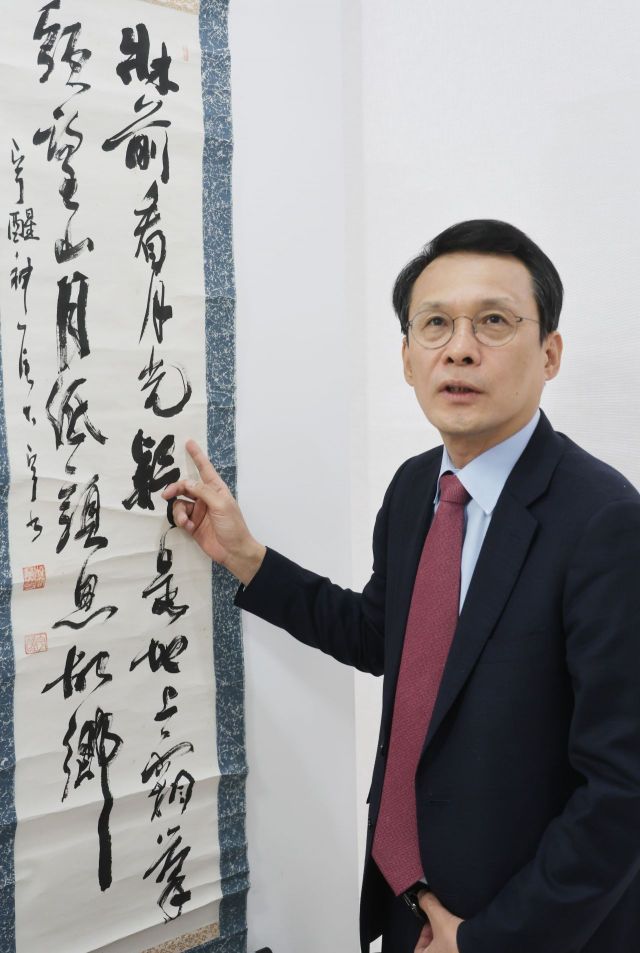 Handwriting expert and CEO of The Kim Law Firm, Bonjin Koo, is talking about handwriting and people while looking at the handwritten note of independence activist Yongman Park hanging in his office. Photo by Younghan Heo younghan@
"When Handwriting Changes, the Inner Self Changes Too" Lawyer Koo Bon-jin
Koo Bon-jin, Korea’s first graphologist and CEO lawyer of The Kimrocom, holds a pen instead of dumbbells for 20 minutes daily to train his brain muscles. Graphology is a research method that analyzes handwriting in detail, examining the shape, size, slant, and spacing of letters to understand a person's personality and inner self. He says changing handwriting can change a person’s inner self. Just as in the East, people cultivated character through calligraphy, practicing changing handwriting once a day consistently for 6 to 8 weeks can significantly help the brain change. He said, "Writing 1,000 characters a day takes just under 20 minutes. Practicing like this for 6 to 8 weeks will greatly benefit the brain."
These and other figures from various fields will hold the launch ceremony of the "Hamanhacheon National Movement Headquarters" on the morning of the 15th at Namsangol Hanok Village in Jung-gu, Seoul, pledging to "lead the Hamanhacheon campaign as a nationwide movement for brain health in the super-aged society."
© The Asia Business Daily(www.asiae.co.kr). All rights reserved.
![Clutching a Stolen Dior Bag, Saying "I Hate Being Poor but Real"... The Grotesque Con of a "Human Knockoff" [Slate]](https://cwcontent.asiae.co.kr/asiaresize/183/2026021902243444107_1771435474.jpg)


















