Court: "No difference in the function of reviewing the legality of seizure procedures"
The Supreme Court has ruled that evidence is admissible even without a seizure report if the police, while investigating a suspect who illegally filmed a woman's body, documented the purpose of the seizure regarding the videos and other materials.
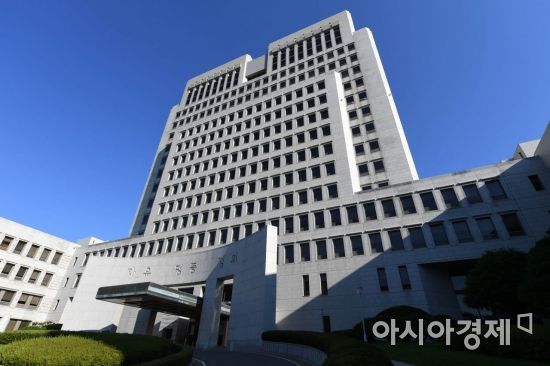
The Supreme Court's 3rd Division (Presiding Justice No Jeong-hee) overturned the lower court's ruling that acquitted part of the charges against Lee Mo (30), who was indicted for violating the Act on Special Cases Concerning the Punishment, etc. of Sexual Crimes (filming using a camera, etc.), and remanded the case to the Uijeongbu District Court, the court announced on the 14th.
Lee was indicted on charges of illegally filming women's bodies eight times from September 2018 to January of the following year.
The first trial recognized all charges as guilty, sentencing him to six months in prison and ordering him to complete 40 hours of a sexual violence treatment program.
However, the second trial maintained the sentence from the first trial but reversed the judgment by recognizing guilt only for the crime against one victim and acquitting the rest, considering that the related evidence was illegally collected.
During the police investigation in January 2019, Lee showed his phone photo album upon request, which contained videos of multiple victims. Lee refused to voluntarily submit his phone but provided only photo and video files to the police. Subsequently, Lee confessed to all the crimes during police and prosecution investigations.
The second trial judged this process as improper because the judicial police officer did not prepare a seizure report. According to the Criminal Procedure Act and other laws, when a judicial police officer seizes evidence voluntarily submitted, they must prepare a seizure report detailing the circumstances of the seizure. However, the Police Agency's Crime Investigation Regulations allow the purpose of the seizure to be recorded in suspect interrogation records or statements in lieu of a seizure report.
However, the Supreme Court overturned the second trial's decision, stating, "It is difficult to see that the defendant's procedural rights were substantially violated, so the seizure can be considered lawful."
The court stated, "Requiring judicial police officers to prepare a seizure report is to review and control the legality of the seizure procedure afterward. Even if the purpose of the seizure is recorded in suspect interrogation records, there is no difference in the function of reviewing the legality of the seizure procedure."
© The Asia Business Daily(www.asiae.co.kr). All rights reserved.
![Clutching a Stolen Dior Bag, Saying "I Hate Being Poor but Real"... The Grotesque Con of a "Human Knockoff" [Slate]](https://cwcontent.asiae.co.kr/asiaresize/183/2026021902243444107_1771435474.jpg)
















