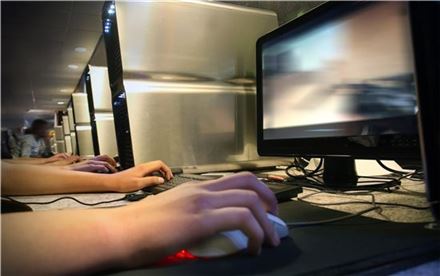
 A teenager receiving game tutoring at a PC bang. Photo by Asia Economy DB
Domestic users are closing their wallets on games. The number of people who say they will spend on games is decreasing every year.
According to the ‘2022 Game User Panel Study 3rd Year Final Report’ released by the Korea Creative Content Agency, both children and adolescents as well as adults responded that they plan to reduce their spending on games in the future.
The Korea Creative Content Agency has been analyzing the usage behavior of game users every year since a preliminary survey in 2019 until last year. The 3rd year survey last year was conducted on 970 students and 711 adults who responded to the 2nd year survey.
Not Spending on Games Even When Receiving Allowance
The report shows that the number of users willing to spend money on games is decreasing every year.
Among children and adolescent respondents last year, 36% said they were willing to pay for game-related expenses, showing a decline every year since 2020. The same trend was observed among adults. Among adult respondents last year, 40% said they were willing to pay for game-related expenses, a decrease of about 7% compared to 2020.
In particular, despite an increase in leisure activity budgets (allowance), willingness to spend on games decreased further. This is interpreted as a decline in the competitiveness of games among various cultural contents. The average allowance for children and adolescents last year was 69,500 KRW, up from 51,500 KRW in 2020. Adults also showed an increase in leisure activity budgets, with 241,300 KRW last year compared to 237,100 KRW in 2020, an increase of about 4,000 KRW.
‘Big Spenders’ Are Middle-Aged Men
Among those who had experience spending on games last year, the age group that spent the most money on average was men aged 45 to 55. They invested more than 80,000 KRW each time they opened their wallets for games.
Among adults, the age group with the highest experience of spending on games was men aged 19 to 24 (64.3%). Men aged 25 to 34 (59.5%) followed, and spending experience did not exceed 50% in other age groups. However, in terms of amount, men aged 45 to 55 spent an average of 82,800 KRW, the highest. Women aged 45 to 55 followed with 60,800 KRW. The higher the income level, the more they tended to spend each time they opened their wallets.
The higher the game immersion, the more spending was observed. Children and adolescents in the risk group for over-immersion spent an average of 18,200 KRW per month on games, about 10,000 KRW more than general users of the same age group. Among adults, the over-immersion risk group spent an average of 74,700 KRW per month on games, while general users spent 32,200 KRW, showing more than twice the difference.
The game industry views the reduction in user spending as a result of multiple factors. These include increased outdoor activities due to the transition to the COVID-19 endemic phase and increased consumption of online video services (OTT) such as Netflix and YouTube.
An industry insider explained, “There is a widespread saying that the competitors of game companies nowadays are not other game companies but Netflix and YouTube,” adding, “As consumption of these services increases and users’ time is taken away, spending on games is also decreasing.”
© The Asia Business Daily(www.asiae.co.kr). All rights reserved.
![Clutching a Stolen Dior Bag, Saying "I Hate Being Poor but Real"... The Grotesque Con of a "Human Knockoff" [Slate]](https://cwcontent.asiae.co.kr/asiaresize/183/2026021902243444107_1771435474.jpg)














