The Biden administration, which has effectively banned the export of advanced semiconductor equipment to China, has decided to extend the regulatory waiver for Korean and Taiwanese companies with production plants in China, which was set to expire this October. For domestic semiconductor companies such as Samsung Electronics and SK Hynix, which were inevitably facing production disruptions in China starting November, this move is seen as a relief.
According to the Wall Street Journal (WSJ) on the 12th (local time), Alan Estevez, U.S. Deputy Under Secretary of Commerce for Industry and Security, announced last week during a meeting with industry officials that the export control waiver applied to Korean and Taiwanese companies will be extended for the time being.
Last October, the U.S. implemented control measures to block semiconductor and production equipment exports to China, but exceptionally granted a one-year waiver period to companies such as Samsung Electronics, SK Hynix, and Taiwan's TSMC, which had already made significant investments in China. Although the waiver is set to end this October, Deputy Under Secretary Estevez confirmed to industry officials that the waiver will be renewed soon. WSJ reported, "Semiconductor manufacturers from Korea and Taiwan will be able to maintain and expand their existing semiconductor businesses in China without U.S. retaliation." Earlier, Lee Chang-yang, Minister of Trade, Industry and Energy, also said at a press briefing last month regarding the regulation, "We expect the waiver to be extended for a considerable period even after October."
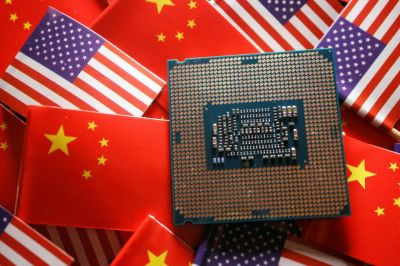
This decision is interpreted as the U.S. authorities acknowledging that isolating China from advanced technology is more difficult than expected in a highly integrated global industry. The strong opposition from many companies, including overseas semiconductor firms, who perceive the U.S. export control measures as interference in business operations, also influenced this outcome. WSJ pointed out that the U.S., foreign semiconductor companies, and governments in Asia and Europe have resisted the regulation, with the strongest criticism coming from Korea, China’s largest export market.
In particular, Deputy Under Secretary Estevez’s remarks drew attention as they came amid strong calls in the U.S. Congress and elsewhere to review the export control waiver to prevent Korean companies from filling the gap left by Micron, a U.S. semiconductor company sanctioned by China. However, the Department of Commerce and Samsung Electronics did not comment on this report.
Currently, the U.S. government is also considering establishing separate equipment import standards for Korean companies operating production activities in China. Since it will take considerable time to set these standards, there is a possibility that the temporary waiver will be extended first, followed by the specification of the standards. The Korean government is also reportedly conveying these companies’ demands to the Department of Commerce and is in consultation to resolve uncertainties. The previously disclosed export control plan requires U.S. companies to obtain permission when selling equipment or technology capable of producing ▲ logic chips using FinFET technology (16nm to 14nm or below) ▲ DRAM of 18nm or below ▲ NAND flash with 128 layers or more to Chinese companies. Foreign companies must also obtain permission if they bring U.S. semiconductor equipment and technology into China.
On the other hand, some in the U.S. criticize that this waiver extension will weaken the U.S. export controls designed to slow China’s technological advancement. Derek Scissors, a senior fellow at the American Enterprise Institute, told WSJ, “If the two giant companies (Samsung and TSMC) can do as they please, technology cannot be controlled,” adding, “The controls look very weak.” Republican Senator Marco Rubio and others urged Commerce Secretary Gina Raimondo in a letter sent on the 30th of last month to strengthen U.S. controls on technology exports, including semiconductors.
© The Asia Business Daily(www.asiae.co.kr). All rights reserved.
![Clutching a Stolen Dior Bag, Saying "I Hate Being Poor but Real"... The Grotesque Con of a "Human Knockoff" [Slate]](https://cwcontent.asiae.co.kr/asiaresize/183/2026021902243444107_1771435474.jpg)















