Payment of 500,000 Yen for Remote Worker Relocation and Pilot Relocation Program
Noted as a Solution to Regional Depopulation Issues
Local governments in Japan, facing regional extinction due to low birthrates and aging populations, are significantly increasing budgets to support migration to remote islands (낙도, rakudo). They are implementing various measures targeting young women and couples, such as trial migration programs called "island study abroad," support for remote workers relocating, child allowances, and childcare hubs. These efforts are showing tangible results, with migration to remote islands being regarded as more effective than most other regional migration support policies.
On the 12th, Nihon Keizai Shimbun (Nikkei) reported that among 14 local governments where the female population increased from 2010 to 2022, over 70% were remote islands. These islands commonly focused on establishing trial migration systems, employment support, and remote work assistance.
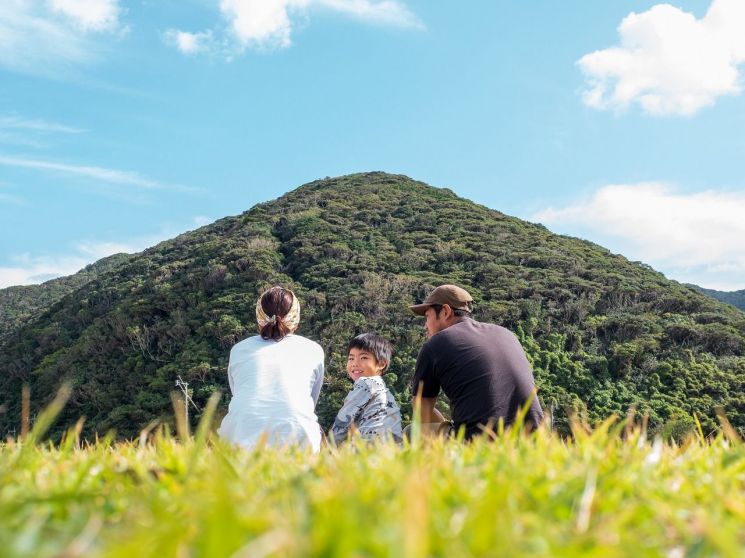 A family who migrated to Goto City, Nagasaki. (Photo source: Nagasaki Prefecture Goto City Migration Related Homepage)
Japan, which views regional extinction as a serious issue, welcomes this trend. The Japan Revitalization Council, composed of leading intellectuals from labor, economic, and other fields to discuss national policies, announced in 2014 that 896 municipalities (basic local governments) were classified as "possible extinction cities," where women in their 20s and 30s were expected to decrease by more than 50% within 10 to 40 years.
Meanwhile, the population moving to remote islands with various support systems is actually increasing, drawing attention. Ama Town (Ama-ch?) in the Oki Islands saw a 19% increase in women aged 20 to 30 last year. This is supported by diverse "island study abroad" programs.
Ama Town established a system to accept families with school-age children and, since 2020, has been running an "adult island study abroad" program where young people aged 20 to 35 work for three months to a year at the village office, fisheries, or forestry to experience island life. The priority is to create a population that stays on the island for a certain period rather than deciding to migrate and settle immediately.
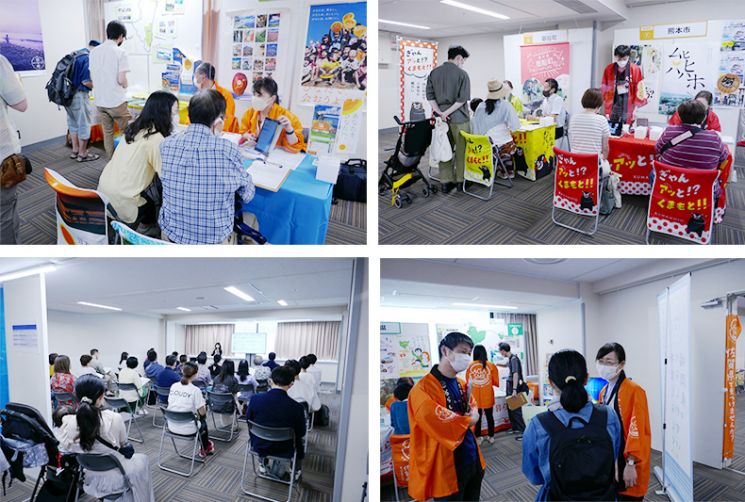
Nishinoshima Town and Chibu Village in the Oki Islands have jointly accepted 100 to 150 people annually through island study abroad programs since last year, with 20% deciding to fully migrate to the islands after studying. A person in their 20s employed in the area told Nikkei, "The nature and people are attractive, and although there are no convenience stores, life is not inconvenient."
Toshima Village in Kagoshima Prefecture, with a total island population of 700, also nearly doubled its young female population. This was due to efforts to establish systems targeting young parents. Toshima Village provides incentives and child allowances to those newly employed in agriculture and fisheries. Additionally, seven inhabited islands have established childcare support hubs. Households with children under 18 can receive childcare support passports, which offer services such as discounts or gifts at stores to accommodate families with children.
The changes in working styles due to COVID-19 have also been advantageous. Toshima Village offers subsidies of up to 500,000 yen (4.62 million won) for people who relocate to the island while working remotely, gaining popularity. A representative from the Japan Remote Islands Center, which deals with remote island issues, said, "Even those working for companies in cities are increasingly considering relocating to islands due to remote work, reflecting a diversification of perceptions."
In addition, Kitaaiki Village in Nagano Prefecture, where 90% of the area is forest, continues local government efforts to attract young people, such as providing moving subsidies to couples under 39.
Nikkei added, "According to statistics from the National Institute of Population and Social Security Research, Japan's total population will decrease by about 70% in 50 years," emphasizing that "sustainable measures are essential amid the financial pressures on local governments caused by low birthrates and aging."
© The Asia Business Daily(www.asiae.co.kr). All rights reserved.


















