Found Unconscious in Prison Cell
Claiming 'Banmunmyeong', Carried Out Bomb Terrorism for 17 Years
Theodore John Kaczynski, known by the nickname "Unabomber," an American bomb terrorist, has died in custody at the age of 81.
According to a report by The New York Times (NYT) on the 10th (local time), the Federal Bureau of Investigation (FBI) stated, "Kaczynski was found unconscious in his cell that morning." The cause of death has not yet been disclosed.
Kaczynski killed three people and injured 23 by sending homemade bombs via packages to American universities and airlines from 1978 to 1995.
Kaczynski was the son of Polish immigrants and was born in Chicago, Illinois, USA. He showed a genius talent in mathematics, entering Harvard University’s mathematics department at age 16 and graduating at 20. After earning a PhD in mathematics from the University of Michigan, he became the youngest assistant professor at the University of California, Berkeley at age 25 in 1967.
After resigning from his professorship after two years, Kaczynski retreated to the forests of Montana in 1973, living alone in a cabin for about five years, shunning civilization, and began his mail bomb terror attacks in 1978.
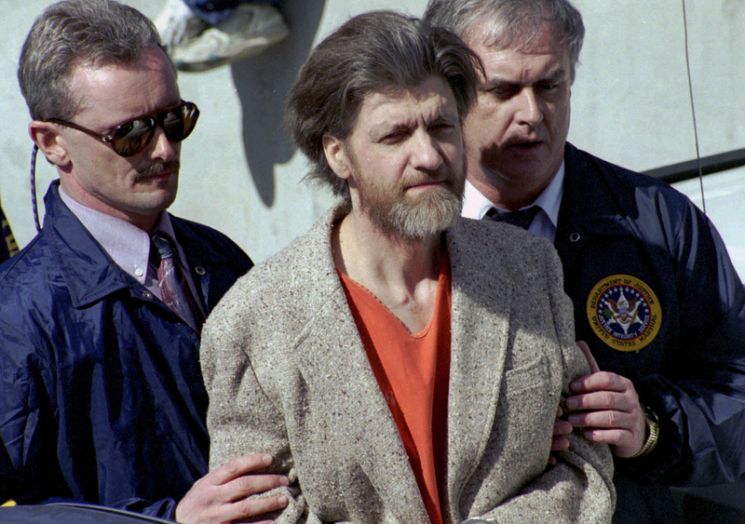
The nickname Unabomber is a portmanteau of University, Airline, and Bomber, reflecting Kaczynski’s primary targets of airports and universities. He demonstrated meticulousness that disrupted police investigations with his high intelligence and excellent judgment, carrying out a total of 16 attacks over 17 years.
Kaczynski committed bomb terror attacks due to his resentment toward technological civilization and industrial society. He believed that the advancement of science and technology and industrialization deprived humanity of dignity and autonomy, ultimately leading to biological annihilation.
In 1995, Kaczynski threatened to continue bomb attacks unless media outlets published his writings. After consultations with the FBI, the media complied, and a 52-page manifesto titled "Industrial Society and Its Future" was published in The New York Times and The Washington Post. In this text, Kaczynski argued that "the advancement of technology will inevitably become a disaster for humanity" and advocated that "industrial society must be overthrown through revolution."
This manifesto became a crucial clue in capturing Kaczynski, whose identity had remained unknown for 17 years. His brother, David Kaczynski, reported to the FBI that the writing style was similar to that of his estranged brother. The FBI arrested him in 1996 while he was living self-sufficiently by hunting and gathering near a river in Montana.
Kaczynski rejected his defense team's suggestion to plead insanity and rationally presented his arguments during the trial, ultimately receiving a life sentence without parole in 1998.
Kaczynski wrote many works expressing his ideology both before his arrest and while in custody, publishing several books. Although the U.S. government tried to block the publication, a federal court ruled that "freedom of the press is more important." Instead, all royalties from the books were ordered to be used as compensation for victims and their families.
© The Asia Business Daily(www.asiae.co.kr). All rights reserved.
![Clutching a Stolen Dior Bag, Saying "I Hate Being Poor but Real"... The Grotesque Con of a "Human Knockoff" [Slate]](https://cwcontent.asiae.co.kr/asiaresize/183/2026021902243444107_1771435474.jpg)















