Published in a Journal of the Royal Society of the United Kingdom
A female crocodile that had not come into contact with a male for 16 years reportedly became pregnant on her own, drawing attention.
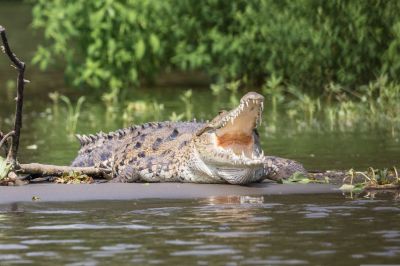
On the 7th (local time), the British BBC reported that a female crocodile, which had been separated from other crocodiles since she was 2 years old, laid eggs in the year she turned 18.
According to the academic journal Biology Letters, published by the Royal Society of the UK, the crocodile laid eggs in January 2018 at the Reptilandia Zoo in Costa Rica, Central America. The offspring developed fully but did not hatch.
In response, the zoo requested an analysis of this phenomenon from Dr. Warren Booth of Virginia Tech in the United States, who has studied parthenogenesis, also known as "virgin birth," for 11 years.
Parthenogenesis refers to a form of asexual reproduction in which a female forms an embryo without fertilization, and it is mainly known to occur when there are problems in the reproductive environment.
Dr. Booth genetically analyzed the heart of the fetus and the skin tissue of the mother crocodile, finding a 99.9% match, and confirmed that there was no male that impregnated the mother.
Parthenogenesis has been observed in species such as sharks, birds, fish, snakes, and lizards, but this is the first case reported in crocodiles.
Dr. Booth explained, "It is a surprisingly common and widespread phenomenon," adding, "The reason parthenogenesis appeared relatively late in crocodilians is because people had no opportunity to find cases."
He continued, "Reports of parthenogenesis have greatly increased since people started keeping pet snakes," but added, "However, reptile keepers do not usually raise crocodiles."
Additionally, Dr. Booth argued that species capable of parthenogenesis may experience population decline and face extinction risks, which could explain the occurrence of this phenomenon.
He also mentioned that, given parthenogenesis is found in a wide variety of species, it is possible that dinosaurs, the ancestors of crocodilians, also reproduced via parthenogenesis.
© The Asia Business Daily(www.asiae.co.kr). All rights reserved.
![Clutching a Stolen Dior Bag, Saying "I Hate Being Poor but Real"... The Grotesque Con of a "Human Knockoff" [Slate]](https://cwcontent.asiae.co.kr/asiaresize/183/2026021902243444107_1771435474.jpg)















