Maturity Extension Extended Until September 2025
Repayment Deferral Ends in September... From October, Repayments Must Follow Bank Plans
Many Borrowers Who Received Maturity Extension and Repayment Deferral Have Already Started Repaying
Financial Services Commission Holds 'Maturity Extension and Repayment Deferral Smooth Transition Status Meeting'
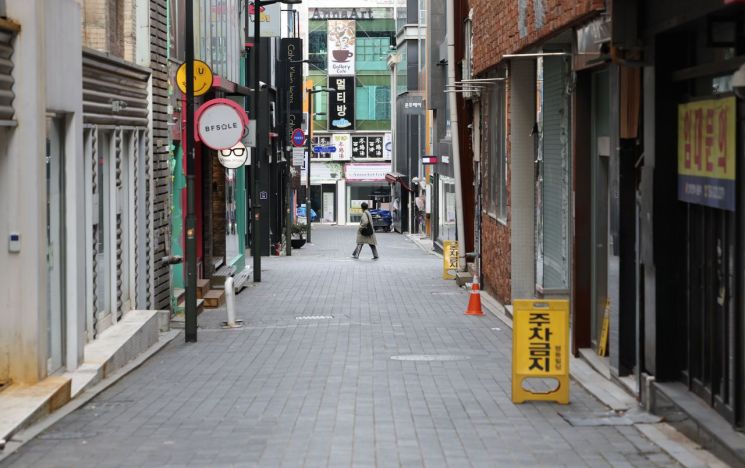
The financial authorities' interest repayment deferral measures for loans to small and medium-sized enterprises (SMEs) and small business owners will end in September, and from October, borrowers must begin repayments according to the repayment plans agreed upon with banks.
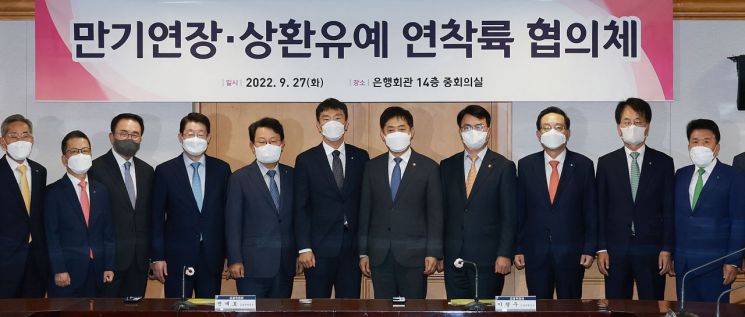
On the afternoon of the 8th, Kim So-young, Vice Chairman of the Financial Services Commission, held a 'Smooth Landing Status Check Meeting for Maturity Extension and Repayment Deferral' at the Government Seoul Office with the Financial Services Commission, Financial Supervisory Service, and Financial Associations to review the smooth landing status of maturity extension and repayment deferral for self-employed individuals.
Borrowers with Repayment Deferral Can Repay in Installments Over 60 Months or More
The maturity extension and repayment deferral measures are systems that extend the maturity and defer principal and interest repayments on loans for SMEs and small business owners experiencing temporary liquidity difficulties due to COVID-19. These measures were first implemented in April 2020 and have been extended every six months.
Currently, they are being operated according to the 'Smooth Landing Support Plan for Maturity Extension and Repayment Deferral Measures' announced during the fifth extension in September 2022. At that time, maturity extension (covering 92% of supported loan balances) was extended for an additional three years (until September 2025).
For repayment deferral (principal deferral accounts for 6% of supported loan balances, interest deferral 2%), the government measures will end this September. From October, borrowers must repay their debts by September 2028 according to the repayment plans previously prepared with their banks. The repayment plans allow financial institutions and borrowers to agree on a grace period (one year) and enable installment repayments over up to 60 months until September 2028.
As of the end of March, among borrowers using repayment deferral, 14,637 are subject to establishing repayment plans. Of these, 14,350 (98%) have completed their repayment plans.
Outstanding Loan Balances for Maturity Extension and Repayment Deferral Decrease... FSC Says "Smooth Landing Underway"
Borrowers who received maturity extension and repayment deferral have started repaying their loans. Compared to the end of September last year, loan balances decreased by about 15 trillion KRW and the number of borrowers decreased by about 46,000 by the end of March this year. Specifically, as of the end of September 2022, the amount and number of borrowers using maturity extension and repayment deferral were approximately 100 trillion KRW and about 430,000, respectively, but by the end of March this year, these figures decreased to about 85 trillion KRW and about 390,000 borrowers.
Kwon Ju-seong, Policy General Manager at the FSC, stated, "The smooth landing is progressing well due to improved liquidity, business condition improvements, repayment completions using low-interest refinancing loans, financial sector's own debt restructuring, and the New Start Fund."
During the same period, the outstanding loan balance for maturity extension decreased from 90.6 trillion KRW to 78.8 trillion KRW, a reduction of 11.9 trillion KRW. Among borrowers using maturity extension, 87.4% (10.4 trillion KRW) of the reduced loan balance was repaid by borrowers who improved their liquidity due to better business conditions or used low-interest refinancing loans. The remaining 13% consisted of 1.2 trillion KRW from financial sector's own debt restructuring and 13.3 billion KRW from the New Start Fund. Borrowers using maturity extension are currently paying interest normally, which is similar to the usual loan practice where maturity is extended (roll-over) when interest payments are made on time.
The outstanding loan balance for principal repayment deferral decreased from 7.4 trillion KRW to 5.2 trillion KRW, a reduction of 2.2 trillion KRW. Of the reduced loan balance, 36.4% (800 billion KRW) was fully repaid. 54.1% (1.2 trillion KRW) began repayment due to improved business conditions, refinancing loans, or the burden of some accumulated deferred principal and interest.
The outstanding loan balance for interest repayment deferral decreased from 2.1 trillion KRW to 1.4 trillion KRW, a reduction of 700 billion KRW. Of this, 35.4% (250 billion KRW) was fully repaid, and 51.5% (360 billion KRW) began repayment. However, it is understood that some borrowers started repayment due to delinquency or business closure.
Kim So-young, Vice Chairman of the Financial Services Commission, said, "To address related inconveniences such as the preparation of repayment plans by borrowers using maturity extension and repayment deferral, and difficulties faced by borrowers wishing to link with financial sector's own debt restructuring and the New Start Fund, the Financial Supervisory Service has opened a 'COVID-19 Financial Support Special Counseling Center' and will continue to monitor the situation." She also urged, "Financial institutions should also prepare repayment plans through consultations with borrowers to ensure borrowers can achieve a smooth landing."
© The Asia Business Daily(www.asiae.co.kr). All rights reserved.
![Clutching a Stolen Dior Bag, Saying "I Hate Being Poor but Real"... The Grotesque Con of a "Human Knockoff" [Slate]](https://cwcontent.asiae.co.kr/asiaresize/183/2026021902243444107_1771435474.jpg)
















