US Forecasts $1 Trillion Treasury Issuance by September
Concerns Over Bank Deposit Outflows Due to Market Liquidity Absorption
As the United States increases the federal government's debt ceiling, it is expected to issue over $1 trillion (approximately 1,307 trillion KRW) in government bonds, raising concerns that it could become a black hole that sucks up market funds. Pressure on the banking sector, which has experienced deposit outflows following the Silicon Valley Bank (SVB) collapse, is intensifying, spreading fears that some liquidity-vulnerable banks may collapse.
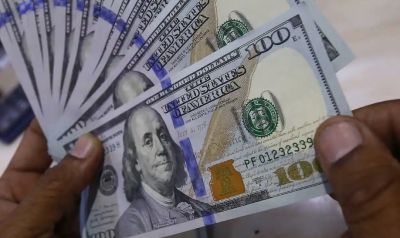
On the 7th (local time), JP Morgan estimated that the U.S. Treasury will issue about $1.1 trillion (approximately 1,438 trillion KRW) in short-term government bonds by the end of this year. Combining forecasts from other banks, the issuance of government bonds is expected to reach $1 trillion by September.
The market is concerned that the massive issuance of government bonds exceeding $1 trillion will flood the financial market, driving investors toward short-term government bonds and drying up funds in the banking sector. If U.S. Treasury bonds absorb liquidity from the market, the cost of funding for banks will rise, potentially leading to a depletion of bank funds. Experts predict that the large-scale issuance of government bonds will have the effect of raising interest rates by 0.25 to 0.5 percentage points.
Jenaidi Goldberg, a strategist at TD Securities, said, "Everyone knows that a flood of U.S. Treasury bonds is coming," adding, "Because of this flood, bond prices will become cheaper, and yields will rise. This is expected to put pressure on banks." TD Securities also expects the scale of U.S. government bond issuance this time to be the largest since crisis situations such as the 2008 financial crisis and the 2020 COVID-19 pandemic.
As concerns spread, government bond yields have already risen. The yield on the 1-year U.S. Treasury bond has moved from 4.871% in early last month to around 5.22% currently. The 2-year U.S. Treasury bond yield rose from 4.141% to 4.55% during the same period. Gregory Peters, Co-Chief Investment Officer (CIO) of PGIM Fixed Income, said, "Bond yields have already started to rise due to the expected increase in supply," adding, "With interest rate hikes and regional bank failures causing customers to seek other high-yield alternatives, this movement could increase pressure related to U.S. bank deposit outflows."
U.S. banks have already been struggling with deposit outflows since the SVB collapse in March. The withdrawn deposits have been flowing into money market funds (MMFs) that invest in corporate bonds and government bonds. According to the Investment Company Institute (ICI), MMF net assets surged from $4.8 trillion (approximately 6,276 trillion KRW) at the beginning of the year to $5.4 trillion (approximately 7,060 trillion KRW) in May, marking an all-time high.
Some predict that the 'bombshell' U.S. Treasury bond issuance in the financial market could lead to the collapse of some vulnerable banks. Goldberg said, "We could see two or three unprepared banks suffer," adding, "Fear could seep into the banking system, and problems may start to arise."
© The Asia Business Daily(www.asiae.co.kr). All rights reserved.
![Clutching a Stolen Dior Bag, Saying "I Hate Being Poor but Real"... The Grotesque Con of a "Human Knockoff" [Slate]](https://cwcontent.asiae.co.kr/asiaresize/183/2026021902243444107_1771435474.jpg)















