Canada raises interest rates three months after pausing tightening
Australia returns to tightening mode after pausing rate hikes
US rate decision on 15th in focus... May CPI is key
The Bank of Canada (BOC), which had declared a pause in monetary tightening, has raised its key interest rate for the first time in three months. Following Australia, Canada has resumed efforts to curb inflation, raising concerns that the U.S. Federal Reserve (Fed) might choose additional tightening instead of holding rates steady at next week's meeting.
On the 7th (local time), the BOC raised its key interest rate by 0.25 percentage points from 4.5% to 4.75% at its monetary policy meeting. This is the highest level in 22 years.
Previously, after raising rates in January, the BOC was the first among the Group of Seven (G7) countries to announce a pause in tightening. It decided to hold rates steady at the March monetary policy meeting and maintained them in April and May, but reversed course to raise rates again after three months.
The persistent inflation, which seems difficult to control, is cited as the reason for the renewed tightening. Canada's inflation rate rose from 4.3% in March to 4.4% in April. The core inflation rate, which excludes volatile items such as energy and food, has remained between 3.5% and 4% for several months, significantly exceeding the target of 2%. The first quarter growth rate also came in at 3.1%, surpassing the initial forecast of 2.3%, indicating that the economy remains robust.
The BOC explained the reason for the rate hike, stating, "Overall, excess demand in the economy appears to be more persistent than expected," and "monetary policy is not sufficiently restrictive to restore the balance between supply and demand and bring inflation back to the 2% target."
The day before, Australia also raised its interest rate. The Reserve Bank of Australia (RBA) increased rates by 0.25 percentage points from 3.85% to 4.1%. After holding rates steady in March and April, it decided on consecutive tightening moves last month and this month. The persistent inflation fire, which has been difficult to contain, led to a revision of the rate path and continuation of the tightening stance. Australia's inflation rate in April reached 6.8%, higher than Canada's. Philip Lowe, Governor of the RBA, explained right after raising the key rate to 4.1%, "Additional tightening may be necessary to bring inflation back to the target within a reasonable timeframe."
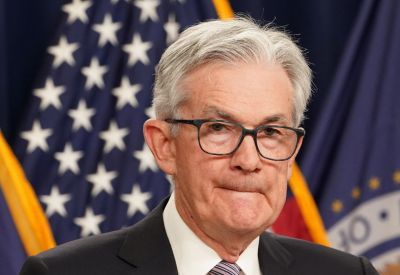
In the market, concerns are growing that the Fed may choose additional tightening instead of holding rates steady. The trend of the May consumer price index, to be released two days before the Federal Open Market Committee (FOMC) meeting on the 15th of this month, is expected to be crucial. If inflation does not slow down significantly, the Fed's tightening stance could become more aggressive. On that day, bond yields sensitive to monetary policy (2-year at 4.55%, 10-year at 3.79%) showed an upward trend. According to the Chicago Mercantile Exchange (CME) FedWatch tool, the federal funds futures market currently shows more than a 50% chance that the Fed will hold rates steady this month but raise them next month.
Oscar Munoz, Chief U.S. Macro Strategist at TD Securities, stated, "(The Fed) will allow the economy to continue expanding beyond trend the longer it delays raising rates," adding, "The longer the decision is postponed, the harder it may become to reduce inflation."
© The Asia Business Daily(www.asiae.co.kr). All rights reserved.
![Clutching a Stolen Dior Bag, Saying "I Hate Being Poor but Real"... The Grotesque Con of a "Human Knockoff" [Slate]](https://cwcontent.asiae.co.kr/asiaresize/183/2026021902243444107_1771435474.jpg)
















