Strategy Document, 107 Pages with 8 Chapters
Development of Cooperative Diplomacy Based on Freedom and Solidarity, Pursuit of Practical Diplomacy
Building Sustainable Peace on a Firm Security Foundation
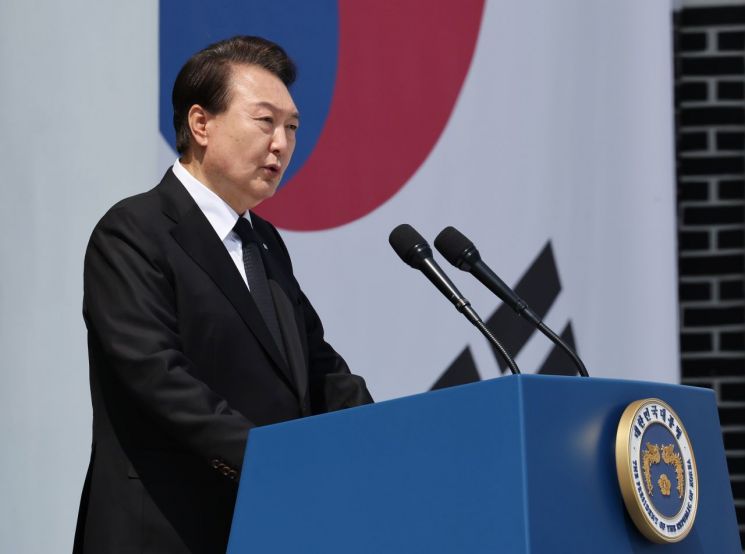
President Yoon Suk-yeol stated on the 7th, regarding the national security strategy of the Yoon Suk-yeol administration published by the Presidential Office titled 'National Security Strategy of the Yoon Suk-yeol Government: A Global Hub Nation of Freedom, Peace, and Prosperity,' that "the Republic of Korea requires an active and comprehensive strategy that designs and prepares for tomorrow in order to proactively secure national security and national interests." President Yoon particularly emphasized, "The key to determining the nation's future lies in establishing a national security strategy that anticipates upcoming changes and maximizes the interests of the country and its people."
In the preface of the national security strategy published that day, President Yoon remarked, "In the face of the whirlwind of change, national security must no longer remain a passive and limited concept focused solely on preventing external invasions."
President Yoon also stressed, "As a global hub nation, the Republic of Korea aims to actively respond to the rapidly changing security environment based on the spirit of freedom and solidarity," adding, "Furthermore, we will build sustainable peace guaranteed by freedom and prosperity based on robust security, rather than a fragile peace that merely avoids war temporarily."
Spanning 107 pages and composed of eight chapters, this strategy document includes evaluations of security issues not only in Northeast Asia but also worldwide, such as the intensifying strategic competition between the U.S. and China, North Korea's advanced nuclear and missile capabilities, supply chain instability, climate change, pandemics, and cyber threats. Since the Roh Moo-hyun administration, successive governments have published national security strategy documents shortly after their inauguration, reflecting the changed security environment and government policy direction.
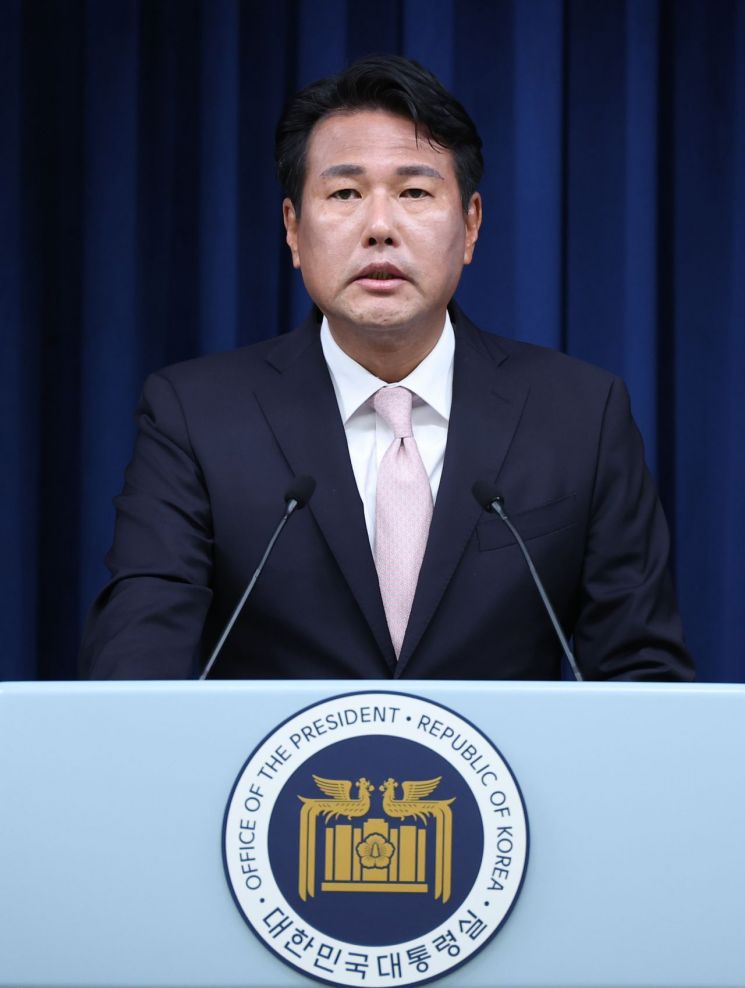
Kim Tae-hyo, First Deputy Director of the National Security Office, emphasized during a briefing held at the Yongsan Presidential Office that "the foreign and security strategic direction of the Yoon Suk-yeol government pursues cooperative diplomacy based on freedom and solidarity while seeking national interests and pragmatic diplomacy," and introduced in detail the directions of the strategy in the fields of ▲ diplomacy and security ▲ defense ▲ inter-Korean relations ▲ economic security.
Deputy Director Kim first highlighted, "The primary task in the diplomacy and security sector is to uphold the international order based on universal human values and norms," noting that this includes building a comprehensive global strategic alliance with the U.S., normalizing Korea-Japan relations, and security cooperation among Korea, the U.S., and Japan. He also introduced leading roles through multilateral diplomacy such as the United Nations, NATO, G20, G7 diplomacy, and ASEAN diplomacy as part of the tasks.
The strategy document identifies three major national security goals: ▲ protecting national sovereignty and territory and enhancing citizen safety ▲ establishing peace on the Korean Peninsula and preparing for unification ▲ laying the foundation for East Asian prosperity and expanding global roles. To achieve these, Deputy Director Kim introduced efforts in the defense sector such as building active peace through strength, establishing the Korean-style three-axis system (Kill Chain, Missile Defense System, Massive Punishment and Retaliation), and practical extended deterrence.
Regarding inter-Korean relations, Deputy Director Kim stated, "First, we seek to build a relationship of mutual respect and trust; second, we prioritize North Korea's denuclearization while pursuing the 'Bold Initiative' and guiding overall inter-Korean relations in line with our direction," adding, "Humanitarian issues will also be pursued together." He further explained, "Humanitarian issues will include human rights, separated families, North Korean detainees, prisoners of war, and abductees."
To proactively secure economic security interests, Deputy Director Kim explained that stabilizing supply chains, promoting and protecting emerging technologies, and preemptively responding to new security issues are essential. He emphasized active participation in international discourse and the creation of international norms regarding climate crises, health crises, and cyber security crises, linking these efforts to economic benefits necessary for Korea.
A senior official from the Presidential Office, speaking to reporters about the differences from the previous Moon Jae-in administration, said, "The previous government devoted a great deal of attention and time to the Korean Peninsula over five years. Our current government approaches the same Korean Peninsula issues with a difference: we consider the mainstream global perspectives, major allied forces, and have established a consensus on values and interests among allies capable of consolidating security capabilities. The current government places emphasis on moving much more proactively and preemptively on global issues."
The National Security Office plans to distribute 10,000 copies of the strategy booklet (7,000 in Korean and 3,000 in English) domestically and internationally.
© The Asia Business Daily(www.asiae.co.kr). All rights reserved.


















