1200 Bq Cesium Detected in Juno-raemi in April
Concerns Raised Over Safety of Seawater Used for Diluting Contaminated Water
As the discharge of contaminated water from Japan's Fukushima Daiichi Nuclear Power Plant into the ocean enters its final countdown, controversy has arisen after high concentrations of cesium?180 times the country's standard?were detected in rockfish caught at a nearby harbor. Japan plans to use seawater from Fukushima to dilute the contaminated water during the discharge process, but the possibility that this seawater is also contaminated has become difficult to rule out.
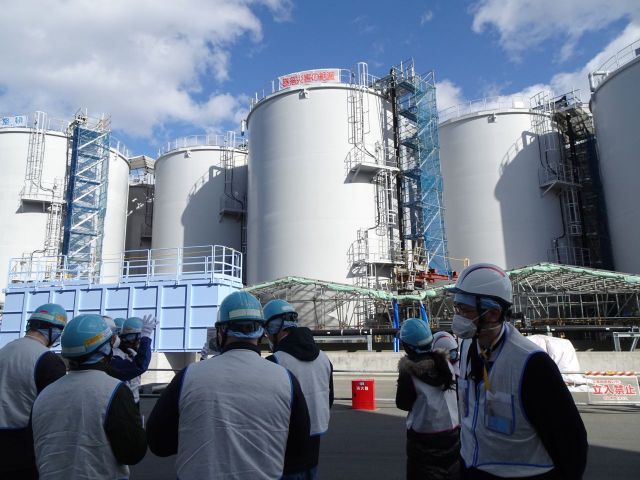
According to the Mainichi Shimbun on the 7th, Tokyo Electric Power Company (TEPCO) announced on the 5th that radioactive cesium measuring 18,000 becquerels (Bq) was detected in rockfish caught last month within the Fukushima nuclear plant harbor. This level is 180 times the limit set by Japan's Food Sanitation Act (1 Bq per kg). The rockfish measured 30.5 cm in length and weighed 384 g.
Earlier in April, cesium measuring 1,200 Bq was also detected in a black rockfish caught at the same location. TEPCO explained that the fishing area is surrounded by breakwaters for reactors 1 to 4, causing seawater with high concentrations of radioactive substances to flow in. Mainichi reported that TEPCO is taking measures such as installing multiple nets to prevent fish from leaving the harbor.
However, concerns continue within Japan. Even if the movement of contaminated fish is blocked, it is practically impossible to prevent the movement of seawater. Since 2016, the Japanese government has claimed to have constructed an ice wall surrounding reactors 1 to 4 at Fukushima Daiichi to prevent additional groundwater inflow and the external leakage of contaminated water. However, since the ice wall was installed in 2016, there have been continuous incidents of coolant leakage from pipe joints and partial loss of function in some sections. This means it is difficult to exclude the possibility that nearby seawater has already been contaminated.
These concerns were raised during discussions on related issues, but TEPCO has yet to establish clear countermeasures. Fukushima Television (TV), a local broadcaster, reported that at a Nuclear Safety Confirmation Technology Review Meeting involving Fukushima Prefecture, nuclear experts, and TEPCO, experts demanded additional explanations from TEPCO, asking, "What will you do if high concentrations of radioactive substances are detected in the seawater used to dilute the contaminated water?" They inquired about the response plans if problems arise during the pre-discharge process.
However, a TEPCO official responded, "Currently, there is no condition to decide to suspend the discharge based on the concentration of radioactive substances in the intake seawater," adding, "We will consider all possibilities, including what kind of abnormalities may occur."
© The Asia Business Daily(www.asiae.co.kr). All rights reserved.
![Clutching a Stolen Dior Bag, Saying "I Hate Being Poor but Real"... The Grotesque Con of a "Human Knockoff" [Slate]](https://cwcontent.asiae.co.kr/asiaresize/183/2026021902243444107_1771435474.jpg)















