OB Beer to Use 25% Recycled PET by 2024
Coca-Cola and Lotte Chilsung Launch Products with Recycled PET
The beverage industry is accelerating the introduction of recycled PET bottles to increase the plastic recycling rate.
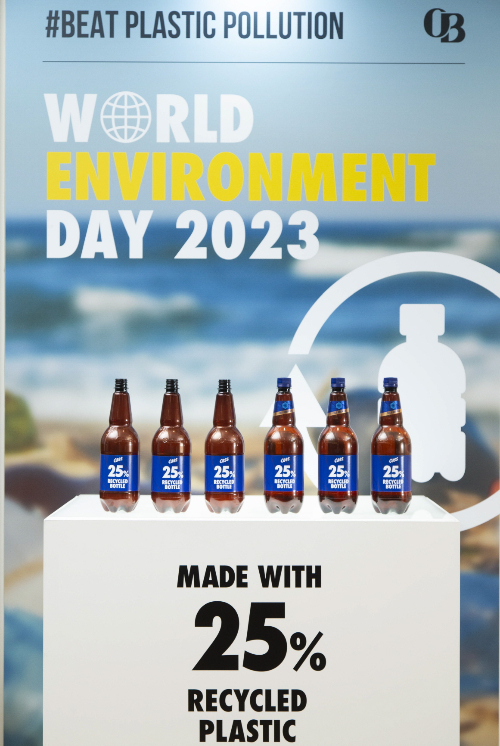
According to the industry on the 6th, OB Beer will replace its existing PET bottle products with chemically recycled PET (rPET) containing 25% recycled plastic by 2024.
There are two main methods of recycling waste plastic: chemical recycling and physical recycling. Chemically recycled PET bottles are not made by melting waste plastic but by chemically breaking it down to extract pure raw materials, which are then used for manufacturing. This technology is key to enabling repeated use and establishing a plastic resource circulation system.
OB Beer expects to reduce its annual plastic usage by up to 1,000 tons in the future. An OB Beer representative said, “OB Beer is the first in the beer industry to use chemically recycled PET bottles,” adding, “We plan to steadily increase the proportion of chemically recycled plastic raw materials to improve the recyclability of PET bottles and also explore recycling methods for other packaging materials such as beer labels, bottle caps, and paper-based outer packaging.”
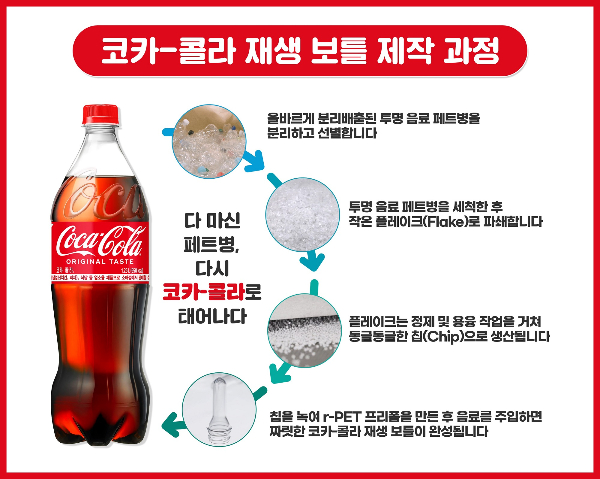
Products using physically recycled PET bottles are also being introduced to the market. Coca-Cola recently launched recycled PET bottle products containing 10% recycled plastic made from beverage PET bottles used domestically, applied to the existing Coca-Cola and Coca-Cola Zero 1.25ℓ products. Earlier, Lotte Chilsung Beverage also introduced the eco-friendly recycled PET ‘Isis 8.0 ECO’ 1.5L, made by physically recycling waste plastic.
Last year, the Ministry of Environment and the Ministry of Food and Drug Safety established the ‘Food Container Recycled Material Standards,’ allowing transparent PET bottles to be recycled into food containers, accelerating the beverage industry’s adoption of recycled PET bottles. Until then, recycling waste PET bottles into food containers was restricted in Korea due to safety and hygiene concerns, but the new standards have made this possible.
Physically recycled PET bottles are produced by heating recycled raw material flakes made according to the Ministry of Environment’s standards, which include waste plastic collection, color sorting, shredding, washing, and drying. Since the chemical structure of the plastic is not altered, the production process is relatively simple. The production cost of PET bottle products made by physical recycling is about 1.5 times that of regular PET bottle products.
In addition to recycled PET bottles, no-label PET bottle products, which have been spreading mainly in the bottled water industry since last year due to their ease of separation and disposal, are now expanding to tea beverages. Hite Jinro Beverage launched the no-label black barley tea beverage ‘Black Barley’ this month. A Hite Jinro Beverage official said, “The application of no-label packaging is expected to be a catalyst for Black Barley to establish itself as a water substitute tea beverage,” adding, “We will continue to expand eco-friendly products to fulfill our environmental responsibilities as a beverage company.”
© The Asia Business Daily(www.asiae.co.kr). All rights reserved.
![Clutching a Stolen Dior Bag, Saying "I Hate Being Poor but Real"... The Grotesque Con of a "Human Knockoff" [Slate]](https://cwcontent.asiae.co.kr/asiaresize/183/2026021902243444107_1771435474.jpg)
















