Harada Yutaka, Professor at Nagoya Sangyo University, Contribution
"Japan's Entertainment Influence Strong, Causing Vicious Cycle
Korean Dramas' Grammar Diversified After Netflix"
A Japanese university professor pointed out that the excessive influence of powerful figures dominating the Japanese entertainment industry has led to sexual violence incidents and, furthermore, has become the cause of the decline in competitiveness of Japanese dramas.
On the 4th, the online edition of the Japanese economic media Gendai Business published a column titled "Revealed by the Johnny's Sexual Violence Issue... The Real Reason Japanese Dramas Lost to 'Manga' and 'Korea'," written by Harada Yutaka, a former deliberation committee member of the Bank of Japan (central bank) and a professor at Nagoya Sangyo University Business School.
 A large screen in Tokyo, Japan, on July 10, 2019, reporting the death of Johnny Kitagawa, a giant in the Japanese entertainment industry.
 [Photo by EPA·Yonhap News]
He pointed out, "The sexual violence case of the late Johnny Kitagawa (1931?2019) is becoming a hot topic," and added, "The power structure that has long concealed sexual violence problems is precisely what has made Japanese TV trivial."
Last March, the BBC exposed through a documentary that Johnny Kitagawa, the representative of "Johnny's Office," who was credited with "building the Japanese idol kingdom," sexually abused teenage boys during his lifetime.
Kitagawa sexually harassed teenage trainee boys called "Juniors," using his debut decision authority as leverage, and continued sexual abuse including having sexual relations. It was also revealed that the media and broadcasting industry turned a blind eye to Kitagawa's atrocities out of fear of retaliation from Johnny's.
Professor Harada explained, "It is natural to leave the selection of drama roles to producers or directors on site, but as the power of entertainment companies like Johnny's grew stronger, the discretion of the field weakened," adding, "As a result, the motivation on site weakened, and the quality of dramas declined."
He evaluated, "The reason entertainment companies have been able to exert influence over drama casting might be because no one truly knows who the most suitable actors are. However, precisely because of that, casting should be handled by directors who have a firm awareness of the quality of the drama."
He continued, "If this process is not properly carried out, the power of those who can select cast members becomes stronger, which leads to sexual violence," and added, "This is probably why there is so much sexual violence in the entertainment industry."
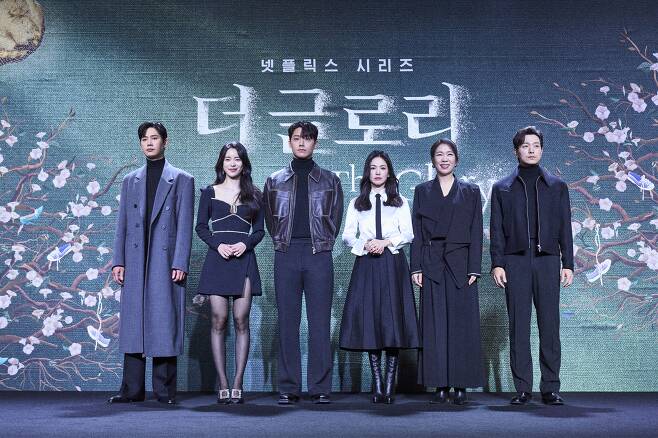 Netflix drama
 Professor Harada criticized the vicious cycle of the Japanese entertainment industry, saying, "If the dominance of entertainment companies becomes stronger and surpasses the power of producers, directors, and playwrights on site, the field will gradually lose motivation," and "What will follow is a surge in drama production costs and a decline in quality."
In particular, he explained that the Japanese manga industry does not have such a power structure visible, so high-quality works continue to be produced. He also mentioned that Korean dramas have shown more distinctive characteristics after the emergence of a new sponsor and producer, Netflix, breaking away from the existing conventions.
He pointed out, "There are countless Korean dramas on Netflix, but Japanese dramas are not visible," and said, "Drama production should be a free competition arena for talent, and there must be a clear accountability system regarding the quality of works."
He concluded his article by saying, "I sincerely hope that the Japanese drama industry will change through this sexual violence issue."
© The Asia Business Daily(www.asiae.co.kr). All rights reserved.
![Clutching a Stolen Dior Bag, Saying "I Hate Being Poor but Real"... The Grotesque Con of a "Human Knockoff" [Slate]](https://cwcontent.asiae.co.kr/asiaresize/183/2026021902243444107_1771435474.jpg)
















