Cement Company Announces Price Increase
Ready-Mix Concrete and Construction Industries Immediately Oppose
Construction Costs Rise for Zero-Energy Buildings
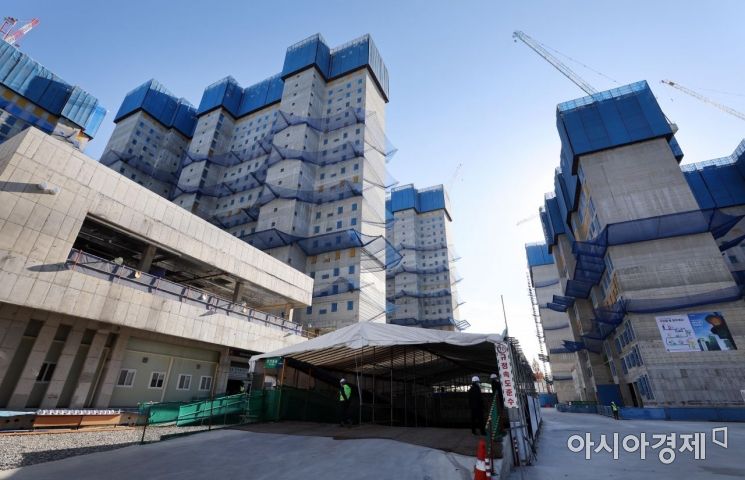 The view of the Dunchon Jugong Apartment reconstruction site in Gangdong-gu, Seoul. Photo by Hyunmin Kim kimhyun81@
As cement manufacturers are successively pushing for price increases, the ripple effects are spreading to construction sites. Amid a sluggish real estate market, concerns are rising that increased construction costs and other expenses could lead to a contraction in housing supply. The cement industry is expected to face ongoing medium- to long-term price pressures as it undertakes structural improvements to reduce carbon emissions.
On the 2nd, Sungshin Cement sent an official letter to the ready-mix concrete industry and others, announcing a cement price increase starting next month. The price of Type 1 bulk cement, currently 105,000 KRW per ton, will be raised to 120,000 KRW, a 14.3% increase. This is the second cement price hike announcement this year, following the 14.1% increase declared by Ssangyong C&E, the industry leader.
Both companies posted operating losses in the first quarter of this year. Ssangyong C&E recorded a loss of 1.73 billion KRW, and Sungshin Cement a loss of 4.9 billion KRW. Other companies such as Hanil, Asia Cement, and Sampyo Cement, which posted profits, are reportedly internally weighing whether to raise prices. Over the past two years, cement companies have implemented three price hikes, pushing the price from around 75,000 KRW per ton in June 2021 to about 105,000 KRW currently, an increase of approximately 40%. If the price rises to 120,000 KRW this time, it will represent a 60% surge over two years. The industry appeals that the increase in electricity costs, which account for 20% of manufacturing costs, makes the price hike inevitable.
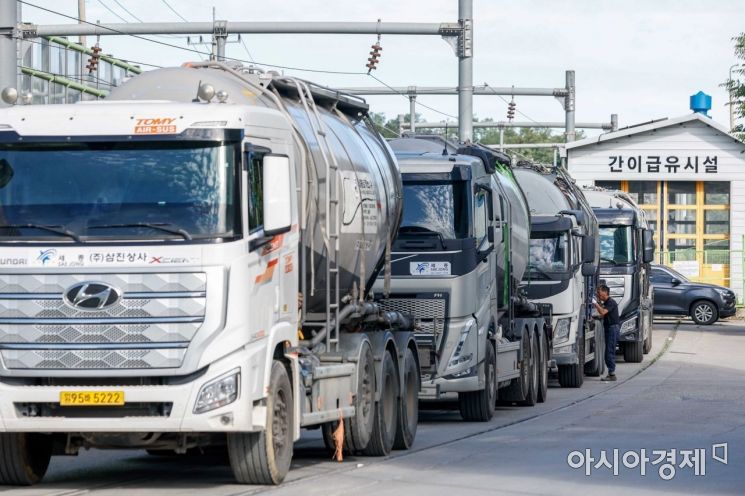
The ready-mix concrete industry, which must immediately procure cement, is protesting, calling the move incomprehensible. A ready-mix concrete industry official criticized, "The price of thermal coal, which was a factor in last year's price increase, has dropped from the 400-dollar range per ton to below 170 dollars," adding, "The situation actually calls for a reduction in cement prices."
The construction industry, which must negotiate prices with ready-mix concrete companies, is equally troubled. Recently, conflicts over construction costs have arisen nationwide due to rising prices of raw materials such as rebar and ready-mix concrete, as well as labor costs, and the cement price increase adds insult to injury. There are concerns that the surge in construction costs will lead to higher sale prices, ultimately harming housing demand. In response, a cement company representative explained, "The average sale price of a 30-pyeong apartment nationwide is 420 million KRW, and the cement cost per household is 2.1 million KRW," adding, "The proportion of cement cost relative to the sale price is a negligible 0.48%."
However, aggressive price increase efforts by cement companies are expected to continue. Achieving the national goal of carbon neutrality by 2050 requires comprehensive investments to reduce carbon emissions during the cement manufacturing process. Last year, representatives of major cement companies visited cement firms in Belgium and other European countries leading decarbonized management to benchmark their business strategies. A cement industry official explained, "Not only recycling of circular resources but also investments in eco-friendly facilities to reduce emissions and future carbon capture, utilization, and storage (CCUS) technologies are unavoidable factors driving cement price increases."
Meanwhile, the government’s recent push for 'zero-energy buildings' is making construction costs inevitably soar. With the introduction of zero-energy building standards, private apartment projects applying for approval must enhance insulation performance and renewable energy utilization to achieve an energy self-sufficiency rate of over 20%. As a result, construction costs for apartment reconstruction projects, which typically cost around 7 million KRW per 3.3㎡, are expected to exceed 10 million KRW in the future. Low-carbon, eco-friendly energy costs are thus driving up overall construction expenses, including cement prices.
© The Asia Business Daily(www.asiae.co.kr). All rights reserved.
![Clutching a Stolen Dior Bag, Saying "I Hate Being Poor but Real"... The Grotesque Con of a "Human Knockoff" [Slate]](https://cwcontent.asiae.co.kr/asiaresize/183/2026021902243444107_1771435474.jpg)

















