OPEC+ Regular Ministerial Meeting
"Measures to Stabilize the Global Oil Market"
Saudi Arabia has decided to cut crude oil production by an additional 1 million barrels per day starting next month to support oil prices. Major member countries of the oil-producing nations' group 'OPEC Plus (OPEC+)' have agreed to extend the voluntary production cut period until the end of next year.
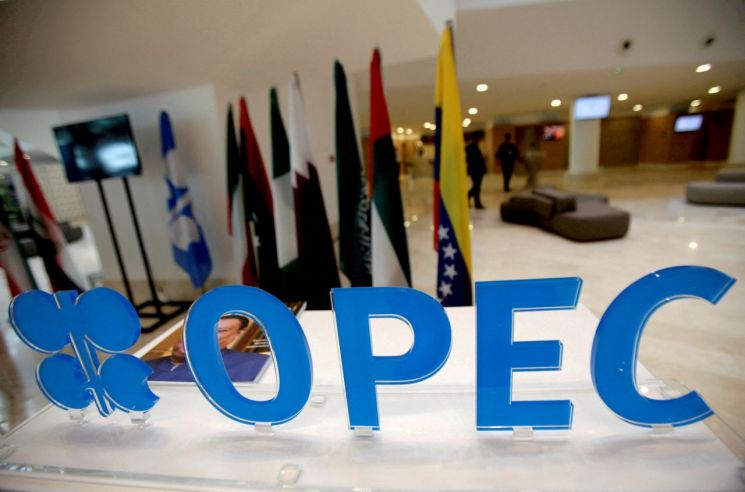
According to major foreign media on the 4th (local time), OPEC+ issued a statement containing this information after its regular ministerial meeting that day. OPEC+ refers to the consultative group of the Organization of the Petroleum Exporting Countries (OPEC) and major non-OPEC oil-producing countries such as Russia.
OPEC+ agreed to reduce daily crude oil production to 40.46 million barrels from January next year, which is 1.4 million barrels less than the current level.
Saudi Arabia announced that it would reduce its daily crude oil production from 10 million barrels in May to 9 million barrels in July. This is a follow-up measure after voluntarily cutting production by 500,000 barrels per day since last month. Saudi Energy Minister Abdulaziz bin Salman stated, "We will take all necessary measures to stabilize this market."
Russia, which has also been voluntarily cutting production by 500,000 barrels per day since March, decided on the same day to extend the production cut period until the end of next year. Russian Deputy Prime Minister Aleksandr Novak told reporters, "There was no difference of opinion with Saudi Arabia in deciding the oil production policy."
Other OPEC+ countries, including the United Arab Emirates (UAE), also agreed to continue restraining oil production until the end of next year. OPEC+ accounts for 40% of the world's oil production.
OPEC+ stated that the production cut measures are decisions aimed at stabilizing the global oil market.
International oil prices were expected to rise this year, supported by China's reopening (resumption of economic activities). However, oil prices have remained weak as China's economic recovery has been slower than expected. Additionally, the application of a price cap on Russian oil by the West, including the United States and Europe, at the end of last year, and Russia selling oil at low prices have also pushed prices down. After OPEC+ announced production cuts in April, oil prices rose to around $90 per barrel but then weakened again, falling to the $70 range last week.
The Wall Street Journal (WSJ) reported, "This move came amid rising tensions between Saudi Arabia and Russia, the world's largest oil producers," adding, "Although both sides agreed on production cuts earlier, Russia's large supply of cheap oil to the market has undermined Saudi Arabia's efforts to support energy prices."
Bob McNally, CEO of energy consulting firm Rapidan, analyzed, "In the short term, oil prices will be a battle of wills," adding, "It depends on the fight between Saudi Arabia, which seeks stability (price increases), and traders betting on weakness."
Previously, OPEC+ member countries agreed in October last year to cut production by 2 million barrels per day, and in April this year, some members decided to voluntarily cut additional production. Combining the voluntary cuts led by Saudi Arabia and Russia with the existing cuts amounts to a total of 3.66 million barrels per day, equivalent to 4% of global oil demand.
© The Asia Business Daily(www.asiae.co.kr). All rights reserved.
![Clutching a Stolen Dior Bag, Saying "I Hate Being Poor but Real"... The Grotesque Con of a "Human Knockoff" [Slate]](https://cwcontent.asiae.co.kr/asiaresize/183/2026021902243444107_1771435474.jpg)















