A pilot project for non-face-to-face medical consultations centered on returning patients will begin on the 1st. As legislation for non-face-to-face medical consultations is expected to be promoted based on the results of the pilot project, debates between the medical community and the industry are expected to continue during the government's proposed three-month grace period. The main issues are the limited scope of first-time consultations and additional fees.
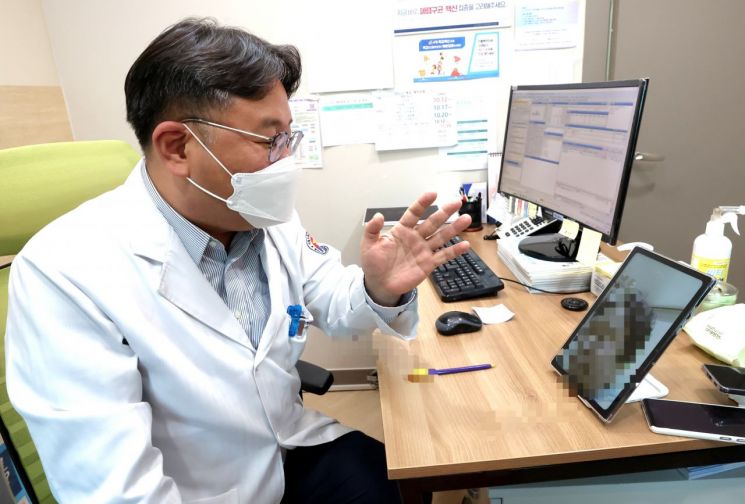 A scene of non-face-to-face medical treatment being conducted at a local clinic.
 [Photo by Ministry of Health and Welfare]
The most contentious issue in the plan to promote the non-face-to-face medical consultation pilot project was whether first-time consultations for pediatric and adolescent patients would be allowed. After much deliberation, the government included a compromise that permits non-face-to-face consultations for pediatric patients during vulnerable times such as weekends and nights, but prescriptions are not allowed. Pediatric patients who suddenly need medical attention during nights or holidays can explain their symptoms and receive medical advice through non-face-to-face consultations even if they have no prior face-to-face consultation history, but prescriptions cannot be issued. To receive a prescription, they must either visit a pediatric clinic in person or have a face-to-face consultation history within 30 days at a medical institution to qualify for non-face-to-face consultation.
This measure is meaningful in that it allows assessment through consultation on whether an emergency room visit is necessary, but it has also been evaluated as a 'half-measure' that neither the medical community nor the industry is satisfied with. The Remote Medical Industry Council (WonSanHyeop), which includes platform companies, criticized, "The ban on non-face-to-face prescriptions for pediatric patients during nights and holidays is a decision that ignores the hardships of parenting households," and added, "We want to question whether there is any will to solve the pediatric crisis and whether the pilot project plan helps alleviate the overcrowding problem in pediatrics." Conversely, the medical community views this as de facto allowance of first-time consultations and is opposing it. The Korean Medical Association stated, "Given the characteristics of the pediatric and adolescent patient group, where atypical symptoms and rapid response require face-to-face consultations, it is regrettable that non-face-to-face consultation during holidays and nights for pediatric and adolescent patients was allowed for reasons of medical accessibility and convenience."
The plan to add a 30% fee increase for medical institutions and pharmacies participating in non-face-to-face consultations is also under heavy criticism. The government decided to apply an additional fee of about 30% to consultation fees and medication costs under the name of 'pilot project management fee.' If fees increase, patient out-of-pocket expenses will inevitably rise, and this will also lead to a burden on health insurance finances. This has been criticized as a decision made solely for the convenience of the medical and pharmaceutical sectors. Consumer group Consumer Watch argued, "The medical services available to the public have been drastically reduced, while doctors and pharmacists have set an additional 30% fee from health insurance under the name of management fees," adding, "This exchange of public taxes for non-face-to-face medical consultations is infuriating for consumers." WonSanHyeop also stated, "Even when referring to overseas cases, it is hard to find countries where remote consultation fees are higher than general consultation fees," and added, "Non-face-to-face consultations should increase convenience by allowing medical services anytime and anywhere while reducing financial burdens."
However, the additional fee for non-face-to-face consultations is likely to be reconsidered after the grace period or once formal legislation is enacted. The government’s position is that additional tasks such as verifying eligible patients and submitting data during the pilot project period may be imposed on medical institutions and pharmacies, which justifies the application of the additional fee. Cha Jeon-gyeong, Director of Health and Medical Policy at the Ministry of Health and Welfare, said, "There is room for adjustment through reevaluation of fees during the implementation of this project, and we will review its appropriateness."
© The Asia Business Daily(www.asiae.co.kr). All rights reserved.
![Clutching a Stolen Dior Bag, Saying "I Hate Being Poor but Real"... The Grotesque Con of a "Human Knockoff" [Slate]](https://cwcontent.asiae.co.kr/asiaresize/183/2026021902243444107_1771435474.jpg)















