The three major indices of the U.S. New York stock market showed mixed movements near the opening, fluctuating around the previous close on the 30th (local time) amid relief over the resolution of the debt ceiling negotiations and caution surrounding the remaining congressional procedures and the Federal Reserve's (Fed) tightening. Nvidia, which had previously announced strong earnings guidance fueled by the artificial intelligence (AI) boom, surpassed a market capitalization of $1 trillion during the session.
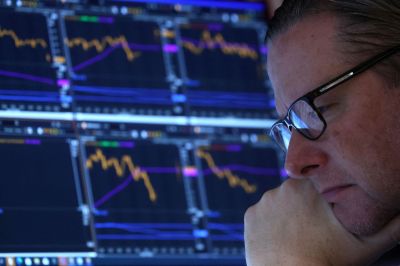
At around 10:10 a.m. at the New York Stock Exchange (NYSE), the Dow Jones Industrial Average was trading at 33,015, down 77.45 points (0.23%) from the previous close. Meanwhile, the large-cap-focused S&P 500 index rose 11.02 points (0.26%) to 4,216, and the tech-heavy Nasdaq index gained 81.24 points (0.63%) to 13,056.
Currently, technology and real estate stocks within the S&P 500 are rallying by more than 1%. In contrast, energy, materials, and consumer staples sectors are declining. Nvidia is trading more than 5% higher compared to the previous close, driven by surging demand for AI semiconductors. It also surpassed a $1 trillion market cap during the session. Companies with market caps exceeding $1 trillion currently include Apple, Google Alphabet, and Microsoft. Electric vehicle maker Tesla rose more than 3% following news that CEO Elon Musk visited China and met with Qin Gang, Chinese State Councilor and Foreign Minister. Reports indicate that Musk is expected to visit Tesla’s Shanghai factory after meeting with senior officials. ChargePoint Holdings surged over 13% after Bank of America (BoA) upgraded its investment rating.
Investors are closely monitoring developments following last weekend’s agreement between U.S. President Joe Biden and House Speaker Kevin McCarthy to raise the debt ceiling. The previously disclosed agreement essentially suspends the debt ceiling until January 1, 2025, in exchange for partial government spending cuts. Speaker McCarthy announced plans to hold a full House vote on the 31st, and at 3 p.m. that day, the House Rules Committee, known as the "gatekeeper," will begin discussions on the bill.
Although there is opposition mainly from hardliners such as the Republican Freedom Caucus, the leadership of both parties is confident the bill will pass. As a result, market concerns about the worst-case scenario of a default have eased, improving investor sentiment somewhat. Goldman Sachs economists noted in an investor memo, "The upcoming congressional vote still carries a small risk, but the main risk was political pressure preventing an agreement. Since an agreement has been reached, the likelihood of passage through both chambers is very high."
With the U.S. Treasury newly setting June 5 as the X-day when cash runs out, federal government cash holdings were estimated at $38.8 billion as of the 25th. This week also features a large number of short-term Treasury auctions and redemptions, drawing investor attention. Major investment banks including JPMorgan expect that ongoing U.S. Treasury issuance under this agreement could lead to significant capital outflows from the stock market. UBS anticipates this will expand monetary tightening capacity and lead to a stronger dollar and rising Treasury yields.
This week, key employment indicators closely watched by the Fed will be released, including the April Job Openings and Labor Turnover Survey (JOLTs), ADP employment report, and May nonfarm payrolls, along with the Beige Book assessing economic activity. Since the Fed has cited inflation and an overheated labor market as reasons for further tightening, stronger-than-expected employment data could reinforce expectations for additional Fed tightening.
Last Friday’s release of the Personal Consumption Expenditures (PCE) price index showed a larger-than-expected increase, pushing up expectations for a Fed rate hike in June. According to the Chicago Mercantile Exchange (CME) FedWatch tool, federal funds futures this morning reflect more than a 63% probability of a 0.25 percentage point rate hike in June, a sharp rise from around 28% just a week ago. Conversely, the probability of a rate hold has dropped from the 71% range to the 36% range.
With the Fed’s blackout period for public comments starting June 3, attention will also focus on the tone of speeches this week by officials such as Thomas Barkin, President of the Federal Reserve Bank of Richmond; Patrick Harker, President of the Philadelphia Fed; and Michelle Bowman, Fed Governor.
In the New York bond market, Treasury yields declined. The 10-year U.S. Treasury yield stood around 3.72%, while the 2-year yield, sensitive to monetary policy, was near 4.5%. The dollar index, which measures the dollar’s value against six major currencies, remained steady around 104.1.
European stock markets showed mixed performance. Germany’s DAX index rose 0.21%, the UK’s FTSE index fell 0.82%, and France’s CAC index declined 0.85%.
© The Asia Business Daily(www.asiae.co.kr). All rights reserved.
![Clutching a Stolen Dior Bag, Saying "I Hate Being Poor but Real"... The Grotesque Con of a "Human Knockoff" [Slate]](https://cwcontent.asiae.co.kr/asiaresize/183/2026021902243444107_1771435474.jpg)















