"Recognized as Top 3 in Domestic Semiconductor Research Capability"
UNIST has been selected for the Semiconductor Specialized Graduate School Support Project led by the Ministry of Trade, Industry and Energy.
On the 26th, the Ministry of Trade, Industry and Energy announced that UNIST, along with KAIST and Sungkyunkwan University, was finally selected for the Semiconductor Specialized Graduate School Support Project. These universities will each receive a total of 15 billion KRW in support over five years until 2028.
Yoon Tae-sik, Dean of the Graduate School of Semiconductor Materials and Components at UNIST, said, “Following the successful attraction of the Samsung Semiconductor Contract Department in March, being selected for the Semiconductor Specialized Graduate School Support Project recognizes UNIST as one of the top three universities in semiconductor research capabilities in Korea,” adding, “We will be able to nurture core semiconductor talents throughout the entire cycle, from undergraduates to graduate students.”
With this selection, UNIST’s ongoing Southeast Region Digital New Deal initiative has gained momentum. Since 2021, UNIST has been promoting a Digital New Deal to transform the local fine chemical industry into semiconductor materials, parts, and equipment companies by establishing the Graduate School of Semiconductor Materials and Components.
The Ulsan Metropolitan City is also providing full support by contributing 500 million KRW annually, totaling 2.5 billion KRW over five years, to the Southeast Region Digital New Deal project.
Mayor Kim Doo-gyeom said, “This is an achievement made possible through close cooperation between Ulsan City and UNIST,” and added, “I hope it will lead the development of Ulsan’s future industries.”
Professor Jung Hong-sik of the UNIST Graduate School of Semiconductor Materials and Components, who led this selection, explained, “The top-level nano-device process infrastructure in Korea, UNIST’s vision for regional coexistence, and the active support from local governments and regional companies received high evaluations from the judges.”
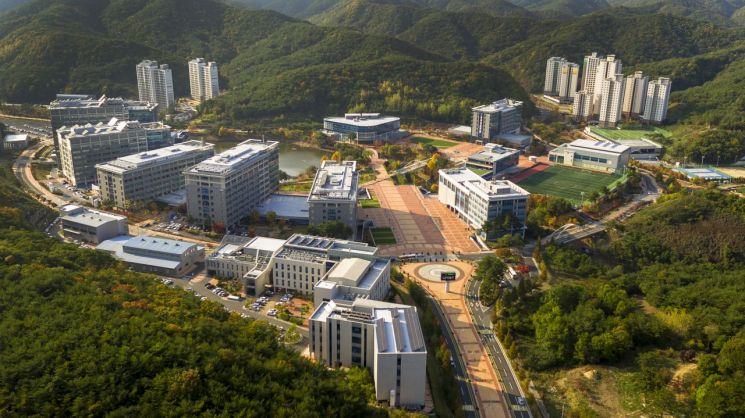
Following this selection, the UNIST Graduate School of Semiconductor Materials and Components will select 65 new graduate students annually and continuously recruit full-time faculty to strengthen the graduate school’s research capabilities.
The curriculum will be differentiated by operating in a practical, hands-on education style that fosters self-directed problem-solving skills. The plan is to cultivate pragmatic talents who can solve research challenges faced by companies.
UNIST President Lee Yong-hoon said, “In less than two years, we have achieved a miraculous result by attracting the semiconductor contract department and the Semiconductor Specialized Graduate School Support Project to the Ulsan region, which was once a semiconductor barren land, standing shoulder to shoulder with KAIST and Sungkyunkwan University as one of the top three semiconductor universities.”
He added, “We will continue to contribute to making Ulsan a core hub for semiconductor R&D industries in the Southeast region.”
© The Asia Business Daily(www.asiae.co.kr). All rights reserved.
![Clutching a Stolen Dior Bag, Saying "I Hate Being Poor but Real"... The Grotesque Con of a "Human Knockoff" [Slate]](https://cwcontent.asiae.co.kr/asiaresize/183/2026021902243444107_1771435474.jpg)















