Talent Development and Protection, Government-University-Industry All-Out Effort in R&D
Strict Punishment for 'Technology Spies'... "Pursuing Higher Punishment Standards"
The government will provide 3 billion KRW annually for five years starting this year to Sungkyunkwan University, Korea Advanced Institute of Science and Technology (KAIST), and Ulsan National Institute of Science and Technology (UNIST). This is to produce 1,500 master's and doctoral graduates specializing in semiconductors by 2027. The government is also pushing to raise sentencing standards for 'technology spies' who steal core technologies abroad.
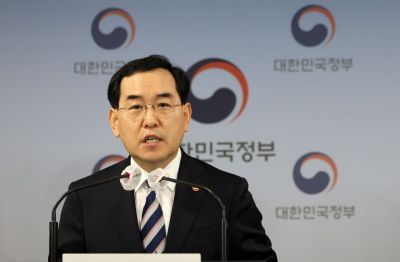
The three pillars of the advanced strategic industry policy announced by the government on the 26th are securing 'manufacturing capabilities, workforce, and supply chains.'
Notably, the government judged that establishing a corporate-led workforce training system is urgent, considering the reality that corporate technology levels far surpass those of universities.
To increase the number of high-level personnel, the government has introduced both nurturing and protection policies. Nurturing policies include expanding research and development (R&D) scale, establishing private-sector-led cutting-edge R&D centers, expanding in-house universities and specialized graduate schools, and attracting outstanding overseas talent.
The government is promoting the enactment of the 'Advanced Industry Talent Innovation Special Act' (tentative name) to accelerate corporate-led workforce training, expand government support, and establish a foundation for talent innovation.
It will invest 4.6 trillion KRW in R&D for 17 core technologies across four industries: semiconductors, displays, secondary batteries, and bio. The government plans to speed up preliminary feasibility studies and apply R&D special cases such as reducing technology fees.
The establishment of the Korea Advanced Semiconductor Technology Center (tentative name) for international joint research is under consideration. Pilot projects for mother factories by industry, such as secondary batteries, will be promoted. The plan is to build smart factories equipped with AI, digital twins, and more.
The government will implement industry-specific academies and in-house university activation policies together with companies. It plans to support specialized graduate schools to cultivate excellent master's and doctoral-level personnel.
It will provide 3 billion KRW annually to Sungkyunkwan University, KAIST, and UNIST to assist with experimental facilities and curriculum operation. Courses will be designed mainly around subjects desired by companies. For a certain number of semesters, master's and doctoral students, professors, and corporate R&D leaders will carry out on-site projects together. They will apply for exemption from preliminary feasibility studies for advanced industry specialized graduate schools in the second half of the year.
Educational curriculum and personnel exchanges between graduate schools will be activated. Research capabilities will be enhanced in connection with the Korea Semiconductor Research Consortium (SRC). Sufficient field experience will be provided through private educational institutions, semiconductor academies, and internships. An official from the Ministry of Trade, Industry and Energy said, "In addition to nurturing 1,500 talents through specialized graduate schools, we plan to cultivate 2,400 people over 10 years through the SRC project," adding, "We will nurture high-level personnel by having universities jointly carry out R&D tasks submitted by companies."
Next year, the government will promote the designation of specialized graduate schools by industry sectors such as batteries, displays, and bio.
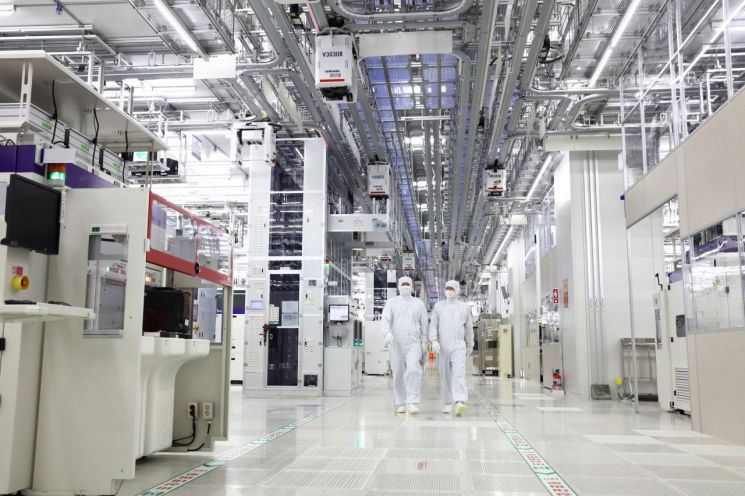
In light of recent incidents such as the Samsung Electronics technology leak case, the government said it plans to strengthen regulations on technology spies. It will push to raise sentencing standards for technology leaks. Until now, even when people caught stealing technology were apprehended, many cases ended with mild punishments such as suspended sentences.
Under the current Act on the Prevention and Protection of Industrial Technology Leakage (Industrial Technology Protection Act), if caught diverting national core technologies for foreign use, one faces imprisonment of three years or more and fines up to 1.5 billion KRW. For industrial technologies, the penalty is imprisonment up to 15 years or fines up to 1.5 billion KRW.
The government operates a designated professional personnel system to prevent technology leaks. It obtains agreements from companies (holders of strategic technologies) and applicants restricting overseas employment and preventing confidentiality breaches. In other words, it requires signing contracts voluntarily agreeing not to divert technology abroad.
An official from the Ministry of Trade, Industry and Energy said, "Sentencing for (technology spies) has been surprisingly low so far," and added, "We will discuss raising sentencing standards related to technology leaks with the prosecution and the Korean Intellectual Property Office."
Review procedures under the Industrial Technology Protection Act will be applied during technology exports, transfers, and overseas mergers and acquisitions (M&A). When companies submit to the ministry, the Industrial Technology Protection Committee will review the cases. Approval from the ministry is granted only after passing the committee's evaluation.
© The Asia Business Daily(www.asiae.co.kr). All rights reserved.
![Clutching a Stolen Dior Bag, Saying "I Hate Being Poor but Real"... The Grotesque Con of a "Human Knockoff" [Slate]](https://cwcontent.asiae.co.kr/asiaresize/183/2026021902243444107_1771435474.jpg)
















