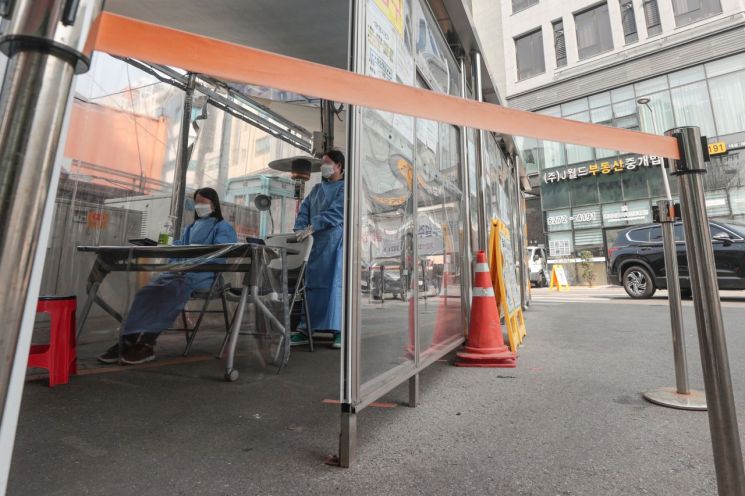
The Central Disease Control Headquarters announced on the 24th that the weekly new COVID-19 cases for the third week of May (14-20) were recorded at 133,848, a 4.6% increase compared to the previous week. This is interpreted as a temporary effect due to the endemic phase, characterized by reduced mask-wearing and increased outdoor activities.
The effective reproduction number is 1.08, maintaining above 1 for nine consecutive weeks since the fourth week of March. This indicates that the spread of the outbreak continues.
The incidence rate by age group was highest among teenagers (50.5 cases), those aged 80 and above (46.5 cases), and people in their 30s (44.4 cases), in that order.
The average daily number of critically ill patients was 148, and the average daily deaths were 10. Compared to the previous week, the number of critically ill patients slightly increased by 0.7%, while deaths decreased by 3.9%. During this period, 87.8% of critically ill patients were aged 60 and above, and all deaths occurred in individuals aged 50 and above.
However, the Central Disease Control Headquarters evaluated the COVID-19 weekly risk level for the third week of May as 'low' nationwide, in the metropolitan area, and in non-metropolitan areas. This assessment is due to the fact that although new cases are increasing, the numbers of critically ill patients and deaths are fluctuating slightly.
The intensive care unit bed occupancy rate decreased from 43.8% the previous week to 40.2%. In the metropolitan area, it dropped from 46.4% to 40.7%, and in non-metropolitan areas, from 40.4% to 39.4%.
The detection rate of the variant virus XBB.1.5 decreased by 2.2 percentage points from the previous week to 23.7%. XBB.1.16 increased by 3.0 percentage points to 12.3%. BN.1, which was the dominant strain last winter, continues to decline steadily, showing a 2.2 percentage point decrease from the previous week to 6.7%.
© The Asia Business Daily(www.asiae.co.kr). All rights reserved.
![Clutching a Stolen Dior Bag, Saying "I Hate Being Poor but Real"... The Grotesque Con of a "Human Knockoff" [Slate]](https://cwcontent.asiae.co.kr/asiaresize/183/2026021902243444107_1771435474.jpg)















