Estimated 30% Decrease in Order Volume Compared to Last Year
Focus on Raising Unit Prices Rather Than Order Quantity
Daewoo Shipbuilding & Marine Engineering secured $4.6 billion in orders by the end of April last year, reaching 51.8% of its annual order target of $8.9 billion. However, the situation this year is different. Although it set an order target of $6.88 billion for this year, as of the second week of May, the order amount stands at $1.06 billion. The achievement rate is only 15.2%.
Samsung Heavy Industries, which set its order target at $9.5 billion this year, has recorded orders amounting to $2.5 billion. The achievement rate is 26.3%.
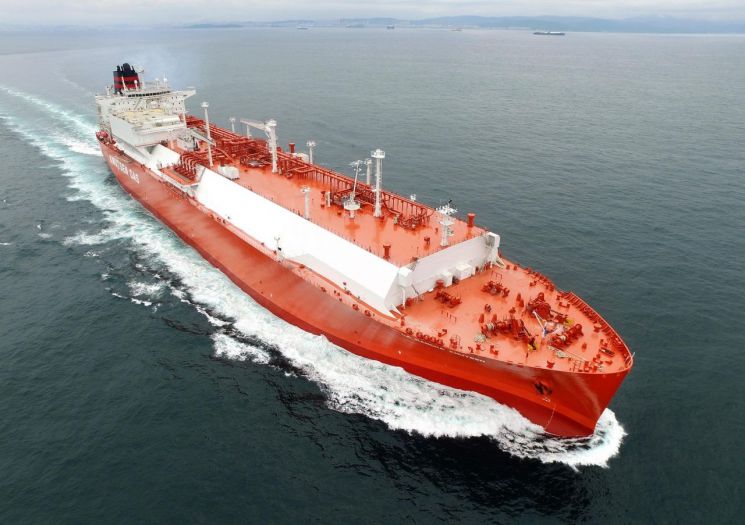
While the shipbuilding industry saw a continuous stream of orders last year, there is analysis suggesting that this year’s orders may decrease compared to last year. Since orders are directly linked to sales, achieving targets is important, but the circumstances this year are different. Shipbuilders themselves are reducing the scale of orders.
The shipbuilding industry estimates that the order volume in the first half of this year will significantly decrease compared to last year. Similar interpretations have been made in the securities sector. NH Nonghyup Securities recently predicted that the order volume of domestic shipbuilders will decrease by about 30% compared to last year.
Currently, shipbuilders have secured an order backlog equivalent to about three years of sales. Therefore, instead of blindly increasing order volume, they are focusing on selecting transaction conditions and raising ship prices.
Shipbuilders are increasing their order selection capability by shortening the timing of slot contracts. A slot contract refers to a pre-contract that secures a dock, the place where ships are built at a shipyard, in advance. By advancing the timing of slot contracts, they can gain an advantage in price negotiations.
In particular, LNG ship prices are expected to continue rising. Clarkson, a British shipbuilding and shipping analysis firm, revealed that the recent market price of a 174,000㎥ LNG carrier has risen to $258 million. LNG ship prices have been continuously soaring recently. The price, which was around $186 million at the end of 2020, rose to $210 million at the end of 2021, and reached $248 million at the end of last year.
The shipbuilding industry estimates that LNG ship orders will continue due to the European Union’s (EU) reduction of dependence on Russian energy following the Russia-Ukraine war and increased natural gas development in the United States.
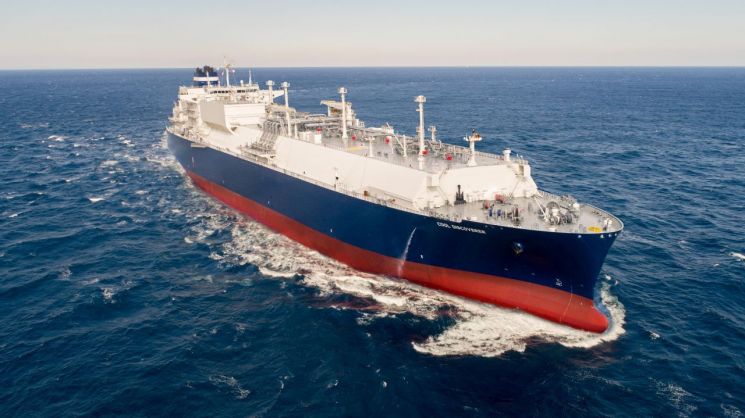
Additionally, due to environmental regulations on fuels, methanol-powered ships maintain new ship prices about 15-20% higher than ships using conventional fuels. As a result, order backlogs are expected to increase from the second half of the year due to rising ship prices.
Yoo Jae-seon, a researcher at Hana Securities, explained, "While the new ship price index remains at a high level, tanker ships and gas carriers are continuously reaching new highs," adding, "The rise in ship prices is expected to have a margin improvement effect."
Furthermore, large-scale ship orders from Qatar Energy are expected in the second half of the year. Qatar Energy is anticipated to place orders for more than 40 LNG carriers as part of the second phase of its LNG ship project, amounting to over $9 billion. A shipbuilding industry official said, "If the second batch of LNG carriers from Qatar is released from the second half of the year, orders could be concentrated."
© The Asia Business Daily(www.asiae.co.kr). All rights reserved.


















