The court ruled that the government's dismissal of a public official who habitually verbally abused subordinates and unjustly controlled the use of leave was lawful.
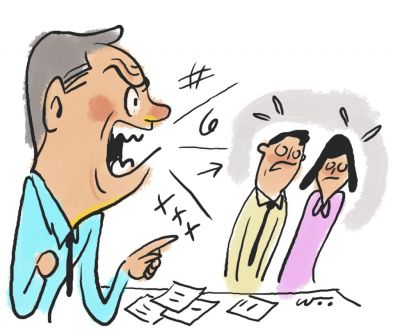
According to the legal community on the 22nd, the Administrative Court of Seoul, Administrative Division 5 (Presiding Judge Kim Sun-yeol) recently ruled against plaintiff A in the first trial of the dismissal cancellation lawsuit filed by public official A against the minister of his affiliated department.
Previously, A worked as the acting head of the building management department and the building manager before being dismissed at the end of 2021. According to the Central Disciplinary Committee, A habitually treated subordinates in a dehumanizing manner. He muttered to himself, targeting newly transferred employees, "Only trash has come," and sarcastically said to a military veteran employee, "How did you even become a major like this?"
Additionally, when an employee applied for leave to take care of his mother’s hospital visit, A questioned, "Are you the only child? Why should you, who works, take care of your parents?" He also scolded an employee who took leave during Chuseok, saying, "You haven’t been in the department long, and you’re already taking leave." The investigation revealed that A himself left work early without permission about 160 times over nine months and went on unapproved business trips.
A also assigned unfair tasks for acquaintances. When signing an automobile insurance contract for building management, he instructed the responsible employee to contract through an insurance planner who was an alumnus of his own school. He also connected acquaintances’ companies when purchasing flowerpots and masks and selecting building repair contractors.
In court, A’s side argued, "Most of these were based on personal relationships or remarks made while overseeing the department, not insults or verbal abuse," and claimed, "Considering that the misconduct was not severe and that he had worked diligently so far, dismissal is too harsh."
The first trial court did not accept these claims. The court stated, "He subjected employees to mental distress and dehumanizing treatment that worsened the working environment," and "Even considering the circumstances A claims, objectively, these were inappropriate acts."
Furthermore, "It is institutionally encouraged for public officials to freely use their designated leave," but A indirectly or directly controlled employees’ use of leave and created an atmosphere that suppressed it, applying different standards to himself," the court pointed out.
The court ruled, "Although A will suffer the disadvantage of losing his public official status due to this disposition, the public interest in enhancing social trust in the public service and establishing discipline is more important," and dismissed A’s claim.
A appealed the first trial court’s decision.
© The Asia Business Daily(www.asiae.co.kr). All rights reserved.
![Clutching a Stolen Dior Bag, Saying "I Hate Being Poor but Real"... The Grotesque Con of a "Human Knockoff" [Slate]](https://cwcontent.asiae.co.kr/asiaresize/183/2026021902243444107_1771435474.jpg)















