6 Million Workers Cannot Take Substitute Holidays
Labor Standards Act Has Stalled Since Expansion to Workplaces with 5 or More Employees in 1989
Government Moves to Amend Law Starting This Year
Starting this year, with the addition of 'Seokgatansinil' (Buddha's Birthday) and 'Christmas' to substitute holidays, the upcoming Saturday, the 27th, which is Seokgatansinil, will be replaced by a day off on Monday the 29th. This creates a golden holiday lasting a total of three days including the weekend. During this period, the demand for overseas travel has increased by as much as 3000% compared to the same period last year, reflecting a welcoming atmosphere for substitute holidays. However, there are workers who have to go to work instead of traveling during this substitute holiday. This applies to those working at businesses with fewer than five employees. Those who were unable to receive proper treatment as workers in the legal blind spots even on 'Labor Day' on the 1st also find substitute holidays to be a story for other countries. Why are workers at businesses with fewer than five employees excluded from the application of substitute holidays?

◆The History of Substitute Holidays as a Token Gesture… From Liberation Day (Democratic Party) to Seokgatansinil (People Power Party) → ?
The expansion of substitute holidays dates back to June 2021. At that time, the ruling party, the Democratic Party, pushed for it, and it was applied starting from August 15, Liberation Day, of the same year. The Democratic Party advocated for the expansion of substitute holidays to guarantee a life with rest and to stimulate domestic consumption, but the People Power Party criticized it, citing the lack of economic review on the effect of boosting domestic consumption and the rushed enforcement. There were also accusations that it was legislation aimed at winning votes.
However, within just one year, the People Power Party, having become the ruling party, suddenly changed its stance. They actively pursued the 'expansion of substitute holidays' to include Christmas and Seokgatansinil. One of the reasons they opposed a year ago, the 'lack of effect on boosting domestic consumption,' changed from 'no' to 'yes.' The economic sector's opposition, citing increased corporate burdens due to reduced working hours and expanded vacation and holiday systems, as well as the worsened economic situation due to COVID-19, had not significantly changed.
The variable was the election. The Democratic Party expanded substitute holidays to include March 1st Movement Day, Liberation Day, National Foundation Day, and Hangul Day ahead of the elections the following year. At that time, the Democratic Party was the ruling party before the presidential election (March 2022) and local elections (June 2022), while the current ruling party, the People Power Party, is before the next general election (April 2023).
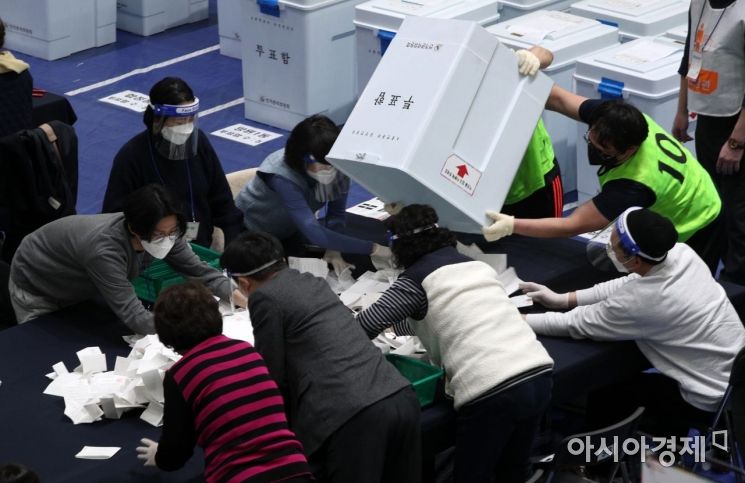 Vote counting is underway at the counting center set up at Mapo-gu Community Sports Center in Seoul on the 9th, the day of the 20th presidential election. Photo by Hyunmin Kim kimhyun81@
◆The Same Holidays, but 6 Million Workers Cannot Take a Day Off
There is another common point. The exclusion of businesses with fewer than five employees from the application has been ignored. Every time the political sphere discusses expanding substitute holidays, concerns about excluding businesses with fewer than five employees have followed like a tail. The application of substitute holidays is stipulated to follow the Labor Standards Act, but the Labor Standards Act exempts 'businesses with fewer than five employees' from vacation or holiday regulations.
The Labor Standards Act has been stagnant since it was expanded to businesses with 10 or more employees in 1987 and to those with five or more employees in 1989. For the past 34 years, businesses with fewer than five employees have remained a 'legal blind spot.' The political sphere has not been completely inactive. In September 2020, Kang Eun-mi of the Justice Party proposed an amendment to delete the clause that distinguishes based on the number of employees in the Labor Standards Act, and in December of the same year, Lee Su-jin (proportional representation) of the then ruling Democratic Party also proposed an amendment to apply the Labor Standards Act to businesses with fewer than five employees. At the end of 2021, among the 16 members of the National Assembly's Environment and Labor Committee, all except six members from the People Power Party expressed opposition to the discriminatory application of the Labor Standards Act, but it was not legislated.
Meanwhile, workers at businesses with fewer than five employees have not only been excluded from the application of substitute holidays but also cannot legally file complaints for workplace harassment, and are excluded from the 52-hour weekly work limit, the Serious Accident Punishment Act, and other protections.

◆Will the Amendment to the 'Labor Standards Act' Resolve a 30-Year-Old Wish?
Concerns remain about expanding the application of the Labor Standards Act to businesses with fewer than five employees. The core issue is that it could impose a huge burden on small business owners. Before and after COVID-19, opposition was based on the economic crisis, arguing that the timing was premature. However, there are growing calls that it can no longer be ignored given that one in four workers in Korea works at businesses with fewer than five employees.
According to the Korea Labor Institute, workers employed at businesses with fewer than five employees account for 28% of the total workforce (based on 2018, 4.55 million people). The labor sector estimates that the number has now reached 6 million. These workers are excluded from the Labor Standards Act, so they are not covered for unfair dismissal claims, nor are they entitled to overtime, holiday, or night shift pay.
With the government announcing this year that it will gradually apply the Labor Standards Act to businesses with fewer than five employees, attention is focused on whether this 30-year-old wish of the labor sector will be fulfilled. Earlier, the Ministry of Employment and Labor stated in this year's work report that it would apply the Labor Standards Act to businesses with fewer than five employees while considering the burden on workplaces, focusing on protecting workers' personal rights. They plan to prepare a phased application plan through discussions in the Economic, Social and Labor Council research group by June.
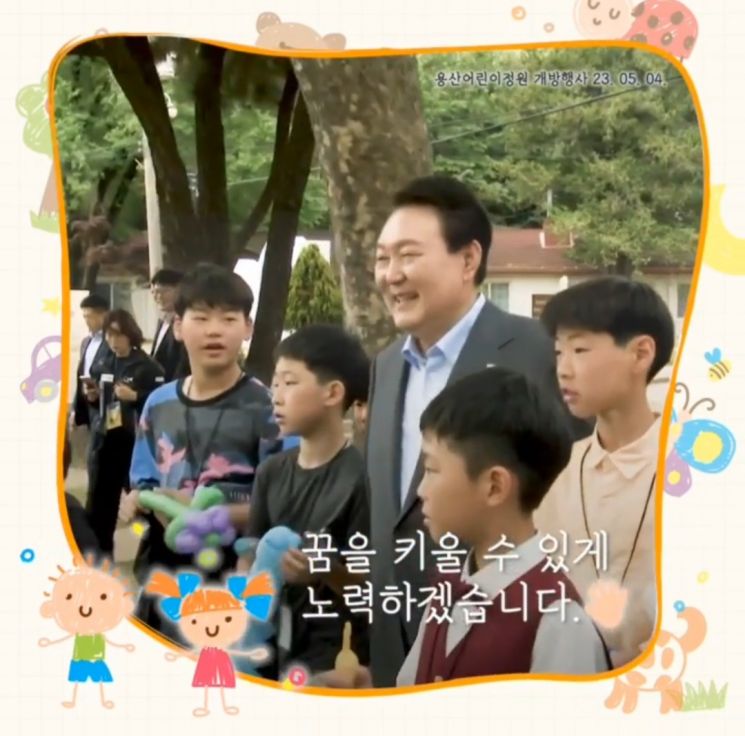
Movements in the National Assembly have also accelerated. The People Power Party's Labor Reform Special Committee, launched on the 2nd, included as a key agenda an amendment to the Labor Standards Act to guarantee rest rights such as annual paid leave, currently only guaranteed to businesses with five or more employees, to those with fewer than five employees. The Justice Party is also promoting 'guaranteeing basic rights for working citizens,' including applying the Labor Standards Act to businesses with fewer than five employees, as a major legislative task this year.
Children's Day on May 5 next year falls on a Sunday, so according to the Substitute Holiday Act and the Labor Standards Act, the following Monday, the 6th, will be a day off. It remains to be seen whether this will become a 'red day for everyone,' without division in labor.
© The Asia Business Daily(www.asiae.co.kr). All rights reserved.
![Clutching a Stolen Dior Bag, Saying "I Hate Being Poor but Real"... The Grotesque Con of a "Human Knockoff" [Slate]](https://cwcontent.asiae.co.kr/asiaresize/183/2026021902243444107_1771435474.jpg)

















