Sports Car Alpin Engine Sole Production
Top Quality Among 20 Group Factories
'Small but Efficient Factory'
New Model Launch Preparations in Full Swing
Exports Also Conducted Using Containers
On the afternoon of the 17th, at the Renault Korea Busan Plant located in Gangseo-gu, Busan, hundreds of XM3 vehicles were waiting in the yard. Six of the waiting vehicles began to move. The two cars at the front made a U-turn and backed their trunks up to the container. The remaining vehicles lined up in a row. When the front vehicle reversed into the container, workers secured the wheels. Immediately, the rest of the vehicles entered one after another. A worker hung onto the container entrance and closed the door. Afterward, the truck carrying the container exited the factory.
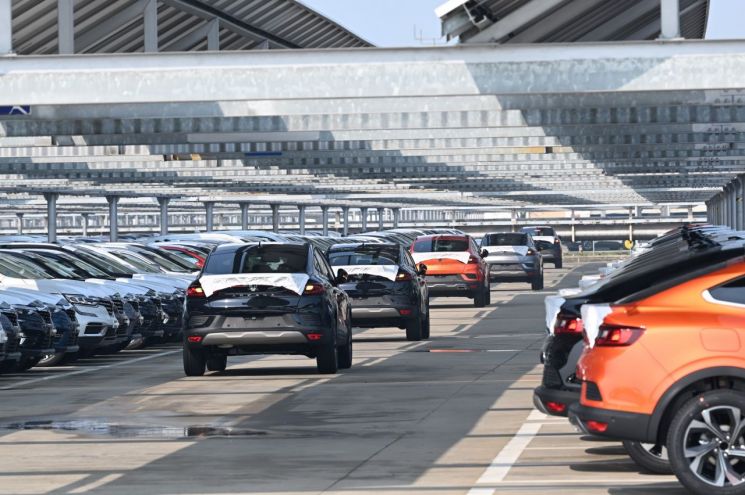
This is the only place that produces engines installed in the group’s sports cars. When eight vehicles were randomly selected daily for quality inspection, it was the highest quality among the 20 Renault plants worldwide. This is the Renault Korea Motors Busan Plant, which even uses containers for exports.
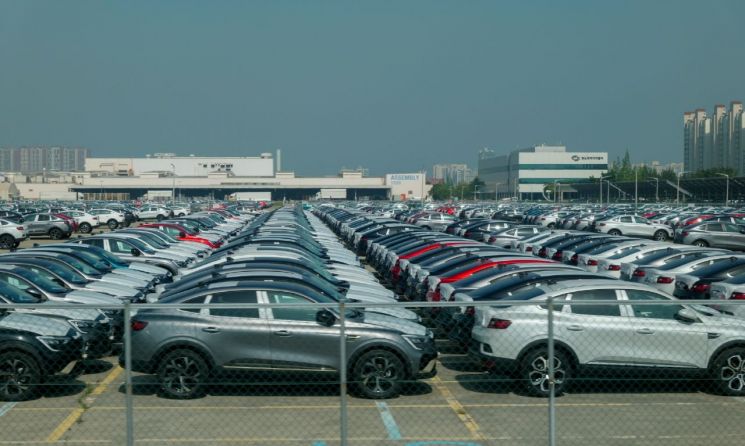 Export vehicles are waiting at the Renault Korea Motors Busan plant.
 [Photo by Renault Korea Motors]
The area (0.159ha) is not very large. It is less than one three-thousandth the size of Hyundai Motor’s Ulsan Plant (500ha), the world’s largest single plant. However, the quality of the products produced does not correspond to the size. According to the group’s plant rankings, it is among the top three out of 20 plants worldwide. In the comprehensive quality management evaluation by plant, it scored 4.7 and 4.4 points (out of 5) in vehicle quality and process management, respectively. In random quality inspections, it ranked first among the 20 plants. In the DPHU (Defect Per Hundred Units) metric, which indicates the number of quality defects per 100 vehicles, it ranked second. Recognized for this, it produces and exports the group’s main model XM3 (export name Renault Arkana). Last year, the export volume was 100,000 units, the highest in Renault Korea’s history.
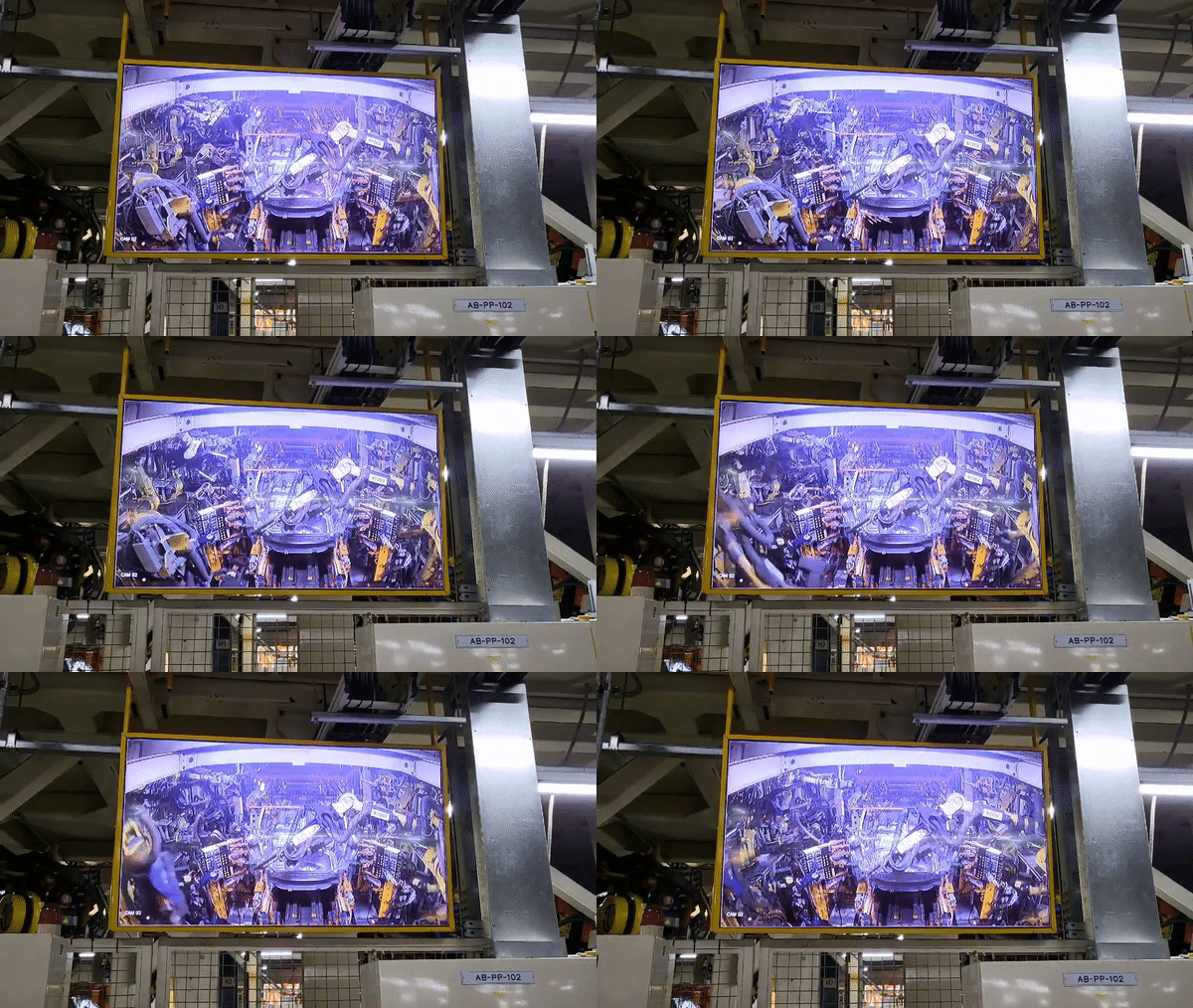 On the 17th, a robot was welding in the body shop at Renault Korea Motors' Busan plant.
 [Photo by Oh Gyumin]
Preparations were also in full swing to produce vehicles scheduled for release next year. Inside the stamping, body, and assembly plants, slogans such as “Aurora Success 2024” and “The Future of RKM (Renault Korea Motors) is with Aurora” were displayed. There was also an empty space in the middle of the line. A Renault Korea Busan Plant official stated, “Pallets will be placed or equipment necessary for production will be installed to produce the new car.” Aurora is the name of a project to produce a hybrid sport utility vehicle (SUV) the size of the QM6 based on the Volvo platform in cooperation with China’s Geely Automobile. Equipment construction has been underway since this month for this purpose.
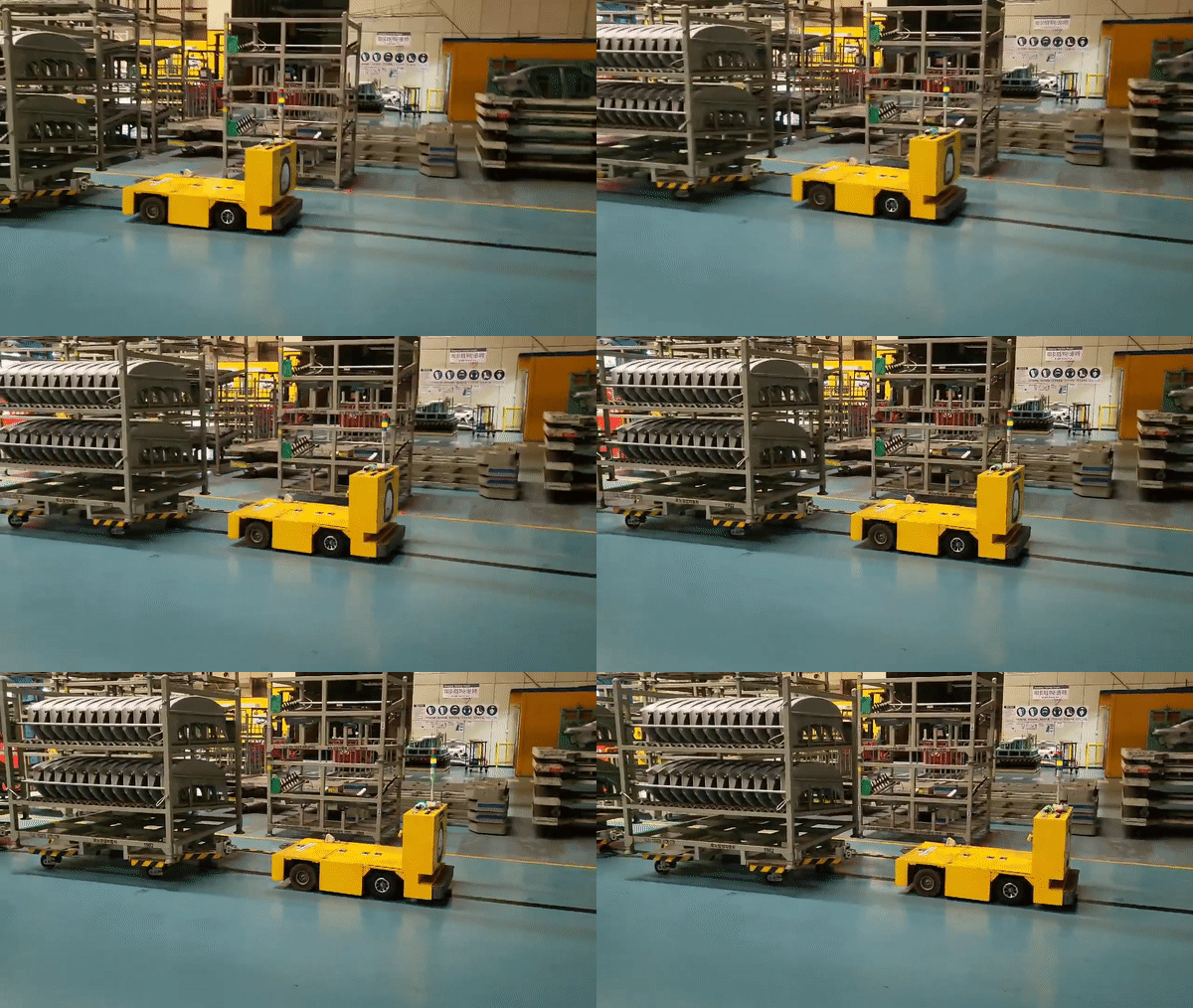 Inside the Renault Korea Busan plant, AGVs (Auto Guided Vehicles) transport logistics materials. A total of 224 units are used exclusively in the assembly plant.
 [Photo by Oh Gyumin]
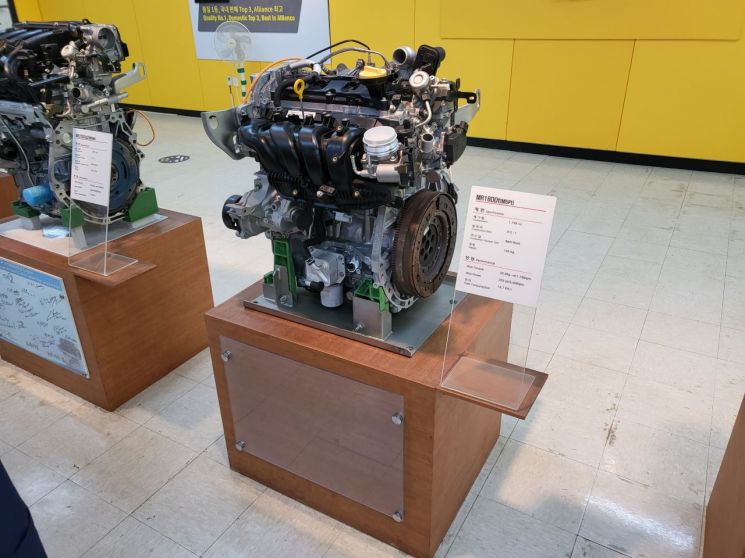 The MR18DDt (TCe300 engine) is supplied to Alpine, the sports car brand within the Renault Group. This engine is produced exclusively at the Busan plant within the Renault Group.
 [Photo by Oh Gyumin]
The powertrain plant produces three Nissan MR engines and three HR engines. Among these, the MR18DDt (TCe300 engine) is produced only at this plant. Recognized for its quality, it is supplied to Alpine, the Renault group’s sports car brand. It is exported to Spain and also installed in the Renault Megane.
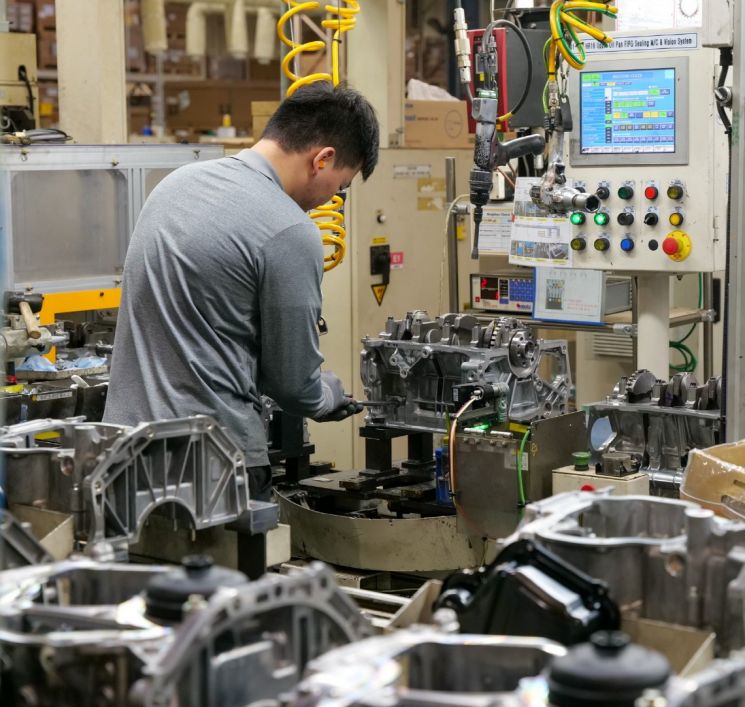 A worker is assembling an engine at the Renault Korea Motors engine plant. [Photo by Renault Korea Motors]
Renault Korea faced difficulties in exports due to a shortage of car carriers. Instead, it began transporting cars using containers. Currently, 10% of total exports are shipped this way. Renault Korea explained that container shipping costs have stabilized and can save about 10% compared to car carriers. Additionally, judging that the shortage of car carriers will be difficult to resolve for at least four more years, they plan to increase exports using container ships. Three XM3 vehicles fit inside one container. In addition to the French port of Le Havre, where container ship exports currently take place, they plan to send containers to the ports of Zeebrugge, Italy, the UK, Eastern Europe, Australia, and Mexico.
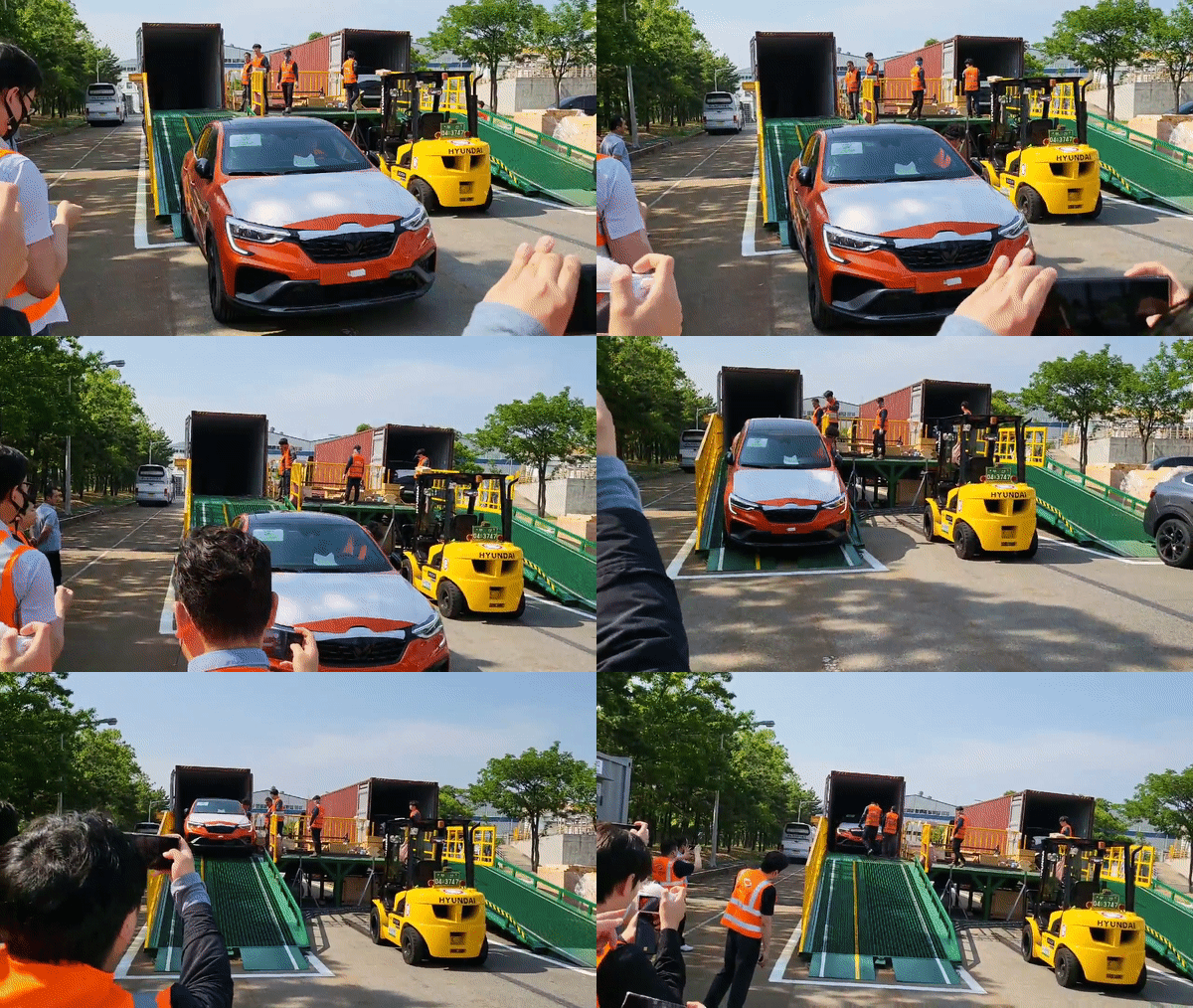 Due to a shortage of dedicated automobile lines at this factory, exports are being carried out using containers. The first vehicle reverses into the container.
 Photo by Oh Gyumin
© The Asia Business Daily(www.asiae.co.kr). All rights reserved.
![Clutching a Stolen Dior Bag, Saying "I Hate Being Poor but Real"... The Grotesque Con of a "Human Knockoff" [Slate]](https://cwcontent.asiae.co.kr/asiaresize/183/2026021902243444107_1771435474.jpg)


















