A Politically Neutral, Colorless and Odorless 'Practical and Managerial Prime Minister'
Coordinating the Cabinet Behind the Scenes and Assisting the President
Broad Contacts with Bureaucracy and Political Circles, Active On-Site Communication
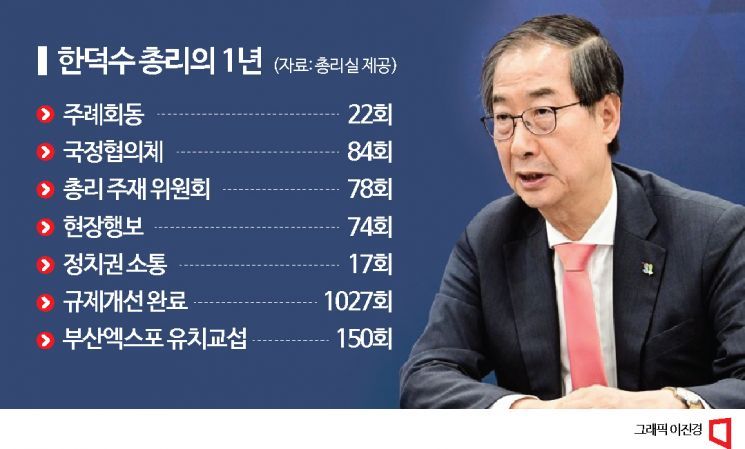
Prime Minister Han Duck-soo is widely recognized as a ‘workaholic.’ Even during the weekly Monday executive meetings, which are broadcast live to all staff at the Prime Minister’s Office, he solemnly focuses solely on work without making any jokes. He moves busily from early morning until late at night, attending to the realities of people’s lives. This is to put into practice his philosophy of ‘Wumunhyundap’ (Our problems have answers on the ground). At the scene, he hands out dozens of business cards with his phone number and urges, “Call me if you have any difficulties.” Even on weekends, if an issue arises, he immediately calls executives to check the situation. At the age of 73, he starts his day by waking up early to read foreign news and smoothly handles a tightly packed schedule.
“I will devote myself to overcoming the current challenges and crises by leveraging the experience and capabilities I have accumulated throughout my life.”
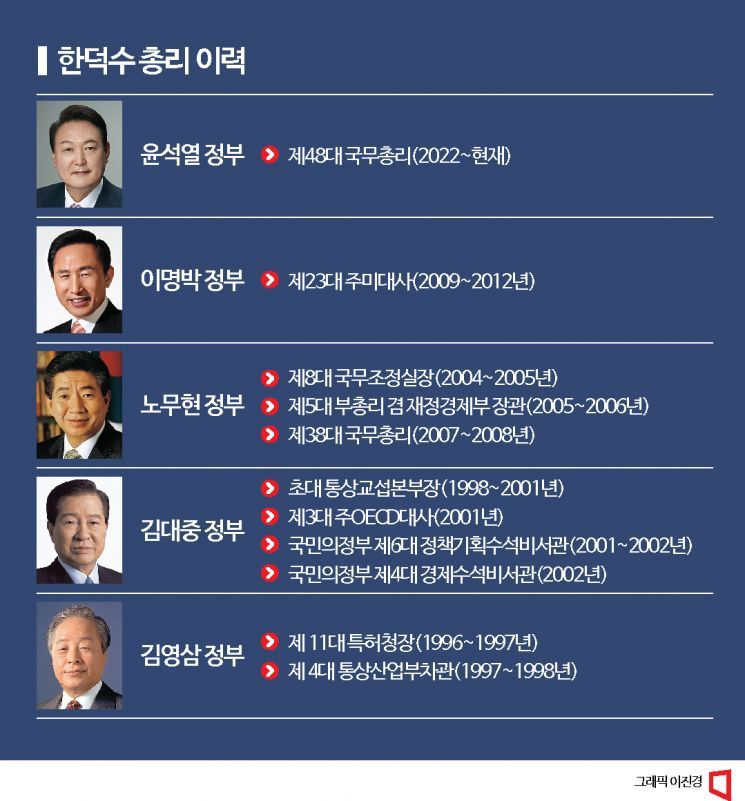
This was Prime Minister Han’s inaugural speech one year ago. Marking his first anniversary on the 23rd, Prime Minister Han is a distinguished figure in the bureaucratic world. Regardless of progressive or conservative administrations, he has served as a senior public official in five governments over more than 40 years, rising rapidly through the ranks. He has held every key administrative position, including Commissioner of the Korean Intellectual Property Office, Vice Minister of Industry and Commerce, inaugural Chief Negotiator for Trade, Senior Secretary for Policy Planning and Economic Affairs, Director of the Office for Government Policy Coordination, Deputy Prime Minister for Economic Affairs, and Ambassador to the United States.
Veteran Elite Bureaucrat Experience... Easy Control Over Cabinet Members
Since his inauguration, Prime Minister Han has served as the vice-chairman of 27 Cabinet meetings, maintaining close communication with bureaucrat-origin cabinet members. Han, who passed the 8th Administrative Examination, is a senior to Deputy Prime Minister Choo Kyung-ho, who passed the 25th Administrative Examination and served as the 6th Minister of Strategy and Finance. His tenure overlaps with Minister of Industry and Commerce Lee Chang-yang, who joined as a clerk at the Ministry of Commerce and Industry in 1986. He is a senior alumnus of Seoul National University’s Economics Department to Financial Services Commission Chairman Kim Ju-hyun. Having served as Ambassador to the U.S., he has deep networking ties with senior officials of the Ministry of Foreign Affairs. After diplomatic events such as the Davos Forum or Korea-U.S. summits, he directly receives feedback from overseas channels and shares it with his aides. Close aides hinted that his extensive experience in various positions makes it easy for him to control cabinet members.
He is especially known for his warm leadership. After Cabinet meetings and ministerial meetings related to state affairs, he shakes hands with every minister individually. It is also often observed that he has separate standing conversations with ministers of departments facing pressing issues.
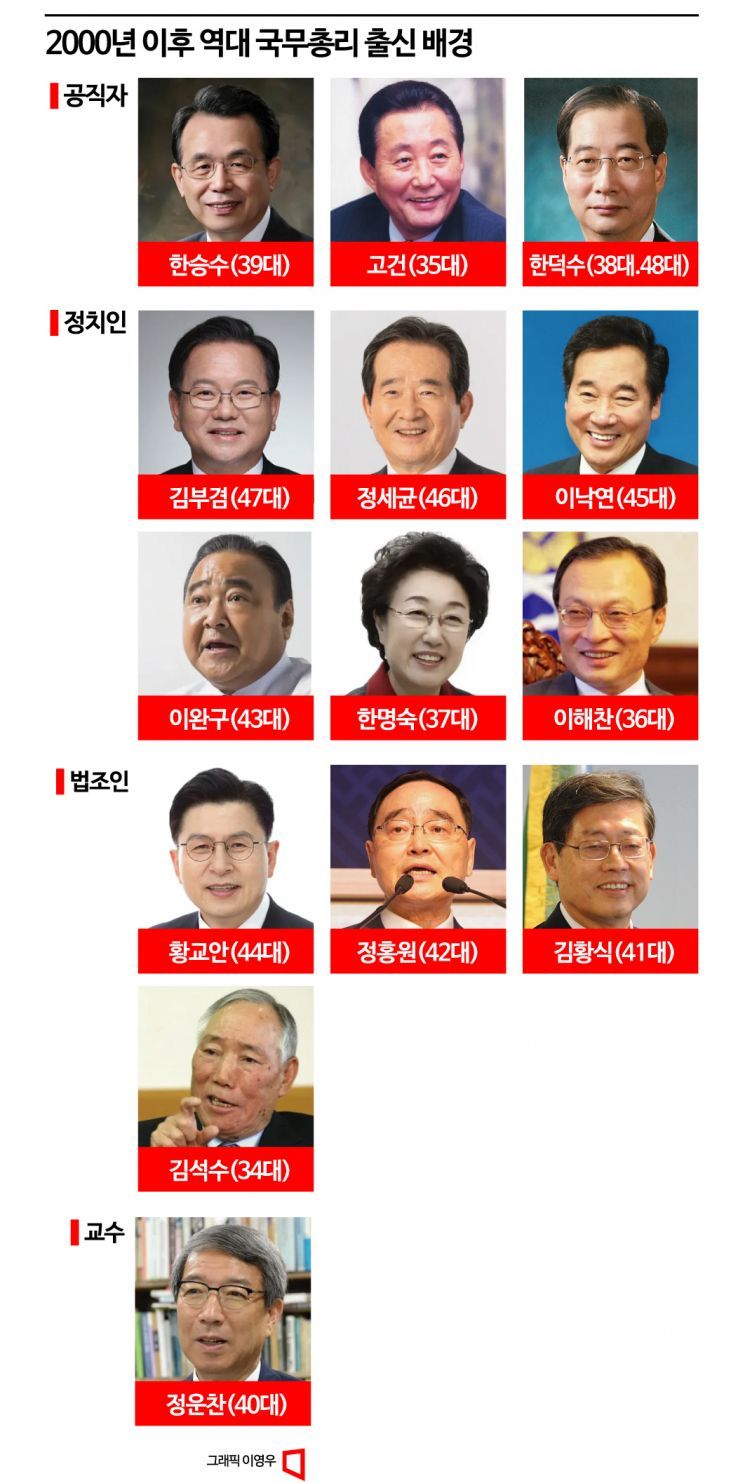
This style distinctly separates him from politician-origin prime ministers who have served as stepping stones to presidential power. He is colorless and odorless but focuses solely on coordinating and assisting the cabinet behind the scenes. As a traditional elite bureaucrat, he is regarded as a ‘practical and managerial’ prime minister whose 40 years of capabilities are concentrated in this role. He does not engage in specific events for votes or make politically colored remarks. Regarding public utility fee hikes such as electricity and gas, he made a candid statement that “it can no longer be delayed,” and drew a line by saying, “Populist policies are unacceptable.”
A Prime Minister’s Office official said, “Prime ministers who were conscious of presidential ambitions had political meaning in all their actions. They were careful not to do anything that could be a blemish or cause criticism in elections.” He added, “Prime Minister Han seems to have no desire for the next position and intends to devote all his accumulated experience to state affairs.” Another senior official at the Prime Minister’s Office said, “He is a superior who grasps the essence well from the bottom to the top of policies. He understands the realities of businesses, the physiology of ministries, and the reactions of stakeholders, and skillfully adjusts the key points and pace of policies. He selects short- and mid-to-long-term tasks and gives instructions, making it easy to serve him.”
Practical and Managerial Prime Minister, Focused Solely on State Affairs
Prime Minister Han’s strength as a detail-oriented professional bureaucrat is well demonstrated in the government’s regulatory reform cases. Since regulations are spread across all ministries, the reform-driving power of each ministry is crucial. Han allowed each ministry to independently announce regulatory innovation cases and let the ministers take credit for the achievements to boost momentum. For issues with sharp conflicts of interest and high difficulty, they were brought to the Regulatory Innovation Strategy Meeting led by the Office for Government Policy Coordination. This allowed cross-ministerial win-win solutions to mature and made it easier to coordinate interests. Through this, significant success stories such as supermarket regulations, the Seoraksan Osaek cable car industry, and the attachment of no-smoking advertisements in convenience stores were created.
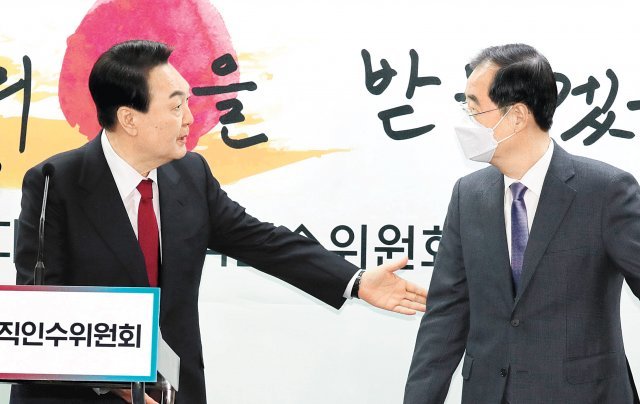
During conservative administrations, the weekly meetings between the president and prime minister were rarely utilized, but Han held 22 such meetings, reading President Yoon’s mind and overcoming crises such as COVID-19, the Itaewon disaster, wildfires, and the triple crisis of high inflation, high interest rates, and high exchange rates. The one-on-one weekly meetings between the president and prime minister are a sign of the president’s trust in the prime minister. They also serve to elevate the prime minister’s status as the president’s administrative counterpart and the channel between the government and the president. Prime Minister Han has supported President Yoon, a political newcomer, as a ‘shadow’ to compensate for his lack of experience in state affairs.
Extensive Political Contacts... Active Persuasion in National Assembly Legislation
Communication with the opposition is similar. Prime Minister Han frequently talks with National Assembly Speaker Kim Jin-pyo (born 1947; Han was born in 1949), who is of a similar generation. A representative case is persuading the necessity of the ‘National Assembly Act Amendment’ centered on legislative regulatory impact assessments, which led to the promotion of related bills. For policies urgently needing passage in the National Assembly, he directly calls the standing committee chairpersons to explain the legislative intent.
When President Yoon visited the United States on the 26th of last month, the five key figures in Korea (the Speaker of the National Assembly, Chief Justice of the Supreme Court, President of the Constitutional Court, Prime Minister, and Chairperson of the National Election Commission) gathered in one place for the ‘70th Anniversary Reception of the Korea-U.S. Alliance,’ an idea proposed by Prime Minister Han. He suggested the event to Speaker Kim, saying, “Washington is bustling, but Korea is too quiet,” and Speaker Kim readily accepted, making it happen. The event was attended by the five key figures, Kim Ki-hyun, leader of the People Power Party, Lee Jae-myung, leader of the Democratic Party, Kim Dae-gi, Chief of the Presidential Secretariat, and Lee Jin-bok, Senior Secretary for Political Affairs, making it a rare ‘bipartisan’ event in recent times.
Controversies Including Unauthorized Crossing Debate in Itaewon Disaster
Since his inauguration, Prime Minister Han has been embroiled in several controversies. Following the ‘unauthorized crossing’ controversy during the Itaewon disaster, he faced fierce criticism from the opposition for joking and laughing during a foreign press briefing. He also sparked controversy by saying, “I learned about it from the newspaper” regarding the presidential office’s plan to build a new guesthouse. He was criticized for describing the solution to forced labor compensation as ‘removing a stone.’
© The Asia Business Daily(www.asiae.co.kr). All rights reserved.
![Clutching a Stolen Dior Bag, Saying "I Hate Being Poor but Real"... The Grotesque Con of a "Human Knockoff" [Slate]](https://cwcontent.asiae.co.kr/asiaresize/183/2026021902243444107_1771435474.jpg)

















