The Russian economy contracted by 1.9% in the first quarter of this year due to the impact of Western economic sanctions, including the oil price cap. However, as growth gained momentum after the first quarter, there are also forecasts that the economy will enter a growth trajectory for the entire year.
According to major foreign media on the 17th (local time), the Russian Federal State Statistics Service announced that Russia's first-quarter gross domestic product (GDP) decreased by 1.9% compared to the same period last year. This is analyzed as a result of economic contraction caused by additional sanctions pressure such as the implementation of the oil price cap by the European Union (EU), the Group of Seven (G7), and other Western countries.
According to the International Energy Agency (IEA), Russia's oil exports in March reached the highest level since the invasion of Ukraine in February last year, but export revenue plummeted by 43% compared to the same period last year. The Russian Ministry of Finance stated that energy export revenue, including oil and gas, from January to April this year fell by 52.3% compared to the same period last year, while expenditures increased by 26%, attributing this to the impact of the Ukraine war.
Accordingly, Russia's fiscal deficit from January to April reached 3.4 trillion rubles (approximately 56.5 trillion won), significantly exceeding the target of 2.9 trillion rubles. Experts have speculated that Russia's public sector deficit could reach 3-4% of GDP, surpassing the target of 2%.
Russia's inflation rate was 3.5% year-on-year in March, falling to 2.3% in April, and the unemployment rate recorded a low figure of 3.5% due to a decrease in the labor force. Russia has been striving to resolve its population crisis in recent years, but the situation has worsened due to population decline (labor shortage) caused by war casualties and mobilization orders.
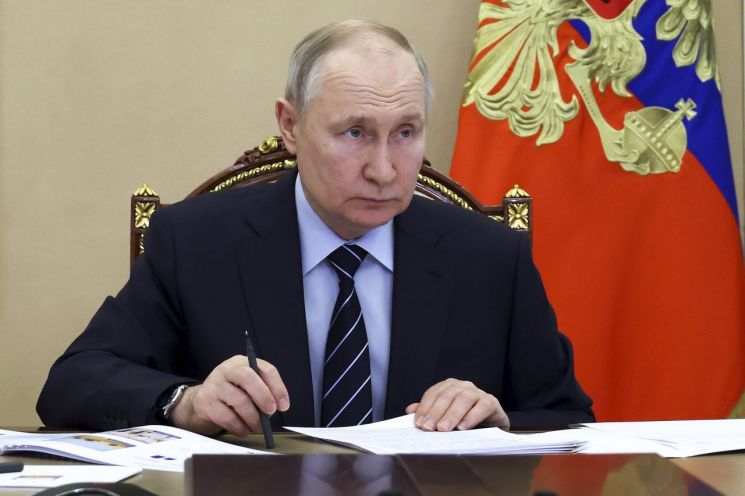
Capital Economics, a think tank based in London, UK, evaluated that "(the scale of economic contraction) was smaller than expected," suggesting that "the economy has passed the turning point and growth is gaining momentum." Capital Economics forecasted that Russian government spending is promoting industry and retail sales, and "the Russian economy is expected to enter a GDP growth trajectory for the entire year."
In the first year of the Ukraine war last year, the Russian economy contracted by 2.1% compared to the previous year, and it was evaluated that it performed relatively well despite Western sanctions. At that time, the Russian Ministry of Economy had predicted that last year's economic growth rate would exceed -12%, but the actual contraction was significantly less than expected.
The international economic community predicted that the Russian economy could collapse due to unprecedented sanctions such as the freezing of Russia's foreign exchange reserves, but the sharp rise in energy prices after the war and increased trade with China, India, and Middle Eastern countries have substantially mitigated the impact of the sanctions.
© The Asia Business Daily(www.asiae.co.kr). All rights reserved.
![Clutching a Stolen Dior Bag, Saying "I Hate Being Poor but Real"... The Grotesque Con of a "Human Knockoff" [Slate]](https://cwcontent.asiae.co.kr/asiaresize/183/2026021902243444107_1771435474.jpg)















