Major US Banks Cut Workforce and Scale Back Operations in China
Major Wall Street banks are scaling back their China operations. After rushing to expand their local businesses following the opening of China's financial market, they have faced a challenging business environment over the past three years due to COVID-19 lockdowns and escalating US-China tensions.
According to Bloomberg on the 17th (local time), Goldman Sachs and Morgan Stanley are scaling down their China expansion plans and lowering profit targets this year due to the worsening geopolitical environment caused by US-China conflicts.
Goldman Sachs has revised its five-year plan due to changes in the business environment within China. Morgan Stanley has decided not to build regional brokerage offices in China for the time being and has made a small investment of $1.5 trillion solely in derivatives and futures. JP Morgan, following competitors who reduced China-dedicated staff earlier this year, plans further layoffs. Previously, Goldman Sachs doubled its staff to 600 to expand its China business but has since cut mainland personnel by more than 10%.
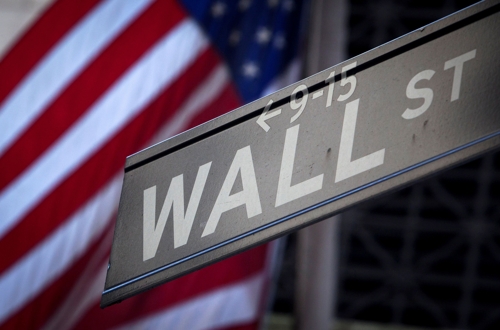
Just three years ago, these companies were competing to expand their China operations. When China opened its financial market in 2020 by allowing qualified foreign institutional investors to trade derivatives, they sought new revenue sources. However, Bloomberg noted that after three years of large-scale financial opening, the dream of earning profits in China’s $60 trillion financial market has become distant.
The aftermath of COVID-19 lockdowns and rising geopolitical tensions are cited as causes. Since reopening its economy, China has been struggling to revive its economy across all sectors including fintech, private education, and real estate, but the recovery has stalled. Last month, retail sales and industrial production growth fell short of market expectations, and youth (ages 16-24) unemployment soared to a record high of 20.4%.
US-China tensions are a longer-term negative factor. Mergers and acquisitions (M&A), initial public offerings (IPO), and stock trading have declined, reducing advisory fees and commissions for major global banks. As US-China tensions escalated, the flow of Chinese companies listing on the New York Stock Exchange slowed, and even already listed companies like PetroChina have been delisted. Overseas investors’ trading of Chinese stocks shrank from $120 billion in 2020 and 2021 to $19 billion in 2022. China’s outbound investment also dropped to $44 billion last year, the lowest since 2008. Consequently, JP Morgan, Citigroup, and Bank of America (BoA) reduced their exposure to Chinese stocks by about 16% to $48 billion in 2022 compared to the previous year.
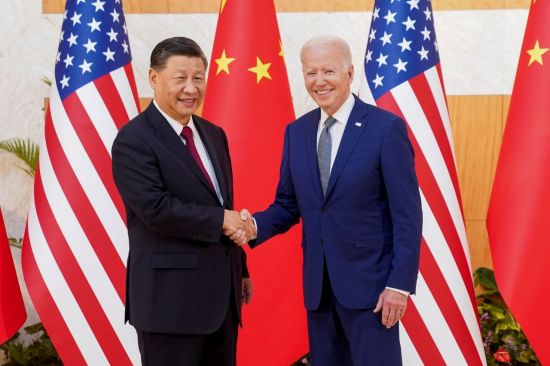
Additionally, Bloomberg pointed out that mainland Chinese companies have weakened the competitiveness of foreign financial institutions by acquiring financial know-how through joint ventures with foreign financial firms.
Bloomberg reported, "Wall Street executives say that with tensions repeatedly flaring, it is difficult for the two countries to maintain a good relationship," adding, "As the US presidential election approaches, relations may become even more difficult." It also noted, "Banks are becoming stricter about credit and market risks," and "They constantly question whether customers could potentially get caught up in US sanctions against China. The farther a bank is from China, the more pessimistic it is about China."
Professor Chen Jiu of the Hong Kong University Business School said, "Wall Street banks should have considered geopolitical risks long ago," adding, "The best-case scenario over the next five years is that China changes course and activates the business environment through genuine opening policies and market reforms. Although this scenario is highly unlikely, it is not impossible."
© The Asia Business Daily(www.asiae.co.kr). All rights reserved.
![Clutching a Stolen Dior Bag, Saying "I Hate Being Poor but Real"... The Grotesque Con of a "Human Knockoff" [Slate]](https://cwcontent.asiae.co.kr/asiaresize/183/2026021902243444107_1771435474.jpg)

















