Seokyun Ryeol, Seoul National University Emeritus Professor, YTN Interview
'Drinking Contaminated Water' Criticism by British Scholar
"It is unreasonable to call him a scholar"
Wade Allison, an authority in radiation and nuclear physics and an emeritus professor at Oxford, stated that "one can drink 1 liter of Fukushima contaminated water." In response, Kyun-ryul Seo, emeritus professor of nuclear engineering at Seoul National University, criticized, "When you spend your whole life lecturing and researching in an academic setting, you get trapped in certain numbers and your own world, leading to such statements."
On the 17th, Professor Seo appeared on YTN Radio's "News King with Park Ji-hoon" and pointed out, "He only knows the tip of the iceberg and either hides or is unaware of the rest. It is hard to call him a scholar. It even makes me think that the 'seok' (석) in 'seoksa' (master's degree) might stand for 'stone' (石)."
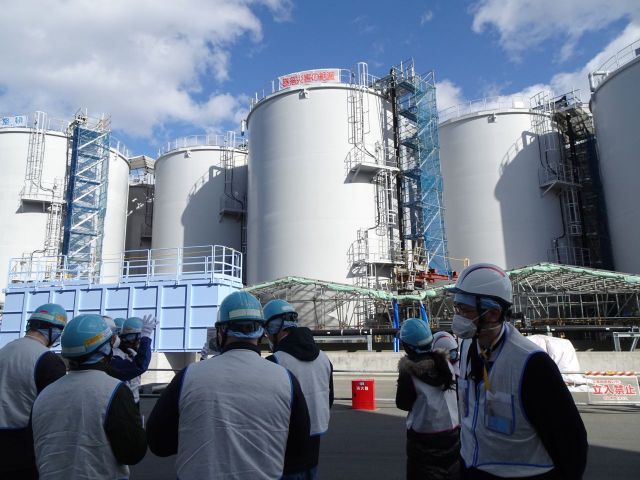
Professor Seo argued that if the Fukushima contaminated water is safe as claimed by Professor Allison, it should not be discharged but used as drinking water. He said, "It is too precious to be used as industrial or agricultural water," and added, "Instead of discarding it, let's connect it directly to the Tokyo water supply system so it can be used as drinking water."
Regarding Professor Allison's claim that tritium is excreted from the body within about 12 to 14 days after ingestion and is harmless to humans, Seo said, "That's what textbooks say," but explained, "It is not completely eliminated; the time mentioned is the half-life. Also, once inside the body, the situation changes overall. It emits weak beta radiation."
He continued, "Our bodies are more than 60% water. Tritium is also water, so they mix together," and explained, "When it binds to living organisms, especially attaching to blood cells like white blood cells, it emits weak electricity. Although weak as radiation, it is strong enough to sever cells." He added, "Chromosomes are connected by a double helix, and this radiation is strong enough to break those connections. While it is excreted, tritium does not remain passive for those 12 days."
Regarding Professor Allison's claim that humans are always exposed to radiation and that our bodies and cellular mechanisms can repair themselves, Seo acknowledged that this is true but said it is a different case from the Fukushima nuclear plant contaminated water. He explained, "What he (Professor Allison) talks about involves concepts of a million, ten million, or a hundred million years, but this (Fukushima contaminated water) is something that suddenly appears."
He added, "Returning to the chromosome strand issue, the electron volt mentioned earlier is very weak, but this radiation is a thousand times stronger, enough to break chromosomes," and said, "Healthy adult men and women can reconnect these strands, but the elderly and weak may die."
He explained, "(Chromosomes) break in tens, thousands, tens of thousands, or hundreds of thousands, and they can connect to other unrelated strands nearby. That is the problem," and said, "This also proliferates well. Humans have evolved through countless mutations and proliferation since birth. However, in this case, very harmful mutations evolve, eventually leading to blood cancer and leukemia."
© The Asia Business Daily(www.asiae.co.kr). All rights reserved.
![Clutching a Stolen Dior Bag, Saying "I Hate Being Poor but Real"... The Grotesque Con of a "Human Knockoff" [Slate]](https://cwcontent.asiae.co.kr/asiaresize/183/2026021902243444107_1771435474.jpg)















