Appearance at the Senate Banking Committee on the 16th
The former CEO of Silicon Valley Bank (SVB), which went bankrupt due to a 'bank run' (massive withdrawal of deposits), claimed that the Federal Reserve's (Fed) rapid interest rate hikes and social media caused the bank's failure.
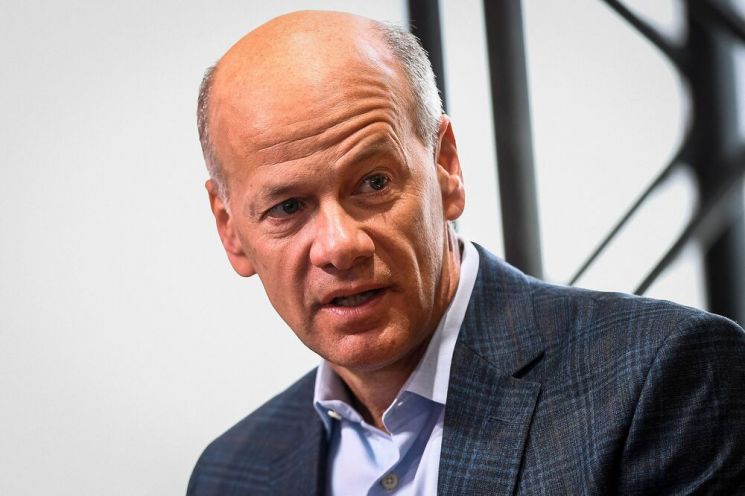
According to Bloomberg on the 15th (local time), Greg Becker, former CEO of SVB, stated in a written report submitted ahead of his appearance at the U.S. Senate Banking Committee hearing on the 16th, "The message previously sent by the Fed was that interest rates would remain low and that the inflation, which was starting to bubble up, was only 'transitory.'"
He pointed out that the Fed's misjudgment in 2021, viewing the price increase as temporary, missed the opportunity to curb inflation early on, and that the subsequent high-intensity tightening steps ultimately led to the bank's collapse.
He added, "From early 2020 to the end of 2021, banks purchased securities worth $2.3 trillion (approximately 3,070 trillion won) in the low-yield environment created by the Fed."
SVB, which had been lending to technology startups, invested heavily in U.S. Treasury bonds, considered safe assets in a low-interest-rate environment. However, rapid interest rate hikes (which caused bond prices to fall) led to a decline in asset value and triggered a bank run.
Becker also claimed that media reports linking SVB's failure to the bankruptcy of Silvergate, a cryptocurrency-focused bank, influenced the bank's collapse.
He pointed out, "(The media) linked Silvergate's bankruptcy with SVB, creating rumors, and misunderstandings spread rapidly online, causing an unprecedented bank run." He continued, "The bank run intensified the next day," adding, "On March 9th, $42 billion (approximately 56 trillion won) in deposits were withdrawn within 10 hours. That means $1 million (approximately 1.3 billion won) left every second."
He explained that attention was also paid to bank risk management. When assets exceeded $100 million in early 2021, the finance team was expanded to strengthen risk management, and after meetings with the Fed, efforts were made to hire a Chief Risk Officer (CRO). He emphasized that despite regulators' assessments that capital and liquidity were sufficient, efforts were made to improve liquidity.
However, Becker faced criticism after it was revealed that he sold 12,451 shares of SVB Financial, SVB's parent company, on February 27, just 11 days before SVB filed for bankruptcy. Although he reported the stock sale to financial authorities a month prior, insider trading suspicions could not be avoided.
Becker said, "I could never have imagined that such an unprecedented event could happen to SVB," and "I firmly believe that the management and I made the best decisions we could at the time based on facts, forecasts, and advice from external experts." He added, "The acquisition of SVB is tremendously shocking both personally and professionally," and "I sincerely apologize for any impact this has had on SVB employees, customers, and shareholders in any way."
© The Asia Business Daily(www.asiae.co.kr). All rights reserved.