Sales Growth of Hanmi, Daewoong, and SK Biopharm with New Drug Approvals
SK Biopharm Targets Q4 Profit Turnaround with 'Cenobamate' Effect
Celltrion's 'Remsima SC' Likely to Be Approved This Year
HLB, Green Cross, and Hugel Also Expected to Apply Within the Year
Domestic new drugs approved by the U.S. Food and Drug Administration (FDA) are rapidly succeeding in penetrating the U.S. market, which is also acting as a positive factor for improving company performance. As the world's largest pharmaceutical market, successful market entry can generate significant profits and is advantageous for expansion into other overseas countries. Accordingly, various new drugs are challenging FDA approval again this year.
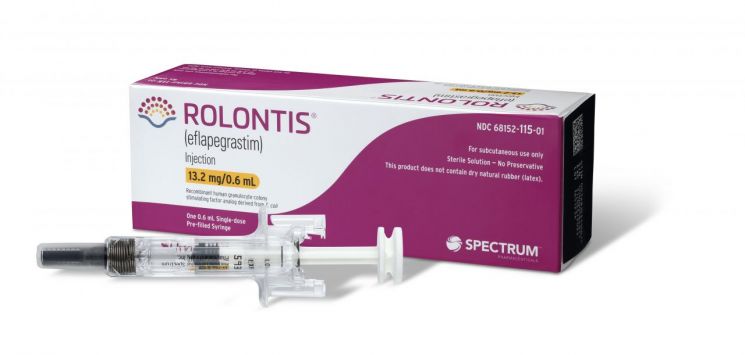
Last year, the domestic new drug approved by the FDA was Hanmi Pharmaceutical's neutropenia treatment 'Rolontis (U.S. name Rolvedon),' which recorded U.S. sales exceeding $15 million (about 20 billion KRW) in the first quarter, marking a successful market entry. The cumulative sales reached $25.73 million (about 34 billion KRW). Notably, last month, the Centers for Medicare & Medicaid Services (CMS), which manages public insurance in the U.S., decided to apply a code for Rolvedon, listing it on the public insurance list. With the number of other clients continuously increasing, sustained growth is expected.
Previously launched products have also continued to increase sales, acting as a key contributor to improving company performance. Daewoong Pharmaceutical's 'Nabota' (export name Juvo) saw export sales rise from 22.8 billion KRW to 36.4 billion KRW in the first quarter of this year, a 59.3% increase compared to the same period last year. Exports to Evolus, the U.S. sales partner, showed strong performance. Accordingly, Daewoong Pharmaceutical recently announced plans to invest 100 billion KRW to build a third factory in Hyangnam-eup, Hwaseong-si, Gyeonggi Province, to expand the Nabota business. The plan is to increase the existing production capacity of 5 million vials by 3.6 times to a total of 18 million vials.
SK Biopharm is also reducing its deficit through sales growth of the epilepsy treatment 'Cenobamate' (U.S. name Xcopri). Cenobamate recorded U.S. sales of 53.9 billion KRW in the first quarter, a 70% increase compared to the same period last year. Since entering the U.S. market in May 2020, it has achieved 12 consecutive quarters of growth. Actual prescription numbers (TRx) also increased by 10% to about 55,000 in the first quarter. As of March, the number was 19,910, which is twice the average prescription number at 35 months for competing new drugs. Overall, the company succeeded in reducing operating losses in the first quarter to 22.7 billion KRW, a 39% decrease compared to the same period last year. If this growth trend of Cenobamate continues, it is expected that the company can achieve its goal of turning a profit on a quarterly basis by the fourth quarter of this year.
Effectively entering the U.S. market enables rapid profit generation as it is the world's largest pharmaceutical market. Additionally, since the FDA is regarded as having the world's highest regulatory standards, it is evaluated that gaining FDA approval provides a favorable position for expansion into other overseas markets. Accordingly, various new drugs are aiming for FDA approval this year, and attention is focused on how their success or failure will unfold.
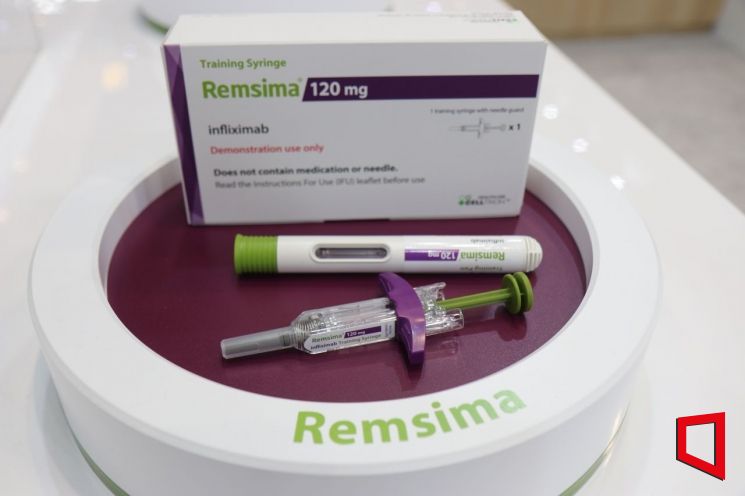
Currently, the most promising candidates are Celltrion's 'Remsima SC' and HLB's 'Rivoceranib.' Remsima SC is a biosimilar of the tumor necrosis factor (TNF)-alpha inhibitor autoimmune disease treatment 'Remicade,' but the FDA has recommended applying for approval as a new drug. Approval is expected to be decided around October.
While other biosimilars and the original drug are all administered intravenously (IV), Remsima SC is a subcutaneous injection (SC) formulation, which offers greater convenience and safety in administration, which is believed to be why the FDA recommended it. In Europe, where it has already entered the market, it has increased market shares to 32% in Germany and 21% in France. In the U.S., 'Remsima IV' already holds a 31.4% market share, so the launch of Remsima SC is expected to create significant synergy. Additionally, FDA approval for 'Yuflyma,' a biosimilar of 'Humira,' is expected to be decided by the end of this month.
HLB, aiming for FDA approval of the anticancer drug Rivoceranib, plans to submit a New Drug Application (NDA) to the FDA around the 20th of this month. They are also pursuing priority review designation to expedite the process, aiming to conclude the approval process by around January next year, ahead of the usual 10-month standard review period. It is expected that HLB will collaborate with Hansoh Pharmaceutical, which developed 'Camrelizumab,' currently undergoing combination therapy, to seek FDA approval for Rivoceranib for liver cancer. At last year's European Society for Medical Oncology (ESMO), the combination therapy Phase 3 clinical trial showed a median overall survival (mOS) exceeding 20 months for the first time ever, achieving 22.1 months.
GC Green Cross, which aimed for new drug approval but received a Complete Response Letter (CRL) for its blood product 'Aliglo (IVIG-SN 10%),' is making a re-challenge. Although approval was anticipated last year, on-site inspections of the Ochang plant could not be conducted due to the COVID-19 pandemic, resulting in a CRL from the FDA in February last year. However, since the FDA conducted an on-site inspection of the Ochang plant last month, it is expected that a Biologics License Application (BLA) can be submitted as early as the second half of this year.
Similarly, Hugel's botulinum toxin 'Botulex,' which received a CRL from the FDA last month, is expected to review the related issues and make a re-challenge soon. The company explained, "The CRL was received regarding factory management," adding, "It is not related to approval." The first approval application was submitted in March 2021, but a CRL was received in March last year. After supplementing the related contents, a re-application was submitted to the FDA in October but faced another hurdle. If expedited, re-application and approval within this year are possible, but with the recent appointment of Cha Seok-yong as the new chairman of Hugel, it is also expected that the overall strategy will be reviewed carefully before making a decision.
© The Asia Business Daily(www.asiae.co.kr). All rights reserved.



















