"Must Comply with Conditions Set by the Labor Standards Act to Be Valid"
Employment Rules Must Be Established When the Unit Period Is Within 2 Weeks
For Unit Periods Less Than 3 Months, Written Agreement with Employee Representative Required
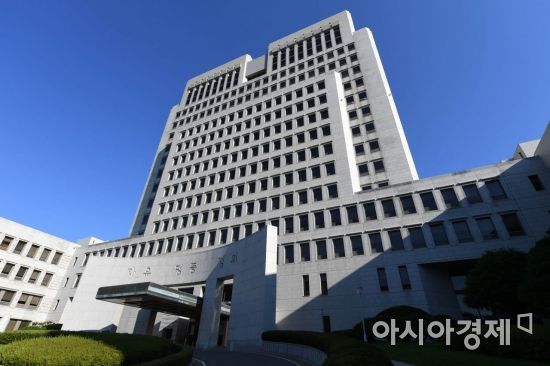
The Supreme Court has ruled that flexible working conditions such as group night shifts for workers at airports operating overnight must be formally established through employment regulations. Agreements made through individual employment contracts or other forms of consent are invalid.
To organize night shifts or similar schedules on a basis of two weeks or more, a written agreement between employee representatives and management is required. This ruling states that for periods of two weeks or less, the arrangement must be formalized through employment regulations.
According to the legal community on the 15th, the Supreme Court's Second Division (Presiding Justice Min Yusook) overturned the lower court's decision that fined cleaning service company CEO A 5 million won in a case involving violations of the Labor Standards Act and the Equal Employment Opportunity Act, and remanded the case to the Incheon District Court.
The court stated, "The lower court's judgment acquitting the defendant of violating the Labor Standards Act contained errors in understanding the validity requirements of the flexible working hours system, the distinction between employment contracts and employment regulations, and the intent regarding unpaid wages, which affected the ruling."
A, who operates an aircraft cabin cleaning service company with more than 400 regular employees, was prosecuted for failing to pay approximately 52 million won in overtime wages to current and former employees and for not paying regular attendance allowances to 124 female workers that were paid to male workers.
The trial focused on whether the flexible working hours system cited by A as the reason for not paying overtime wages was validly introduced and whether there were justifiable differences in work between male and female workers to rationalize wage discrimination.
A claimed that since the flexible working hours system on a two-week basis was introduced through individually signed employment contracts with employees, there was no obligation to pay overtime wages.
However, the court held that even if the employment contracts included provisions related to extended working hours, they have no effect unless stipulated in employment regulations as required by law.
The court explained, "For the 'flexible working hours system with a unit period of two weeks or less' stipulated in Article 51, Paragraph 1 of the Labor Standards Act, the start and end dates of the unit period and the working hours for each working day within the unit period must be specifically defined in the employment regulations. For the 'flexible working hours system with a unit period of up to three months' under Article 51, Paragraph 2, it must be established through a written agreement with employee representatives; otherwise, it has no effect as a working hours system."
It added, "Even if an individual employment contract includes a clause stating 'within the scope of 40 hours per week, flexible work is conducted based on the work schedule considering the special nature of airport operations,' such individual contracts alone cannot be recognized as having the effect equivalent to employment regulations."
The court also ruled that A's failure to pay the regular attendance allowance to female workers performing the same aircraft cleaning work as male workers, while paying it to male workers based on attendance performance, violated the Equal Employment Opportunity Act.
A argued that there were quantitative or qualitative differences in work conditions, such as male workers handling heavy objects, but this was not accepted.
The second trial court acquitted A of violating the Labor Standards Act due to unpaid overtime wages and reduced the fine to 5 million won.
The court reasoned that since the employment contracts commonly included conditions related to flexible working hours, the flexible working hours system could be considered validly introduced, and even if not, A had applied the system for a long time without employee objections.
However, the Supreme Court's judgment differed.
The court stated, "The flexible working hours system allows setting prescribed working hours exceeding the statutory weekly and daily standard working hours and is exceptionally permitted only within certain conditions and scope defined by law. Therefore, it can only be introduced through employment regulations as prescribed by law, not through employment contracts or individual employee consent."
It added, "Allowing the introduction of the flexible working hours system through employment contracts or individual consent would undermine the purpose of the Labor Standards Act, which requires the consent of a labor union representing the majority of employees for unfavorable changes to employment regulations."
The court judged that since separate employment regulations exist within the company, it is difficult to consider the employment contracts in this case as effectively equivalent to employment regulations, contrary to the second trial court's assessment.
A Supreme Court official explained, "This is the first ruling to determine that the flexible working hours system with a unit period of two weeks or less cannot be introduced even with individual employee consent and can only be introduced through employment regulations."
© The Asia Business Daily(www.asiae.co.kr). All rights reserved.
![Clutching a Stolen Dior Bag, Saying "I Hate Being Poor but Real"... The Grotesque Con of a "Human Knockoff" [Slate]](https://cwcontent.asiae.co.kr/asiaresize/183/2026021902243444107_1771435474.jpg)
















