Following the rise in U.S. consumer prices, the increase in wholesale prices is also slowing down. This is seen as an additional signal that inflationary pressures are easing due to the Federal Reserve's (Fed) monetary tightening that has lasted for over a year. Accordingly, the view that the Fed will halt interest rate hikes starting as early as June is gaining momentum.
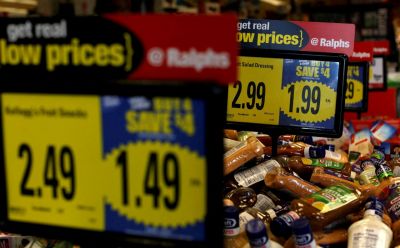
According to the U.S. Department of Labor on the 11th (local time), the Producer Price Index (PPI), a measure of wholesale prices, rose 2.3% in April compared to the same month last year. This is a slowdown from the 2.7% increase in March and the lowest level since January 2021. The April PPI also rose only 0.2% month-over-month, falling short of Wall Street's forecast of a 0.3% increase.
Specifically, prices in wholesale food and alcoholic beverages, outpatient care, and hotel room sectors increased, while prices in food retail, securities brokerage, trading, and investment advisory sectors declined. The Department of Labor noted that service prices rose by 0.3%, accounting for 80% of the overall PPI increase.
Core PPI, which excludes volatile energy, food, and trade services, rose 3.4% year-over-year. This is a slowdown from 4.5% in February and 3.7% in March. However, core PPI increased 0.2% month-over-month, slightly higher than the 0.1% rise in March.
Experts interpret the recent easing trend in wholesale prices as a result of recent declines in raw material prices and improvements in supply chains. Considering that wholesale price increases typically pass through to consumer prices later, these figures are also analyzed as a signal that inflationary pressures have eased. Quincy Crosby, Chief Global Strategist at LPL Financial, said, "The PPI released today shows that prices are gradually falling, which is an important indicator for markets concerned about rising inflation."
The CPI released the previous day also fell short of market expectations, signaling a cooling of inflation. The April CPI rose 4.9% year-over-year, marking the smallest increase since April 2021. It was below both the Wall Street forecast of 5.0% and the 5.0% increase in March, continuing a ten-month consecutive slowdown.
Following the CPI, the confirmation of the inflation slowdown trend by the PPI has sustained expectations that the Fed will halt interest rate hikes starting from the June Federal Open Market Committee (FOMC) meeting. According to the Chicago Mercantile Exchange (CME) FedWatch tool, as of the morning of the day, federal funds futures markets reflect over a 99% probability that the Fed will keep rates unchanged in June. Nearly half of the bets also anticipate rate cuts beginning as early as July. The Fed, which declared a war on inflation, has raised the U.S. benchmark interest rate to 5.0-5.25% through ten consecutive rate hikes since March last year.
On the same day, employment data suggesting that the labor market overheating, which the Fed has been concerned about, is cooling down was released. The weekly initial jobless claims reached the highest level since October 2021. According to the U.S. Department of Labor, last week's initial jobless claims were 264,000, an increase of 22,000 from the previous week. Continued claims, which represent those applying for unemployment benefits for at least two weeks, also rose by 12,000 to 1.81 million. Among Wall Street experts, there is an analysis that the cumulative tightening by the Fed and large-scale layoffs by big tech and investment banks are gradually being reflected in these indicators.
However, the key issue remains core inflation. While it is slowing year-over-year, it has slightly increased month-over-month, confirming that sticky core inflation persists. Edward Moya, Senior Market Analyst at OANDA, said the previous day, "There is strong optimism that the disinflation process will continue," but added, "Considering the strength of the labor market, reaching the Fed's inflation target of 2% will be much more difficult."
© The Asia Business Daily(www.asiae.co.kr). All rights reserved.
![Clutching a Stolen Dior Bag, Saying "I Hate Being Poor but Real"... The Grotesque Con of a "Human Knockoff" [Slate]](https://cwcontent.asiae.co.kr/asiaresize/183/2026021902243444107_1771435474.jpg)















