Controversy Over Term Change from Contaminated Water to Treated Water
Japan Uses 'Treated Water' to Mean 'Cleanly Purified'
Opposition: "Renaming... Attempt to Change Image of Contaminated Water"
As Japan is reported to discharge contaminated water from the Fukushima nuclear power plant into the ocean this summer, controversy has arisen after it was revealed that the government considered changing the term 'contaminated water' to 'treated water.'
The Japanese government refers to the radioactive contaminated water from Fukushima, from which most radioactive nuclides except tritium have been removed using the Advanced Liquid Processing System (ALPS), as treated water. This emphasizes the meaning that the contaminated water within the Fukushima nuclear power plant site has been 'cleanly purified and treated.'
On the other hand, regions expected to be affected by Japan’s contaminated water discharge, including South Korea, China, and some Pacific island countries, as well as international environmental organizations, use terms such as contaminated water or radioactive waste water instead of treated water. Domestic environmental groups like the Korean Federation for Environmental Movements have pointed out that calling contaminated water treated water is an attempt by the Japanese government to conceal the risks of the contaminated water.
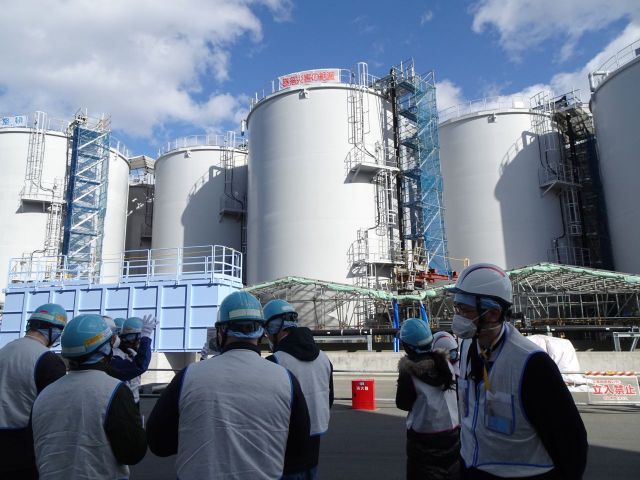
However, controversy arose recently when it was revealed that the government considered changing the terminology from contaminated water to treated water. Earlier, citing government sources, JoongAng Ilbo reported, "If the treatment ratio increases in the future, it is reasonable to call contaminated water treated water, so we are reviewing the terminology change."
Seong Il-jong, a member of the People Power Party and chairman of the Our Sea Protection Verification Task Force (TF), argued that since the contaminated water is treated with ALPS before discharge, it is appropriate to use the term 'contaminated treated water.'
On the 11th, he said on SBS Radio's 'Kim Taehyun's Political Show,' "The Moon Jae-in administration also conducted verification, and the International Atomic Energy Agency (IAEA) is leading efforts to verify and test whether multiple radionuclides are filtered out. Everything is being verified, and the water that meets international legal standards will be discharged into the outer sea."
In response, the Democratic Party raised their voices, saying it represents Japan’s interests. Park Sung-jun, spokesperson for the Democratic Party, said in a written briefing on the 11th, "Are you trying to give the public the impression that Japan’s nuclear power plant contaminated water is safe by changing the name? Only less than 30% of the contaminated water has been treated, and even the treated water’s safety must be scientifically verified. Why change the name?" he criticized.
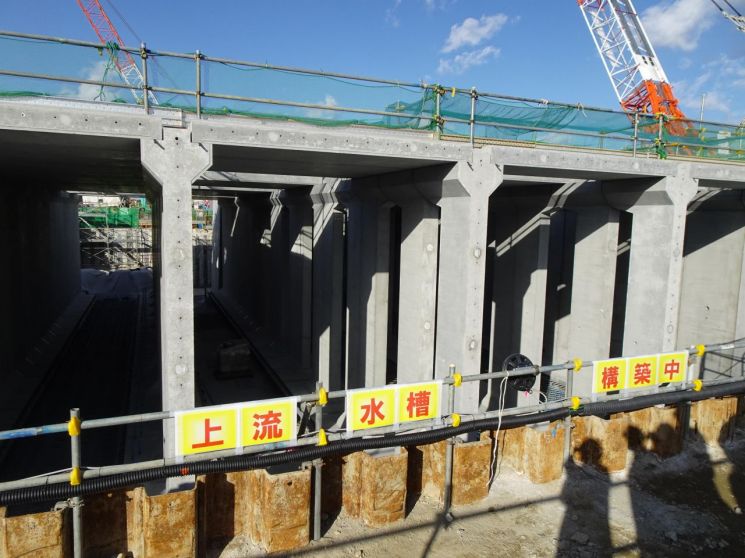 On February 2nd, the upstream reservoir, which corresponds to the final stage of discharging contaminated water from the Fukushima nuclear power plant in Japan through an underwater tunnel, has its basic frame made of concrete. Photo by Yonhap News
Meanwhile, although the Japanese government plans to discharge the contaminated water into the ocean starting this summer, it is facing criticism from neighboring countries and around the world regarding safety. Japan claimed to have gained support from the Group of Seven (G7) for the nuclear power plant contaminated water discharge but was publicly contradicted.
At a press conference during the G7 Climate, Energy, and Environment Ministers’ Meeting held in Sapporo, Japan, on the 16th of last month, Japan’s Minister of Economy, Trade and Industry, Nishimura Yasutoshi, said, "The steady progress in decommissioning, including the ocean discharge of treated water (contaminated water), and Japan’s transparent response based on scientific evidence were welcomed." However, German Environment Minister Steffi Lemke said, "While I have great respect for the efforts of Tokyo Electric Power Company and the Japanese government, I cannot welcome the discharge of Fukushima contaminated water." Eventually, Minister Nishimura apologized to reporters after the conference, saying, "I misspoke."
The Chinese government is also actively opposing the ocean discharge of contaminated water and refuting Japan’s claims that the contaminated water is harmless. On the 10th, Wang Wenbin, spokesperson for the Chinese Ministry of Foreign Affairs, criticized the plan at a regular briefing, saying, "The Japanese government repeatedly says the contaminated water is safe and harmless, but many people wonder why Japan does not discharge it domestically or use it for agricultural or industrial water."
© The Asia Business Daily(www.asiae.co.kr). All rights reserved.
![Clutching a Stolen Dior Bag, Saying "I Hate Being Poor but Real"... The Grotesque Con of a "Human Knockoff" [Slate]](https://cwcontent.asiae.co.kr/asiaresize/183/2026021902243444107_1771435474.jpg)

















