Visit to Japan Bio Cluster 'iPark Institute'
Discussion on Collaboration Including Joint Research, Infrastructure, and Regulatory Consulting
Japan with Extensive New Drug Development Experience... A Foothold for Overseas Expansion
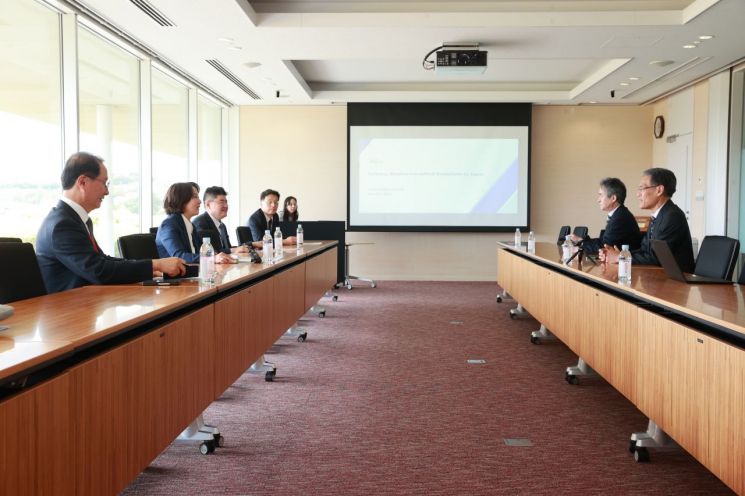 Minister Lee Young of the Ministry of SMEs and Startups visited the I-Park Institute in Kanagawa Prefecture, Japan, on the 11th to discuss cooperation plans in the advanced bio sector.
Lee Young, Minister of the Ministry of SMEs and Startups, visited Japan's representative bio cluster on the 11th to discuss cooperation plans in the advanced bio sector between the two countries.
On the same day, Minister Lee visited the iPark Institute in Kanagawa Prefecture, Japan, stating, "In connection with the Korea-US bio cluster cooperation agreed upon last April, we will establish a Korea-US-Japan bio cluster cooperation system," and added, "We will spare no effort to provide multifaceted support so that capable bio startups can realize their dreams through overseas expansion."
The iPark Institute is an innovation cluster established by the global company Takeda Pharmaceutical, which opened its own research center to universities and external companies in 2018 to promote exchange and cooperation. It has the largest facilities in Japan in the life sciences field. Recently, it has become independent from Takeda Pharmaceutical and established itself as a symbol of autonomous bio-technology innovation.
The Ministry of SMEs and Startups and iPark have been discussing ways for domestic bio startups to challenge clinical trials in an environment that meets global standards and collaborate with Japanese pharmaceutical companies experienced in new drug development.
This visit by Minister Lee is the first official event following the announcement of the "Global Innovation Zone Creation Plan" on the 8th. The Global Innovation Zone aims to build a demonstration environment that transcends borders and spaces, including plans to establish overseas demonstration bases centered on advanced technology sectors.
It is expected that if the iPark Institute is designated as an overseas demonstration base in the future, it will facilitate the overseas expansion of domestic advanced bio startups.
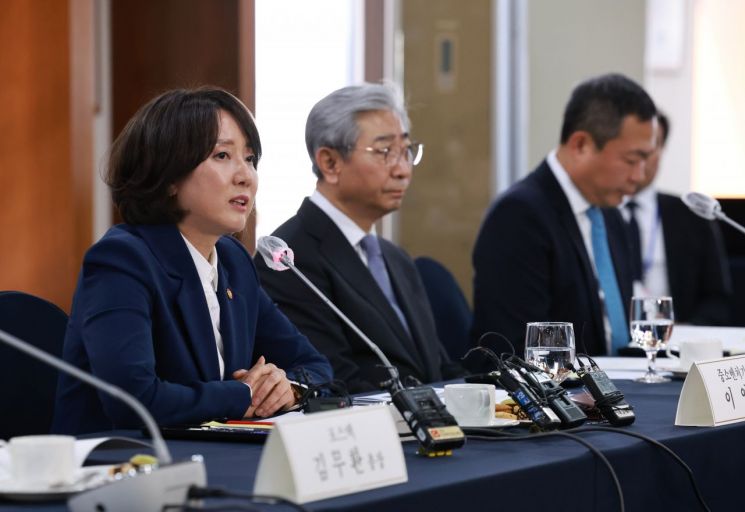
Minister Lee toured major research facilities such as the culture room, chemical substance laboratory, and shared laboratory established at iPark, and discussed cooperation between the bio clusters of the two countries with related personnel including CEO Toshio Fujimoto.
Both sides agreed to concretize agenda items to ensure that cooperation in advanced bio fields, such as joint research, mutual infrastructure support, regulatory consulting, and operation of networking programs, can produce tangible results.
The advanced bio sector, the focus of cooperation, refers to industries involving therapies or pharmaceuticals using living cells as raw materials, such as stem cells and cell genes. It has shown nearly 50% annual growth and is gaining attention as a next-generation promising technology capable of treating rare and intractable diseases in the bio field.
The Japanese side showed interest not only in bio startups but also in cooperation between Korean advanced digital startups in artificial intelligence and big data and Japanese pharmaceutical companies. Since clinical results in Japan are largely recognized in the United States as well, cooperation with iPark is expected to positively influence entry into the US market.
CEO Fujimoto said, "Our goal is to provide opportunities for challenge to promising startups with innovation and creativity," adding, "Cooperation with Korean bio startups will contribute not only to innovation in the bio sectors of both countries but also to active exchanges among young people and help improve human health."
Minister Lee emphasized, "Effective support for bio startups, which require huge funds and long-term development, is important not only through financial support such as research and development (R&D) but also through cooperation with global innovation entities for development and business that meet global standards."
Meanwhile, the Ministry of SMEs and Startups has prepared a plan to establish the 'K-Bio Lab Hub' to create a full-cycle support foundation for bio ventures and startups.
Last month, during President Yoon Suk-yeol's visit to the United States, a memorandum of understanding was signed to share success know-how and promote exchange activities with 'LabCentral Boston,' a role model for the K-Bio Lab Hub, establishing a Korea-US bio cluster cooperation system.
© The Asia Business Daily(www.asiae.co.kr). All rights reserved.
![Clutching a Stolen Dior Bag, Saying "I Hate Being Poor but Real"... The Grotesque Con of a "Human Knockoff" [Slate]](https://cwcontent.asiae.co.kr/asiaresize/183/2026021902243444107_1771435474.jpg)
















