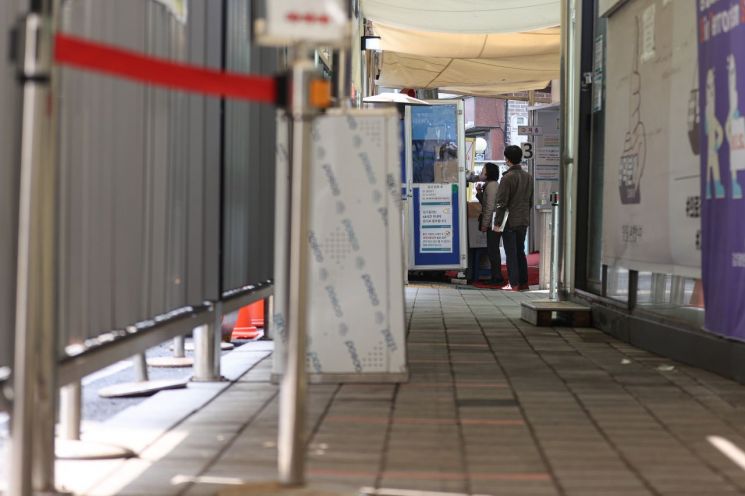
On the 1st, the government effectively declared COVID-19 as an 'endemic' (periodic outbreak of infectious diseases), signaling the end of the pandemic. However, the threat of the unknown infectious Disease X still persists. The emergence cycle of infectious diseases is shortening, leading to predictions that Disease X may appear soon. A health official stated, “After SARS emerged in 2003, the novel flu appeared six years later, and four years after that, COVID-19 began,” adding, “there is a need to build infectious disease response capabilities on a new level.”
In response, the Korea Disease Control and Prevention Agency (KDCA) announced the 'Mid- to Long-term Plan for Preparing for a Novel Infectious Disease Pandemic,' jointly prepared with related ministries. The plan aims to develop vaccines within 200 days at the latest after a novel infectious disease outbreak and establish a medical system capable of responding to one million daily confirmed cases.
KDCA has set 10 core tasks to achieve this. First, it will build an integrated surveillance system (Infectious Disease Comprehensive Intelligence Platform) for early warning of infectious diseases that may appear at any time. This system will integrate separately used overseas and domestic surveillance information and comprehensively analyze various data such as wastewater and zoonotic surveillance. Since Disease X is likely to be a respiratory infectious disease, clinical surveillance, pathogen and variant monitoring will be significantly strengthened, focusing on respiratory infections.
The lesson from COVID-19 was securing hospital beds. During the peak of COVID-19, it took more than 10 weeks to secure target beds even with administrative orders. To prepare for a potentially larger-scale Disease X, approximately 3,500 intensive care unit (ICU) beds that can be mobilized within a week will be secured. This is five times the roughly 700 beds secured at the early stage of the COVID-19 outbreak. Essential personnel will also be increased. Epidemiologists will be assigned even in counties and districts with populations under 100,000, and specialized staff in ICUs and infectious disease wards will be expanded.
Before a pandemic occurs, a rapid vaccine and therapeutic development system will be established. Priority infectious diseases such as respiratory viruses and hemorrhagic fever viruses will be selected domestically, and priority pathogens and prototype vaccines will be pre-produced and stockpiled in a prototype library. Efforts will also be made to secure key platforms such as messenger ribonucleic acid (mRNA). The National Institute of Infectious Diseases will strengthen its infectious disease research and development (R&D) planning function and collaborate performance-orientedly with the National Science and Technology Advisory Council and private organizations. A KDCA official emphasized, “Through this, we will promote rapid vaccine and therapeutic development within 100 or 200 days of a pandemic outbreak.”
KDCA plans to establish implementation plans for 79 detailed tasks in the mid- to long-term plan and conduct periodic performance reviews. Director Ji Young-mi of KDCA stated, “Future pandemics may come in forms and ways we cannot predict, so we will prepare quarantine capabilities to handle the maximum possible outbreak.”
© The Asia Business Daily(www.asiae.co.kr). All rights reserved.

















