Controversy Over ADHD Drug as 'Focus Pill'
Excessive Motivation When Taken by Non-Patients
May Cause Failure to Detect Life's 'Risks'
Among some exam candidates and job seekers, ADHD medication is gaining attention as a 'drug that enhances concentration,' sparking ongoing controversy. Reviews of ADHD medication use are being posted on social networking services (SNS) and YouTube, and on the 3rd of last month, there was even an incident where narcotics were disguised as ADHD medication and given to students in the form of a 'drug beverage.'
So, what actually happens in the brain when a person without ADHD takes ADHD medication? A study has found that some users experience an 'illusion of improved concentration' after taking ADHD medication because the brain's motivation ability becomes distorted.
ADHD Medication Makes the Brain Obsess Over 'Profit'
 Pill. The photo is not related to any specific expression in the article. [Image source=Yonhap News]
ADHD medication is prescribed to patients diagnosed with ADHD and is designed to alleviate symptoms by regulating the amount of neurotransmitters. The cause of ADHD is presumed to be improper regulation of neurotransmitters such as dopamine in the brain.
But what happens when a person with stable dopamine secretion in their body, unlike an ADHD patient, takes ADHD medication? Researchers at Brown University in the U.S. published a study in the Science Journal analyzing what occurs in the brain when a healthy individual takes ADHD medication.
The study involved randomly administering ADHD medication and a placebo to 50 men and women aged 18 to 43, followed by three rounds of 'tests.' The tests consisted of various tasks, and participants received monetary rewards for successfully completing tasks. The reward increased with the difficulty of the task.
Additionally, the researchers conducted brain magnetic resonance imaging (MRI) on the participants to observe what happens in the brain when considering rewards.
The results showed that participants who took the placebo were more sensitive to costs (task difficulty) than to benefits (money) when choosing tests. In contrast, participants who took ADHD medication and had activated dopamine focused much more on the rewards.
The researchers stated, "Regardless of drug treatment, dopamine generally plays a role in regulating motivation in the human brain."
Humans Consider Both Costs and Benefits of All Actions... Excessive Dopamine Disrupts Balance
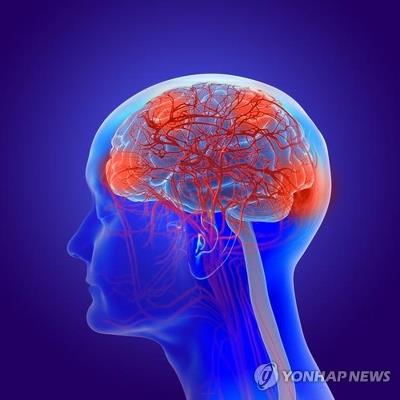
According to the researchers, people consider both 'costs' and 'benefits' when performing specific actions. Even if the benefit is highly attractive, if the cost is judged to be unreasonably high, the action is not taken. This allows healthy individuals to avoid risks in life and control impulsive behavior. However, when dopamine levels are imbalanced, focus shifts solely to benefits, leading to much more impulsive and active behavior than usual.
The 'illusion' that ADHD medication improves concentration for exam candidates also stems from this. It causes users to obsess over benefits (improved grades) rather than the costs (academic stress, effort) required for studying.
However, this excessive motivation has no actual relation to improved concentration. On the contrary, it disrupts the brain's motivation system, potentially slowing cognitive abilities and causing risks.
Andrew Westbrook, who developed the brain model used in the study, pointed out, "If you increase dopamine levels in a person who already has sufficient dopamine, that person will perceive every decision given to them as beneficial." Excessive dopamine levels reduce a person's ability to avoid risks.
Westbrook emphasized, "Because of this, the person may impulsively engage in temptations such as gambling and risky behaviors, acting in ways that do not align with their actual goals."
© The Asia Business Daily(www.asiae.co.kr). All rights reserved.
![Clutching a Stolen Dior Bag, Saying "I Hate Being Poor but Real"... The Grotesque Con of a "Human Knockoff" [Slate]](https://cwcontent.asiae.co.kr/asiaresize/183/2026021902243444107_1771435474.jpg)
















