Europe Tightens Screening Amid Concerns Over Chinese Capital Inflow
Investment in Electric Vehicle Batteries Increases
Last year, China's investment in Europe plummeted to its lowest level in a decade. While the impact of COVID-19 and other factors worsened China's external investment environment, some analysts attribute this decline to the European Union (EU) being cautious about the influx of Chinese capital into key infrastructure.
According to the Hong Kong South China Morning Post (SCMP) on the 9th, China's investment in the EU and the United Kingdom last year amounted to 7.9 billion euros (approximately 11.54 trillion KRW), a 22% decrease compared to the previous year. SCMP reported, "China's investment in Europe has returned to the 2013 level, before Chinese President Xi Jinping's Belt and Road Initiative (the overland and maritime Silk Road connecting China, Central Asia, and Europe) expenditures began."
According to a joint research report cited by the media from the German think tank Mercator Institute for China Studies (MERICS) and the US consulting firm Rhodium Group, this trend mirrors the broad decline in China's overseas investments. Last year, China's external investment totaled 111 billion euros, down 23% from the previous year, marking the lowest level in eight years. In particular, mergers and acquisitions (M&A) related investments fell 21% to 22 billion euros.
SCMP explained the decrease in investment in Europe as "resulting from European governments scrutinizing Chinese investments in key infrastructure more closely," adding, "The EU recently introduced a foreign direct investment screening process for member states to manage risky investments."
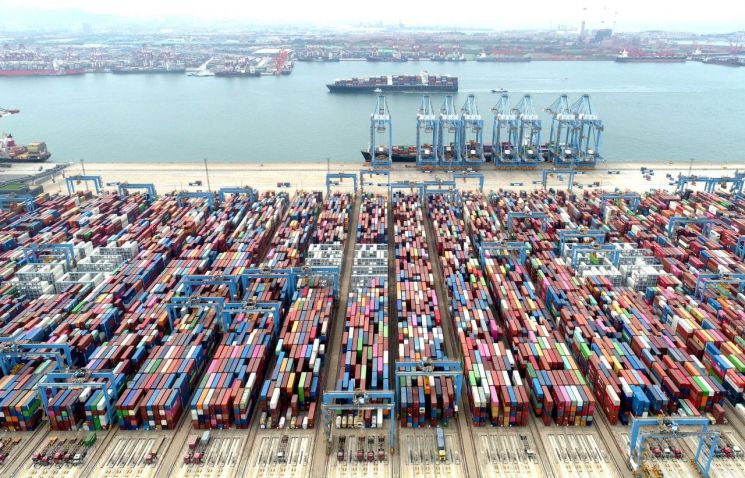
In fact, last year the European Commission recommended that the German government reject the bid by COSCO, a Chinese state-owned shipping giant, to acquire a stake in the Hamburg port terminal. Initially, COSCO sought to purchase a 35% stake in the Tollerort terminal, the smallest of the four container facilities at Hamburg port, and Germany approved the sale after reducing the stake to 24.9%. However, the transaction is currently under review due to cabinet resistance.
The report also mentioned that China itself has diminished capacity to invest in energy, infrastructure, real estate, and financial sectors. It explained, "Capital controls have been strengthened to reduce financial risks for companies with high domestic debt, and deteriorating EU-China relations along with stricter investment screening of key infrastructure after the Ukraine war have influenced this."
China's investments in Europe were concentrated 88% in four countries: the United Kingdom, France, Germany, and Hungary. Among these, large-scale greenfield investments in electric vehicle (EV) battery manufacturers showed an increasing trend, the report diagnosed. Greenfield investment is a type of foreign direct investment (FDI) where a parent company establishes a subsidiary in another country and builds the business from scratch.
A Rhodium Group official stated, "There is a significant change in how Chinese companies invest in Europe," explaining, "While most investments were previously focused on corporate acquisitions, now investments in battery factories are driving the trend." He added, "Chinese companies are investing billions of dollars in Europe's electric vehicle supply chain," emphasizing, "They have also played an important role in Europe's green transition."
© The Asia Business Daily(www.asiae.co.kr). All rights reserved.
![Clutching a Stolen Dior Bag, Saying "I Hate Being Poor but Real"... The Grotesque Con of a "Human Knockoff" [Slate]](https://cwcontent.asiae.co.kr/asiaresize/183/2026021902243444107_1771435474.jpg)















