"Immediate Response 'If Necessary' to Widening US-Korea Interest Rate Gap"
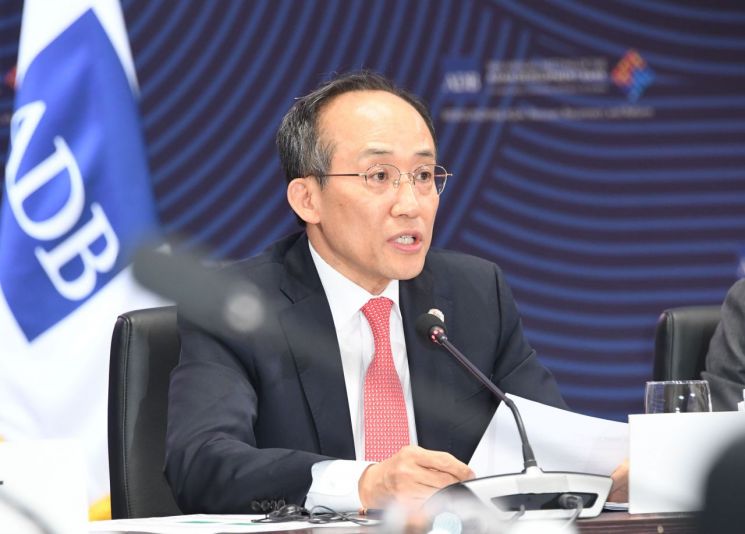
Deputy Prime Minister and Minister of Economy and Finance Choo Kyung-ho said on the 4th, "Now is not the time to shift the policy stance from price stabilization to economic stimulus," adding, "We will focus our policy capabilities on firmly maintaining the price stabilization stance."
At a press conference held at the Songdo Convensia in Incheon, where the Asian Development Bank (ADB) Annual Meeting is taking place, Deputy Prime Minister Choo said, "Although the consumer price inflation rate last month recorded 3.7%, major advanced countries are still experiencing significantly high inflation and are continuing interest rate hikes and financial tightening policies in response."
Deputy Prime Minister Choo stated, "There are still domestic and international uncertainties that could cause inflation in various places," and added, "I believe that the policy stance should consistently maintain a firm price stabilization stance for the time being."
He also added, "If the policy stance is prematurely shifted back to economic stimulus before the price stabilization stance is established, it could rather cause price instability."
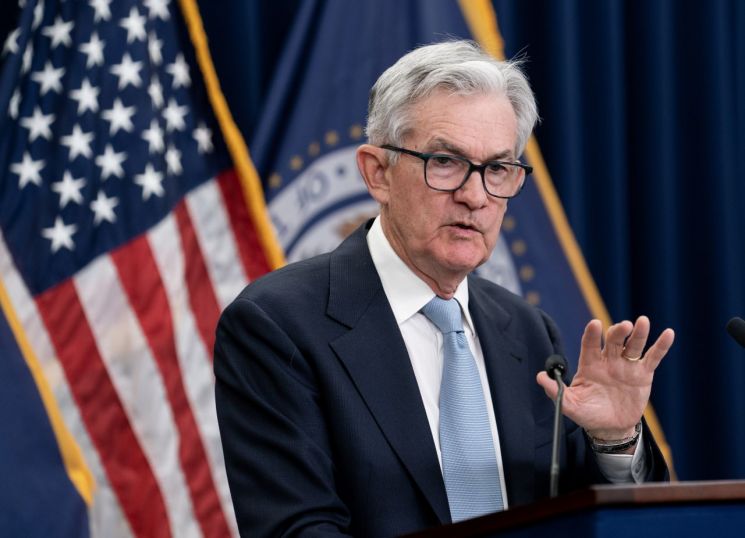
Regarding concerns about capital outflows as the U.S. Federal Reserve (Fed) raised its benchmark interest rate by 0.25 percentage points on the 3rd (local time), widening the Korea-U.S. benchmark interest rate gap to a record 1.75 percentage points, he said, "We plan to closely cooperate with the central bank and related institutions and respond immediately when necessary."
Deputy Prime Minister Choo emphasized, "Related institutions have had many discussions and have several plans in place to prepare for emergency situations," adding, "We will closely monitor the international economic and financial market situations, including the U.S., without letting our guard down even for a moment."
He confirmed that although concerns about tax revenue shortages are growing, the government is still not considering an additional supplementary budget.
He said, "The economic issues, sluggish asset markets, and poor business conditions of companies have overlapped, causing tax revenue shortages," and added, "It does not seem that this situation will be resolved in the short term."
He continued, "Nevertheless, the budget already allocated for livelihood-related matters will be spent," and said, "We plan to respond by utilizing surplus funds from reserves and other sources. Internally, tax revenue estimates are ongoing, but currently, an additional supplementary budget is not being considered."
Regarding the International Monetary Fund (IMF) lowering South Korea's economic growth forecast for this year to 1.5%, he said, "In December last year, the government forecasted this year's economic growth at 1.6%, which was lower than other institutions," adding, "The forecasts from institutions including the IMF currently coming out are not significantly different from the government's original forecast."
In response to concerns that the delay in electricity rate hikes and bonds issued by Korea Electric Power Corporation (KEPCO bonds) could increase financial market instability, he said, "KEPCO bonds are being absorbed by the market without difficulty, contrary to initial concerns."
Deputy Prime Minister Choo explained, "Last year, KEPCO's deficit increased significantly, leading to a flood of KEPCO bonds, which heightened instability in the bond market, raising worries that a similar situation might occur again this year. However, the possibility of financial market instability due to KEPCO bonds is very limited at present."
© The Asia Business Daily(www.asiae.co.kr). All rights reserved.
![Clutching a Stolen Dior Bag, Saying "I Hate Being Poor but Real"... The Grotesque Con of a "Human Knockoff" [Slate]](https://cwcontent.asiae.co.kr/asiaresize/183/2026021902243444107_1771435474.jpg)
















