Naver 4.8% vs Union 11% Raise
Disagreements Over Total Compensation Including Stock Grants
Union Membership Rising Amid Internal Dissatisfaction
Wage negotiations between Naver's labor and management are dragging on. Although the management slightly increased the initially proposed wage hike rate, the gap with the union remains wide. Internal dissatisfaction is rising as wage negotiation difficulties add to the reduction of year-start performance bonuses.
Naver's labor and management held the 7th wage and collective bargaining negotiation on the 25th. The management proposed a slight increase from the initially suggested 3.8% wage hike rate to 4.8%.
However, the gap remains significant. Naver's union, 'Gongdongseongmyeong,' is demanding an 11% increase. They argue that wages should be raised further, reflecting the inflation rate, after the company cut employee performance bonuses by about 20% compared to the previous year. They claim that the proposed increase rate falls short of last year's inflation rate of 5.1% as reported by Statistics Korea, thus crossing the 'line.' They also argue that the management's proposed increase is excessively low compared to IT companies like Kakao and Nexon. Kakao agreed on a 6% increase based on its headquarters, and Nexon agreed on 8%.
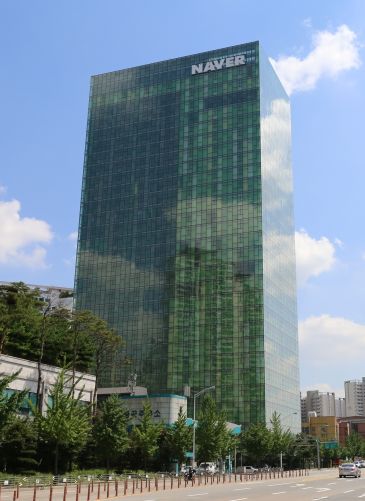
There was also no consensus on the total compensation package, including stock grants. The union demands reducing the volatility of the total compensation scale, including stock grants and performance bonuses, which will end next year, but the management has not accepted this. Stock grants are a type of incentive where the company gives shares free of charge instead of stock options. Naver promised to provide stock grants worth about 10 million KRW per employee annually for three years in 2021, when the competition for salary increases in the IT industry was fierce.
The company tightened its belt due to increased management uncertainty. Although annual sales surpassed 8 trillion KRW for the first time last year, operating profit decreased. This is the first decline in operating profit in four years since 2018. This year, concerns about a slowdown in the economy and its impact on advertising revenue, a major source of income, persist. This is why the company focused on cost reduction by cutting employee performance bonuses and reducing the director's compensation limit earlier this year.
Although it is already May, negotiations are expected to continue longer. There are predictions that the talks may extend beyond the first half of the year under the current atmosphere. Last year, after a total of 11 rounds of negotiations, an agreement was reached in early April for a 10% increase. Although lower than the union's demand of 15%, it was a double-digit increase.
Employee dissatisfaction is rising. Accordingly, union membership rates have increased from 40% at the beginning of the year to just under 45%. A Naver employee said, "Even considering the economic situation, the wage increase rate is too low compared to other companies," adding, "Many employees are disappointed because, unlike large-scale mergers and acquisitions (M&A) and external investments, investment in employees has been neglected."
© The Asia Business Daily(www.asiae.co.kr). All rights reserved.
![Clutching a Stolen Dior Bag, Saying "I Hate Being Poor but Real"... The Grotesque Con of a "Human Knockoff" [Slate]](https://cwcontent.asiae.co.kr/asiaresize/183/2026021902243444107_1771435474.jpg)















