The scale of commercial real estate investment in Seoul in the first quarter of this year has sharply declined by about 70% compared to the previous year.
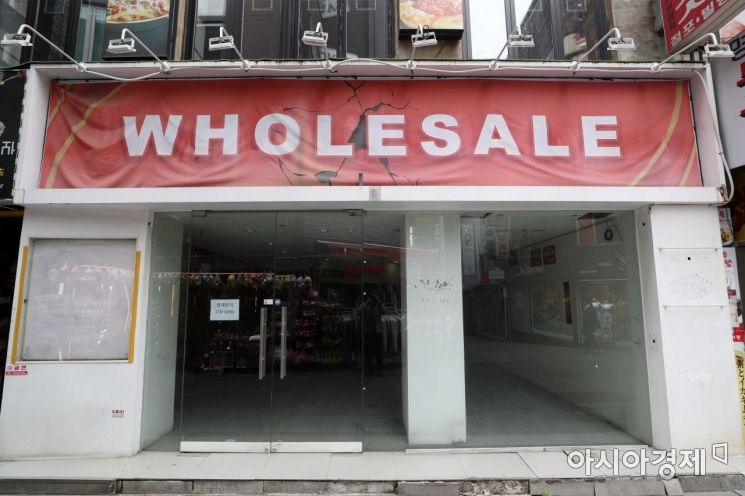 Vacant stores have been steadily increasing in major commercial districts due to the prolonged COVID-19 pandemic. Myeongdong, Seoul's representative commercial area, is severely affected, with 4 out of 10 stores empty. According to the "2021 Q1 Commercial Real Estate Lease Trend Survey" released by the Korea Real Estate Board, the vacancy rate for medium to large stores in Myeongdong was recorded at 38.4%. Rental inquiries, temporary closure, and business termination signs are posted on Myeongdong shops. Photo by Moon Honam munonam@
According to the "Domestic Commercial Real Estate Market" report released by global real estate service company CBRE Korea, the size of the commercial real estate investment market in Seoul in the first quarter was 2.157 trillion KRW, a 70% decrease compared to the same period last year. This is the lowest quarterly level since 2017.
By type, office and logistics transactions accounted for similar proportions of 48% and 42%, respectively, and with overseas investors notably purchasing logistics centers, about 34% of the total investment scale was identified as foreign investment.
The average vacancy rate of Seoul's Grade A office market in the first quarter of this year was 1.2%, showing a level similar to the previous quarter. With almost no new supply, major business districts continue to maintain vacancy rates at the lowest levels.
Similarly, according to data from commercial real estate data company RSquare, which tracked and announced sales of office and commercial buildings in Seoul from early this year to March 14 (based on contract date) through the Korea Real Estate Board, there was only one transaction exceeding 100 billion KRW. It was an office facility in Jung-gu, contracted at 308 billion KRW early this year. The next largest transaction was a neighborhood living facility in Sinsa-dong, sold for 50 billion KRW.
In contrast, during the same period last year, there were 7 building transactions exceeding 100 billion KRW and 9 transactions exceeding 50 billion KRW in Seoul. The sharp deterioration in the commercial real estate market is interpreted as being due to the fact that, although rents for large buildings continue to rise, it has become difficult to generate profits due to the impact of interest rate hikes.
© The Asia Business Daily(www.asiae.co.kr). All rights reserved.
![Clutching a Stolen Dior Bag, Saying "I Hate Being Poor but Real"... The Grotesque Con of a "Human Knockoff" [Slate]](https://cwcontent.asiae.co.kr/asiaresize/183/2026021902243444107_1771435474.jpg)
















