Wearing a Dress Decorated with Butterflies and Flowers Symbolizing Down Syndrome
Barbie Dolls Reflecting Diversity Produced Since 2016
American toy giant Mattel has released a Barbie doll featuring characteristics of Down syndrome.
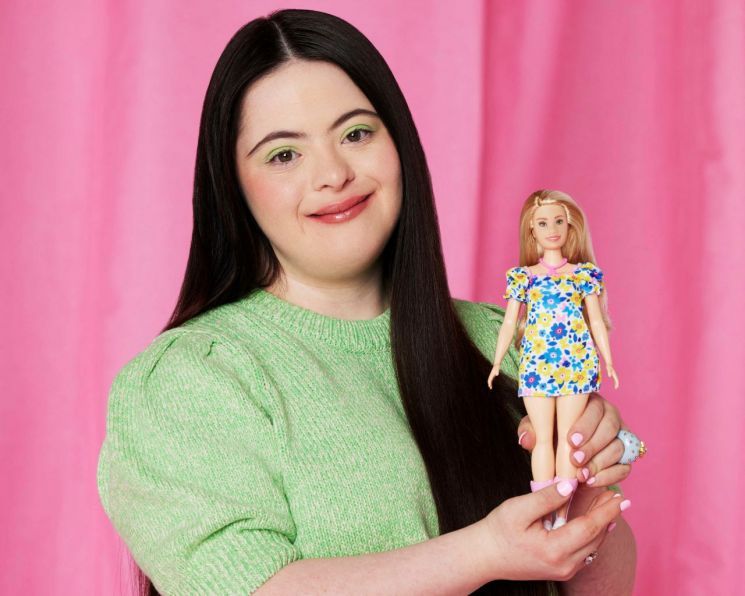
On the 25th (local time), the British BBC reported the launch of a Down syndrome Barbie doll. According to BBC, Barbie manufacturer Mattel closely collaborated with the National Down Syndrome Society (NDSS) in the U.S. to accurately capture the appearance of women with Down syndrome in the doll.
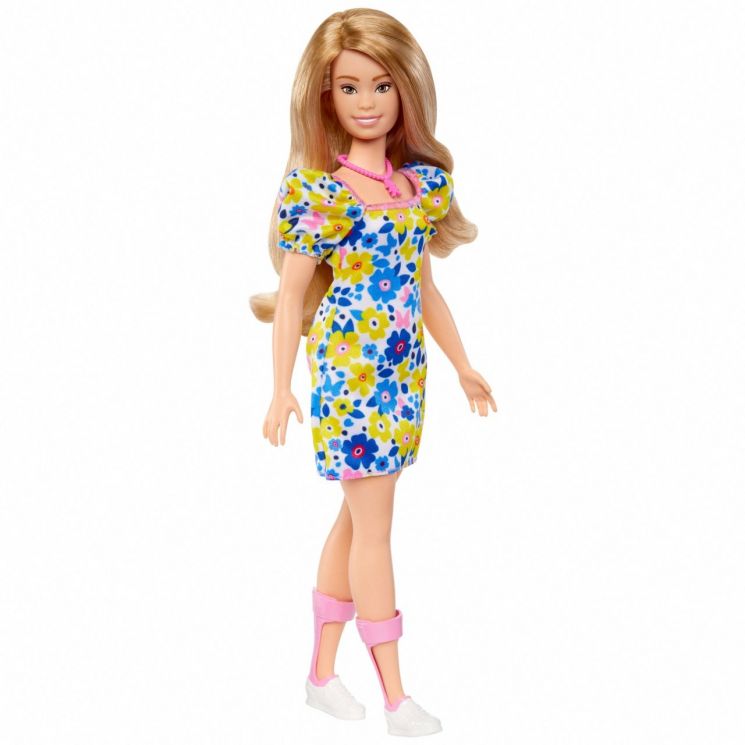 The pink pendant necklace hanging around the neck of the Barbie doll with Down syndrome symbolizes the characteristic of Down syndrome, which involves having three copies of the 21st chromosome. The pink orthotic on the doll's ankle represents the supportive devices worn by some children with Down syndrome to support their feet and ankles. The doll is also dressed in a dress decorated with yellow and blue butterflies and flowers, symbolizing Down syndrome.
 [Photo by Reuters·Yonhap News]
The Down syndrome Barbie doll reflects features commonly seen in women with Down syndrome, such as a round face, almond-shaped eyes, small ears, and a flat nose.
The pink pendant necklace hanging around the doll's neck symbolizes the characteristic of Down syndrome where there are three copies of the 21st chromosome. The pink orthotic device on the doll's ankle represents the support braces worn by some children with Down syndrome to support their feet and ankles. The doll is also dressed in a dress decorated with yellow and blue butterflies and flowers, colors symbolizing Down syndrome.
Candy Pickard, president and CEO of NDSS, said, "It is a significant moment for our community to finally have a Barbie doll that looks just like us," adding, "We must never underestimate the power of representation, and this is a major step forward for inclusion and a moment we should celebrate."
Mattel has been producing Barbies reflecting various ethnicities since 2016
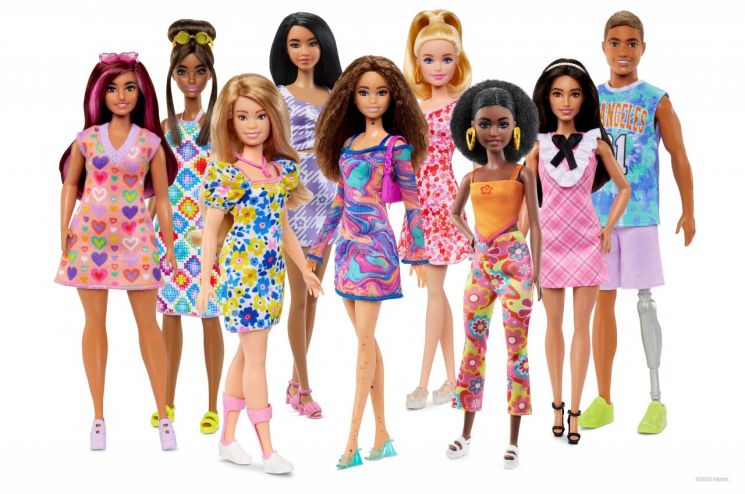 Mattel has been producing Barbie dolls with various appearances since 2016, including multiple skin tones reflecting different races, curly hair, and shorter heights.
 [Photo by Reuters·Yonhap News]
Barbie dolls, first released in 1959, were characterized by long legs, a slim waist, and voluminous blonde hair. However, after criticism that "Barbie dolls do not reflect the bodies of real women," Mattel has been producing Barbies with various skin tones, curly hair, short stature, and other diverse appearances since 2016.
Recently, they have introduced Barbie dolls wearing hearing aids or using wheelchairs.
BBC reported that Mattel's goal is "to ensure every child can see themselves in Barbie dolls" and "to allow children to play with dolls that do not necessarily look like themselves."
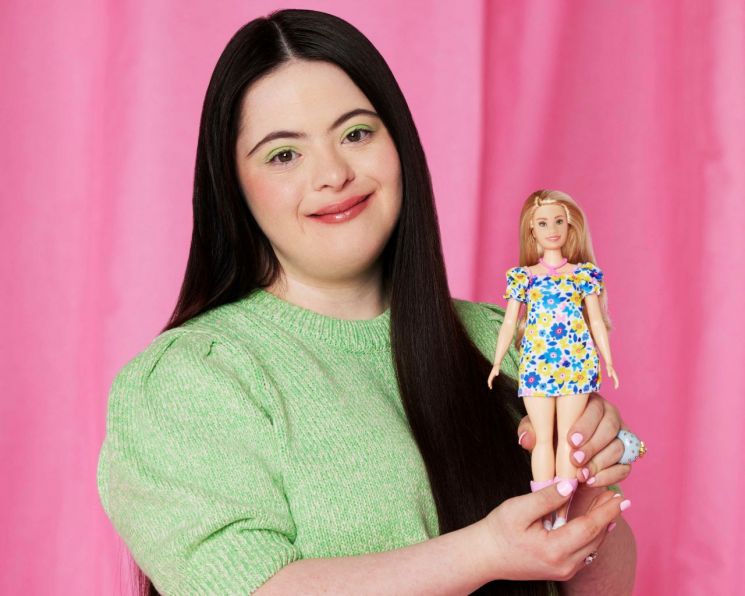 Ellie Goldstein, a British model with Down syndrome, poses for a commemorative photo holding a Down syndrome Barbie doll.
 [Photo by Reuters·Yonhap News]
Ellie Goldstein, a British model with Down syndrome, said she was "overwhelmed" upon seeing the doll. She added, "Diversity is important, and people need to know that there are more people like me in the world and that we are not hidden."
© The Asia Business Daily(www.asiae.co.kr). All rights reserved.
![Clutching a Stolen Dior Bag, Saying "I Hate Being Poor but Real"... The Grotesque Con of a "Human Knockoff" [Slate]](https://cwcontent.asiae.co.kr/asiaresize/183/2026021902243444107_1771435474.jpg)

















