Starting to Foster the Future Food Source: the Aviation Industry
The Special Act on Daegu-Gyeongbuk New Airport passed the National Assembly plenary session on the 13th.
Gumi City plans to actively foster the aviation industry as a new growth engine for regional development in line with the opening of the new airport in 2030.
The city is currently promoting research and demonstration on drones and UAM as part of future mobility projects linked to the new airport. In particular, it plans to develop various drone business models through the designation of a special drone deregulation zone and to advance UAM verification and utilization projects, which are being promoted as national policies ahead of commercialization in 2025, in connection with local industries. It is expected to create significant synergy with the recently selected Defense Innovation Cluster project.
Local universities and Meister high schools are preparing to cultivate highly skilled professionals in related fields such as aviation, electronics, and IT. Through curriculum reform and new course establishment, they aim to nurture demand-tailored talents necessary for the future mobility industry, including aviation electronic parts and materials, aircraft maintenance, drones, and UAM (urban air mobility), thereby serving as a supply source for the specialized workforce needed to foster the aviation industry.
Until the opening of the new airport, the city plans to actively promote the aviation industry by creating an aviation electronic parts cluster linked to Gumi National Industrial Complex’s advanced electronics industry, nurturing specialized companies and personnel in civil-military integrated aircraft maintenance, and fostering aerospace defense industry through cooperation with defense anchor companies. Additionally, the city will prepare various measures to utilize the new airport, such as building future mobility urban air transportation infrastructure that can be linked with the new airport.
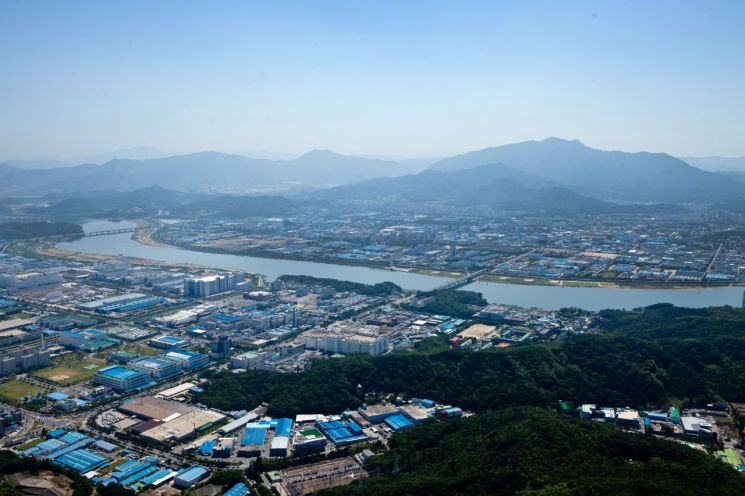
Gumi City hosts the largest inland national industrial complex and is home to companies in fields closely related to aviation, such as electronic components, wireless communication equipment, electromagnetic measurement and testing analysis, and precision instrument manufacturing, which have driven the national economy for a long time. This infrastructure is expected to have a twofold effect by reducing social and economic costs associated with the creation of new industrial complexes around Daegu-Gyeongbuk New Airport while leveraging Gumi’s excellent industrial capabilities.
Mayor Kim Jang-ho expressed confidence, saying, “The new airport will not be just a simple means of transportation but a future food source that creates new opportunities for the region, provides a foothold for a leap forward, and greatly contributes to our lives and economy. Gumi City will steadily prepare to play the role of a hinterland city,” showing his confidence in expanding Gumi’s industrial history, which unfolded along the Nakdong River, now into the skies.
© The Asia Business Daily(www.asiae.co.kr). All rights reserved.
![Clutching a Stolen Dior Bag, Saying "I Hate Being Poor but Real"... The Grotesque Con of a "Human Knockoff" [Slate]](https://cwcontent.asiae.co.kr/asiaresize/183/2026021902243444107_1771435474.jpg)











