Office Vacancy Rate at 13% in Q1
Surpassing 2008 Financial Crisis Levels
The office vacancy rate in the United States has surpassed the level seen during the 2008 global financial crisis. Concerns are growing that the commercial real estate market, showing signs of recession, could become another trigger for a banking crisis.
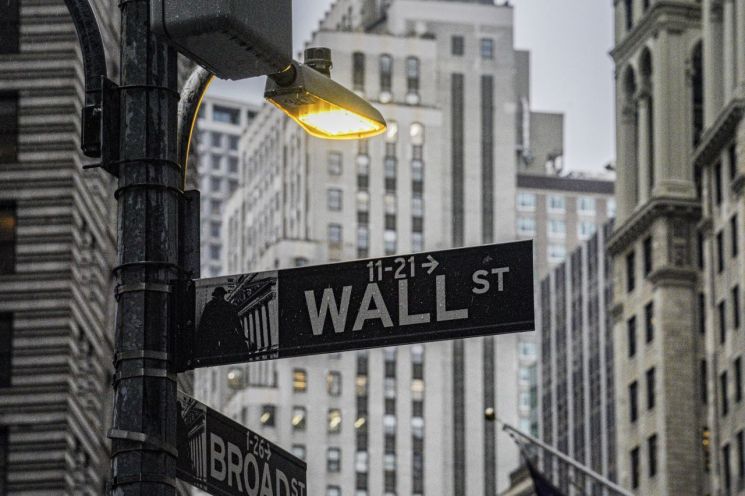
The US daily newspaper The Wall Street Journal (WSJ) reported on the 24th (local time), citing market research firm CoStar Group, that the US office vacancy rate reached 12.9% in the first quarter of this year.
This level exceeds the vacancy rate during the 2008 financial crisis. It is also the highest level since CoStar Group began its survey in 2000. The increase is attributed to the rise in remote work due to COVID-19 and the growth of e-commerce, which have reduced demand for offices and retail spaces. In particular, the office space per employee has decreased by 12% compared to 2015.
The decline in demand, combined with the high-intensity tightening policy continuing since last year, has led to a continuous drop in US commercial real estate prices. According to real estate research firm Green Street, office building prices have fallen 25% since early last year, and shopping mall prices have dropped 19%. Compared to 2016, shopping mall prices have plummeted by 44%, effectively halving in value.
While demand for some commercial real estate such as data centers and warehouses remains strong, these represent only a portion of the overall commercial real estate market. A significant number of commercial properties, including offices and retail stores, are at risk of collapse. It is expected that companies will reduce office space when lease terms expire. UBS AG predicts that 50,000 retail stores in the US will close over the next five years.
The impact of the real estate downturn is expected to hit the banking sector. In particular, small and medium-sized banks, which have recently been the starting point of banking crises, are expected to face significant shocks.
For commercial real estate owners, the combination of high interest rates, increased loan costs due to expanding vacancies, falling real estate prices, and the fallout from the Silicon Valley Bank (SVB) bankruptcy has made obtaining new loans difficult. This could lead to defaults on commercial real estate loans, potentially spreading into a crisis for banks with high exposure to related loans. Currently, small banks hold 40% of all commercial real estate loans.
Defaults on commercial real estate loans are gradually becoming a reality. Wells Fargo, the fourth-largest bank in the US, saw its commercial real estate loan defaults increase by nearly 50% in the first quarter of this year compared to a year ago. The total amount of commercial real estate loans maturing in the US this year is $450 billion.
Ron O'Hanley, CEO of State Street, said, "Commercial real estate, especially offices, is the biggest concern," adding, "Looking at ratings, Class A properties can withstand rent declines, but Class B and C properties will face problems."
© The Asia Business Daily(www.asiae.co.kr). All rights reserved.
![Clutching a Stolen Dior Bag, Saying "I Hate Being Poor but Real"... The Grotesque Con of a "Human Knockoff" [Slate]](https://cwcontent.asiae.co.kr/asiaresize/183/2026021902243444107_1771435474.jpg)
















