"From Fermented Pickles to Separate Korea-China Approaches"
Earlier, Popular Chinese YouTuber's Kimchi Making Controversy
As China makes unfounded claims as part of its Northeast Project that 'Paochai (泡菜) is the origin of Kimchi,' experts have pointed out that Kimchi is a unique dish optimized for Korean table settings and is different from China's Paochai, which corresponds to the vegetable pickling stage.
According to the Northeast Asian History Foundation on the 24th, Park Chaerin, a senior researcher at the World Kimchi Research Institute, recently revealed this in an article titled "Fermentation of Food, Fermentation of Thought" published in the 'Northeast Asian History Report,' analyzing the process in which the vegetable pickling stage and Kimchi diverged.
Park, who explained that humanity began salting long ago to preserve surplus ingredients, said, "It was salting with salt, which has a strong effect of preventing spoilage, to store vegetables during harsh winters for long-term use when needed," adding, "The 'primitive pickling' that did not require special techniques was a universal human culture."
However, he argued that from the 1st to 3rd centuries, fermentation culture was formed, changing the pickling ingredients and methods. Park emphasized, "From this period, China and Korea took their own paths," adding, "In China, fermentation techniques using vinegar, alcohol, and other methods developed, while in Korea, the use of salt and jang (fermented sauces) as pickling ingredients was overwhelmingly predominant."
He also stressed that old literature clearly shows differences in pickling methods between Korea and China. Park stated, "According to 'Qimin Yaoshu,' known as China's first agricultural book, it is understood that ingredients such as vinegar, alcohol, and lees were used in vegetable pickling in China, but there is no trace of their use in ancient Korean vegetable pickling."
He pointed out, "Since the pickling ingredients of China and Korea are completely different, it is difficult to see that Korea was influenced by China," and "There is no evidence to prove the claim that vegetable pickling techniques were transmitted to Korea from China during the late Eastern Han period."
Chinese YouTuber Causes Controversy by Tagging Kimchi Video with '#ChineseFood'
Previously, some Chinese have been asserting that 'Kimchi originated in China.' In particular, in November 2020, the Chinese state media Global Times reported that Paochai received international standard certification from the International Organization for Standardization (ISO), claiming that "China's kimchi industry has become the standard for the international kimchi market," which sparked controversy.
Also, in 2021, a popular Chinese YouTuber posted a video making Kimchi and Kimchi stew, tagging it as 'Chinese cuisine' and 'Chinese food,' which also caused controversy.
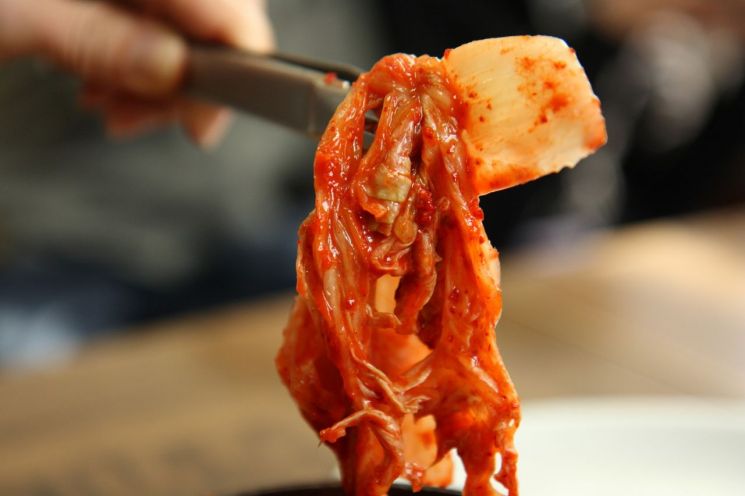
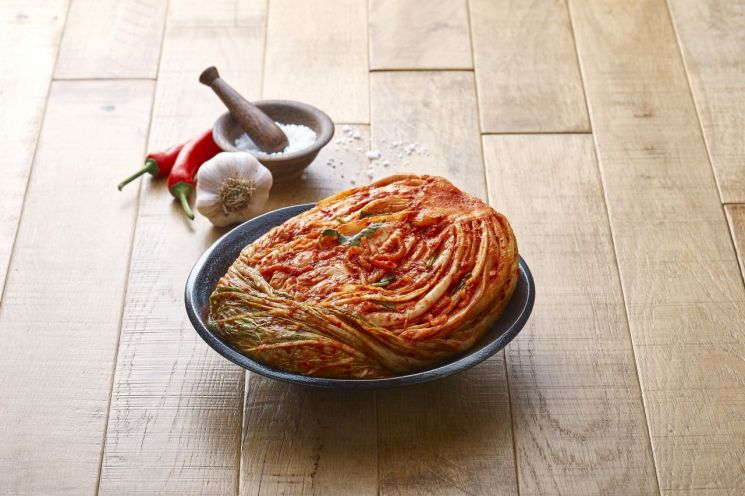
However, Paochai is a dish where vegetables salted are either fermented immediately or boiled and then fermented, making it closer to pickles than Kimchi. Kimchi involves first salting vegetables such as napa cabbage and radish, then fermenting them with red pepper powder, green onions, garlic, ginger, and other ingredients in a secondary process.
Another key difference between Kimchi and Paochai is the presence or absence of the 'lactic acid bacteria fermentation process.' Kimchi undergoes active lactic acid bacteria fermentation, resulting in a clear change in taste before and after fermentation, whereas Paochai has minimal microbial activity, leading to negligible taste changes due to fermentation.
"Baseless Claims that Arirang, Fan Dance, and Pansori Also Originated in China"
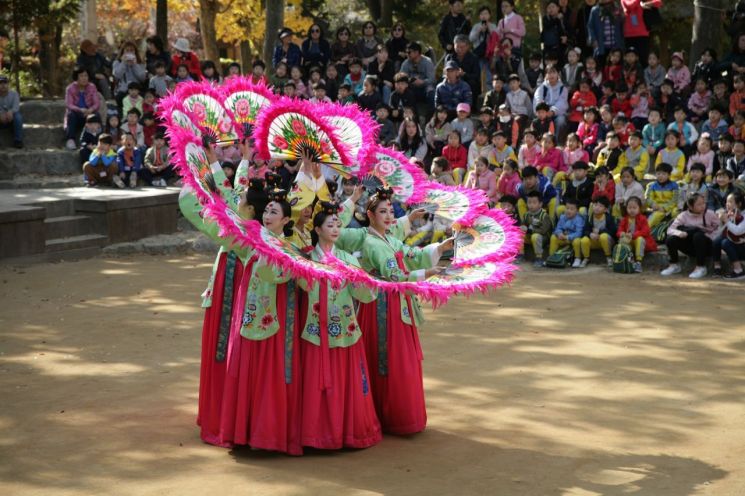
China's claims of being the 'origin' of Korea's unique foods and culture are not new. For years, China has claimed that Hanbok originated from the 'Hanfu' worn during the Ming Dynasty, causing conflicts with Korea. They have also asserted that Korean cultural elements such as Arirang, fan dance, and Pansori originated in China.
Moreover, the Chinese version of Wikipedia has stirred controversy by introducing historical figures like King Sejong and poet Yun Dong-ju, as well as sports stars like Kim Yuna and Son Heung-min, as ethnic Koreans (Joseonjok). China's largest portal, Baidu Encyclopedia, also lists poet Yun Dong-ju's nationality as Chinese and ethnicity as Joseonjok. It is reported that Baidu Encyclopedia has ignored correction requests for two years.
Professor Seo Kyung-deok of Sungshin Women's University pointed out on Facebook last December, "For two years, I have consistently requested Baidu to correct poet Yun Dong-ju's nationality and ethnicity to 'Republic of Korea' and 'Korean people,' respectively," adding, "China is engaging in 'Northeast Project' to incorporate the histories of Goguryeo and Balhae, and recently in 'Cultural Project,' claiming that Hanbok, Kimchi, and even Talchum, registered as UNESCO Intangible Cultural Heritage, originated in China, as well as distorting the history of Korea's representative independence activists."
© The Asia Business Daily(www.asiae.co.kr). All rights reserved.



















