Card Payment Marked with ¥ Used Yuan Instead of Yen
Purchased for 16,000 Won, Lost 300,000 Won
The controversy over the yen (¥) symbol, which represents the Japanese yen, is spreading in Japan. Recently, disguised fraud exploiting the fact that the symbols for the yen and the yuan are the same has surged on Japanese online shopping malls, causing the scale of damage to grow.
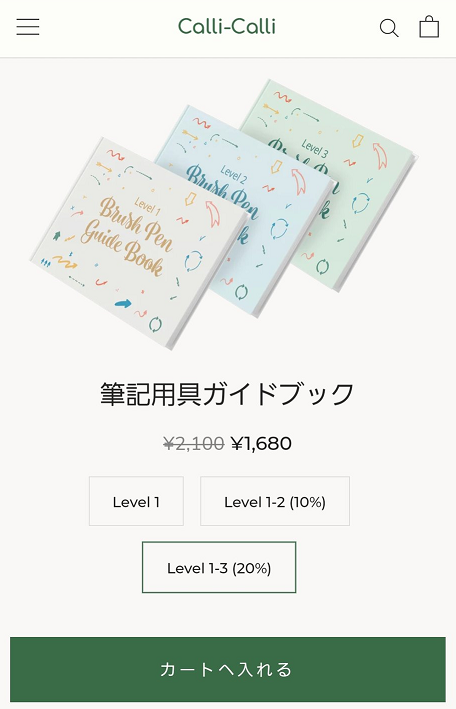 Problematic site disclosed by the Japan Consumer Affairs Center. It is written as ¥1680, but payment is made in Chinese yuan.
On the 20th, the Japan Consumer Affairs Center, a consumer protection organization in Japan, announced that reports have surged recently from consumers who purchased goods with credit cards on certain online shopping malls, claiming that the payment was made in Chinese yuan instead of yen. They warned, "If you do not carefully check the currency, you could end up paying more than 20 times the price," urging caution when shopping online.
The reason this unexpected currency symbol controversy is spreading is because the Japanese yen uses the same symbol as the Chinese yuan. Both the yen and yuan are denoted with the '¥' mark. Although they are labeled as 'JPY' and 'CNY' respectively, if only the symbol is shown, it is practically impossible to distinguish between them.
The Consumer Affairs Center introduced a case where a consumer purchased a calligraphy book priced at '¥1680'. After credit card payment, the confirmation email from the home shopping site also showed ¥1680 (approximately 16,000 KRW), but the credit card company’s payment notification showed '¥32916' (approximately 323,800 KRW). This is because the yen and yuan typically have about a 20-fold price difference, with the exchange rate on that day being 1 yuan equal to 19.52 yen.
However, all the shopping mall sites where reports were received were written entirely in Japanese, making it difficult for consumers to predict that the payment would be made in yuan. The payment window also did not indicate that the '¥' symbol referred to Chinese yuan as 'CNY' or similar, causing consumers to mistakenly proceed with the purchase thinking it was yen.
According to the Consumer Affairs Center, more than 100 cases of disguised payments have been reported from January of this year to the present. The Center considers this a violation of commercial transaction laws.
However, the companies remain silent. Consumers have requested order cancellations and refunds from the companies, but most inquiries have gone unanswered. In some responses, it was revealed that the shopping mall’s ‘Support’ page stated, "The currency is Chinese yuan," placing full responsibility on the consumer. The site is currently closed and does not appear in domain searches.
Attorney Hiroko Sumita said in an interview with Japan’s private broadcaster FNN, “Considering that the site is written in Japanese and the customers are Japanese, it is appropriate to indicate prices in yen. Otherwise, it should be clearly stated as yuan. This is a legal violation.” She added, “However, it seems the operators acted knowing the symbols are the same. Refunds are unlikely, so consumers have no choice but to check multiple times themselves.”
© The Asia Business Daily(www.asiae.co.kr). All rights reserved.

















