The Office for Government Policy Coordination and the Korean Society for Regulation Studies Publish the Book 'Regulatory Innovation: Removing the Sandbags'
The private sector has evaluated that the government's relaxation of large mart business regulations is gradually resolving issues by fostering a foundation for win-win cooperation. There is also an analysis that the significant delegation of authority to local governments for lifting Greenbelt (development restriction zones) reflects a well-grounded regulatory innovation based on field realities.
The Office for Government Policy Coordination and the Korean Society for Regulation Studies published a book titled Regulatory Innovation: Removing the Sand in the Gears on the 19th, containing these insights. The purpose is to evaluate the government's regulatory innovation efforts from the private sector's perspective to determine whether meaningful results have been achieved on the ground and to derive implications. This is the first time that regulatory innovation achievements have been analyzed from the private sector's viewpoint and reflected in the Regulatory Reform White Paper.
The book consists of a comprehensive diagnosis of regulatory innovation outcomes and analysis results of 21 major regulatory innovation cases. The authors are experts related to regulation. A total of seven experts participated, including professors and journalists specializing in regulatory administration (▲KDI Graduate School of International Policy Studies Visiting Professor Kang Young-cheol ▲Yonsei University Graduate School of Economics Visiting Professor Kim Jin-guk ▲Yonsei University Visiting Professor Kwak No-sung ▲Chosun University Professor Lee Min-chang ▲Kyungpook National University Professor Park Sun-joo ▲Asia Economy Reporter Kim Min-jin ▲Korea Financial News Reporter Choi Yong-sung).
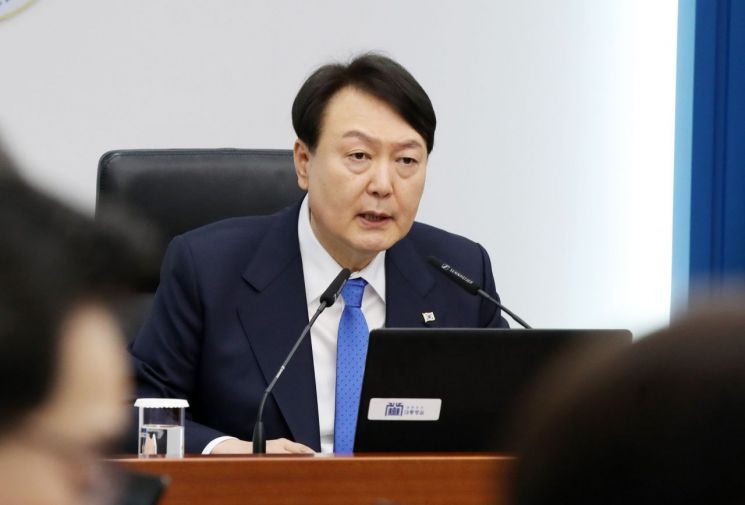
The book also includes many contentious regulatory innovation cases. Examples include strengthening university operational autonomy, easing real estate regulations, deploying innovative medical devices on-site, and relaxing satellite image resolution standards. This content is scheduled to be included and distributed in the 2022 Regulatory Reform White Paper.
Positive Foundation for Win-Win Cooperation in Large Mart Regulations... Need to Increase Customized Solutions for Corporate Difficulties
Among the regulatory innovation cases, fostering a foundation for win-win cooperation regarding large mart business regulations was mentioned as a positive example. It was evaluated that issues, which were difficult due to conflicts among stakeholders, are being resolved one by one through social dialogue. Additionally, the ‘On-site Waiting Investment Project,’ which revived investment by providing customized solutions to companies hindered by regulations, and the delegation of authority to lift development restriction zones were presented as notable achievements.
Experts assessed that the Yoon Suk-yeol administration has clearly identified ‘regulatory innovation’ as a key national task to be consistently pursued throughout its term and has established a network to implement it. They viewed that the administration is directly confronting and breaking through long-standing issues such as bulky regulations and conflict regulations, which were known problems but had not been properly resolved due to difficulty or avoidance.
The Yoon Suk-yeol administration’s regulatory innovation network was evaluated as multilayered. The Regulatory Innovation Strategy Meeting, chaired directly by the President and Prime Minister, plays a role in maximizing the momentum for regulatory innovation. The Regulatory Innovation Promotion Team gathers the capabilities of 130 regulatory experts to directly tackle long-standing bulky regulations. The Regulatory Tribunal verifies the validity of tasks rejected by ministries from the private sector’s perspective. The Regulatory Reform Committee acts as the gatekeeper of government regulations. The Economic Regulation Task Force creates an innovation system through collaboration between the Prime Minister and the Deputy Prime Minister for Economy, resolving regulatory difficulties such as revitalizing corporate investment. The Regulatory Sandbox actively addresses conflict issues that had not been properly handled before.
Eradicate Regulations with the ‘Chamchochegeun’ Method
Furthermore, experts viewed that regulations in the environment, cultural heritage, and location sectors, which had not been resolved for a long time, are being transformed through rational improvements that reduce excessive regulatory burdens while enhancing regulatory effectiveness, thereby changing the fundamental framework of existing regulations.
Finally, to amplify the achievements of regulatory innovation, experts recommended strengthening efforts to listen to voices from the field regarding regulatory difficulties and suggested a ‘Chamchojegeun’ approach to regulatory innovation?meaning to cut the grass and uproot the roots, i.e., to eradicate problems at their source rather than improving them incrementally or segmentally.
Based on the analysis results from the Korean Society for Regulation Studies, the government plans to meaningfully utilize the findings by further developing positively evaluated aspects and reflecting the recommendations in regulatory innovation efforts.
© The Asia Business Daily(www.asiae.co.kr). All rights reserved.
![Clutching a Stolen Dior Bag, Saying "I Hate Being Poor but Real"... The Grotesque Con of a "Human Knockoff" [Slate]](https://cwcontent.asiae.co.kr/asiaresize/183/2026021902243444107_1771435474.jpg)















