Labor Shortage in Semiconductor Industry Due to Low Birthrate and Aging Population
Efforts to Train Talent Accelerate but Concerns Arise Over "No Time"
As the Taiwanese TSMC factory is being built in Kumamoto Prefecture, creating a revival atmosphere in Japan's semiconductor industry, the labor shortage caused by low birth rates and an aging population is intensifying. In Kyushu, where Kumamoto is located, it is expected that more than 1,000 workers will be lacking every year for the next 10 years, prompting an emergency within Japan to "attract talent."
On the 18th, Asahi Shimbun reported this citing the survey results of the Kyushu Semiconductor Talent Development Consortium. This consortium, formed by the Kyushu Bureau of Economy, Trade and Industry and related industry-academic organizations, conducted a recruitment plan survey targeting 791 semiconductor companies in the Kyushu region from last fall to February this year, announcing that more than 3,000 people will be needed annually from 2023 to 2032. Considering that the total number of semiconductor company hires in Kyushu was about 2,300 in 2021, Asahi analyzed that there will be a shortage of about 1,000 workers every year over the next 10 years.
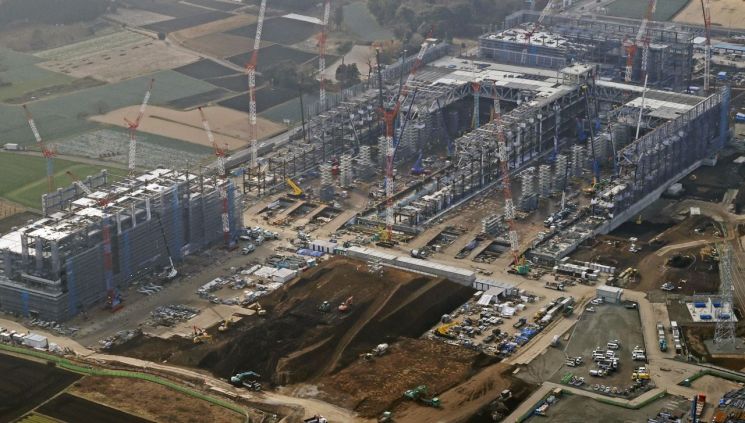
In particular, Kyushu accounts for 40% of Japan's semiconductor production value. As a semiconductor hub, there is strong enthusiasm to attract experienced workers. According to the Japanese job change platform Toda, the number of semiconductor-related job openings doubled compared to January 2019 before COVID-19, and regionally, the Kyushu area where TSMC is entering saw an especially high increase of 2.8 times.
The problem is that this labor shortage is expected to occur not only in Kyushu but throughout Japan in the future. Japan is currently continuing to build semiconductor factories nationwide, making large-scale hiring inevitable. This year, Kioxia plans to expand the second manufacturing building at its memory factory in Iwate Prefecture, and in 2025, Rapidus, a joint venture of Japanese companies for semiconductor localization, will operate a line in Chitose City, Hokkaido.
However, the semiconductor workforce in Japan itself continues to decline. According to the Industrial Statistics Survey published annually by the Ministry of Economy, Trade and Industry, the semiconductor workforce, which was about 230,000 in 1998, decreased to about 170,000 in 2019.
Asahi analyzed, "Japan, which held a large share of the global market in the 1980s, saw its share drop by more than 10% due to the strength of Taiwan and South Korea," adding, "During this period, Japanese engineers moved overseas or to other domestic industries, so there is no workforce ready to be deployed immediately on site."
Japan appears to be rushing to nurture talent in response. Kumamoto University established a semiconductor and digital research education institute on the 1st, expanding its faculty size to more than 30 by newly hiring six faculty members. Next year, in line with attracting the TSMC factory, it plans to establish a semiconductor device engineering course and recruit students.
However, there are also voices saying that there is far too little time to wait until talent grows. Nikkei XTECH, a subsidiary of Japan's Nihon Keizai Shimbun (Nikkei), stated, "Even if talent is developed in Japan, the number will not be sufficient," adding, "An environment that makes it easy to attract overseas talent must be created. Above all, flexibility to actively accept people from other fields or those who are not majors should be shown."
© The Asia Business Daily(www.asiae.co.kr). All rights reserved.
![Clutching a Stolen Dior Bag, Saying "I Hate Being Poor but Real"... The Grotesque Con of a "Human Knockoff" [Slate]](https://cwcontent.asiae.co.kr/asiaresize/183/2026021902243444107_1771435474.jpg)
















