Bank of Korea: "Trade Barriers in Core Industries Weaken Growth Engines of Countries"
In the wake of the COVID-19 pandemic and the Russia-Ukraine war, major countries are pursuing nationalist industrial policies, and this trend is expected to have a negative impact on the global economy.
On the 16th, the Bank of Korea stated in its report titled "Current Status and Implications of Major Countries' Nationalist Industrial Policies," published in Overseas Economic Focus, that "While protectionist policies through industrial policy may benefit domestic production and employment, they are expected to negatively affect the global economy by causing inefficient allocation of resources through geo-economic fragmentation."
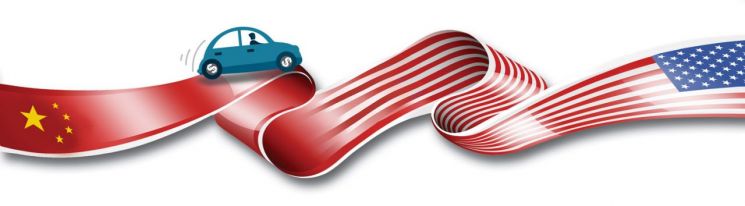
The report anticipated that global supply chains will be rapidly reorganized due to the promotion of nationalist industrial policies by major countries, such as the U.S. Semiconductor Support Act, the Inflation Reduction Act (IRA), and the European Critical Raw Materials Act (CRMA).
Since the pandemic, with the strengthening of digital transformation and carbon neutrality policies, demand for core industries such as semiconductors, secondary batteries, and electric vehicles has been continuously increasing. Accordingly, securing stable supply chains for these industries has been recognized as an important element of economic security, leading to the promotion of nationalist industrial policies centered on the U.S. and Europe since last year.
The report analyzed that this movement also aims to reduce dependence on China for key industries in the global supply chain. In the case of secondary batteries, the U.S. IRA excludes subsidies for parts and critical minerals produced in countries of concern, while Europe aims to limit third-country dependence on secondary battery raw materials through the CRMA. Consequently, secondary battery companies that primarily use Chinese raw materials are expected to diversify their supply chains to reduce dependence on Chinese products. Regarding semiconductors, the U.S. restricts investments in advanced semiconductor facilities in China and other countries through safeguards in the Semiconductor Support Act for companies benefiting from tax credits.
The report predicted that if nationalist policies persist, they will negatively impact the global economy. Trade barriers in key industrial sectors can weaken each country's growth engines in a global economic environment with increasing technological interdependence. If imports of essential capital goods are disrupted, capital stock accumulation and technology transfer embedded in imported goods will be constrained. For these reasons, the International Monetary Fund (IMF) estimated that if global trade fragmentation due to nationalist industrial policies intensifies, the global economic scale (GDP) could decrease by up to 2% in the long term.
The Bank of Korea emphasized, "As global supply chains for semiconductors, electric vehicles, and secondary batteries are reorganized, uncertainty in the domestic and overseas investment environment for domestic companies will significantly increase. Investment in advanced industries is expected to expand mainly in the U.S. and Europe, which may reduce domestic investment; therefore, it is necessary to explore various incentives to expand domestic investment."
Meanwhile, the Bank of Korea assessed that upward pressure on international oil prices will be somewhat dominant in the future. Uncertainty related to Russian supply during the restructuring of oil trade following Western sanctions against Russia is expected to act as an upward pressure on oil prices. On the demand side, the scale of China's oil demand recovery this year is expected to be a key factor determining the additional rise in oil prices.
Park Na-young, a researcher at the Bank of Korea's Research Department, said, "Increased crude oil demand due to European natural gas supply disruptions and supply instability caused by geopolitical conflicts are upward risks for international oil prices, while the possibility of increased production by non-OPEC countries such as the U.S. and the resurgence of financial instability act as downward risks."
© The Asia Business Daily(www.asiae.co.kr). All rights reserved.
![Clutching a Stolen Dior Bag, Saying "I Hate Being Poor but Real"... The Grotesque Con of a "Human Knockoff" [Slate]](https://cwcontent.asiae.co.kr/asiaresize/183/2026021902243444107_1771435474.jpg)
















