ExxonMobil CEO Receives 47 Billion Won Compensation
As the global economy faces a recession and companies worldwide implement company-wide cost-cutting measures, CEOs of major global oil companies have received 'super salaries' fueled by record-breaking profits. Some have earned hundreds of billions of won annually. Despite making enormous profits last year thanks to the Russia-Ukraine war, they have been criticized for neglecting investments in climate crisis response and demands for windfall taxes, focusing solely on a 'money feast.'
According to major foreign media on the 13th (local time), Darren W., CFO of ExxonMobil, the largest oil company in the United States, received a total compensation of $36 million (about 47 billion won) last year. This represents a 52% increase compared to the previous year's total compensation ($25 million) and more than double compared to 2020.
ExxonMobil paid $25 million worth of stock options and a cash bonus of $6.4 million (about 840 million won) as a record-high profit performance bonus last year.
Alongside ExxonMobil, Ben van Beurden, former CEO of Royal Dutch Shell, one of the world's two largest oil companies, received ?9.7 million (about 15.9 billion won) last year. This is a 53% increase compared to the previous year.
British Petroleum (BP), the largest oil company in the UK, also paid CEO Bernard Looney ?10 million last year, doubling the previous year's amount. Foreign media explained that Looney's actual compensation was much higher than ?10 million, but part of his pay was cut due to legal liabilities following an explosion at a refinery in Ohio, USA.
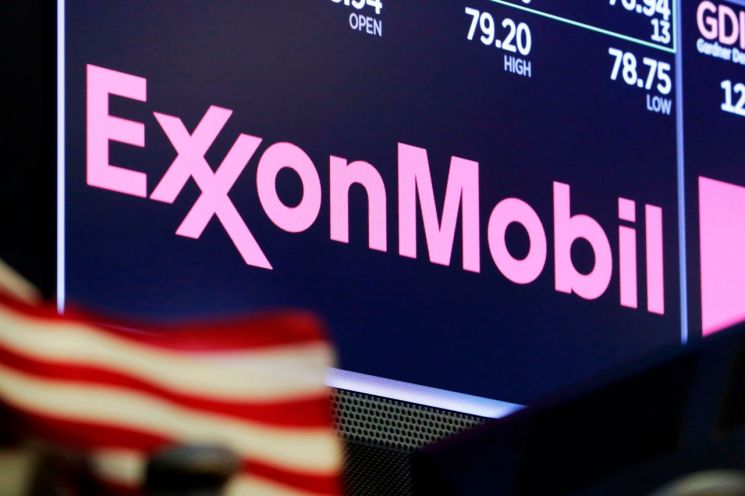
The world's top five oil refiners recorded their highest net profits ever last year, benefiting from the surge in international oil prices caused by the Ukraine crisis. ExxonMobil posted a record net profit of $55.7 billion (about 73 trillion won) last year, while TotalEnergies, headquartered in France, recorded a net profit of $36.2 billion (about 47 trillion won), double that of 2021.
Additionally, other major oil companies such as Chevron ($36.5 billion), Shell ($39.9 billion), and UK-based BP ($27.7 billion) also announced record-breaking performances last year. The combined profits of these five oil giants reached $199.3 billion (about 260 trillion won).
However, public opinion is cold toward their money feast. While these oil giants have made enormous profits thanks to soaring oil prices since the Ukraine crisis, ordinary people worldwide are suffering from the impact of high oil prices, leading to strong calls for imposing higher taxes on their 'windfall' gains. President Joe Biden previously stated about ExxonMobil, "They have made more money than God," and warned that the energy industry's profits should be returned to consumers through windfall taxes.
In addition to tax demands, pressure is mounting for investigations into these companies' investments. BP pledged to reduce oil and gas carbon emissions by 35-40% by 2030 but recently lowered its carbon emission targets to 20-30%, citing the need for more investment to meet oil and gas demand, drawing heavy criticism from environmental groups.
US CNN criticized oil companies for pouring billions of dollars into oil and gas resource development despite warnings from the International Energy Agency (IEA) that fossil fuel investments must be immediately halted to keep global temperature rise within 1.5 degrees Celsius above pre-industrial levels, as outlined in the Paris Climate Agreement.
© The Asia Business Daily(www.asiae.co.kr). All rights reserved.
![Clutching a Stolen Dior Bag, Saying "I Hate Being Poor but Real"... The Grotesque Con of a "Human Knockoff" [Slate]](https://cwcontent.asiae.co.kr/asiaresize/183/2026021902243444107_1771435474.jpg)











